Quick Answer
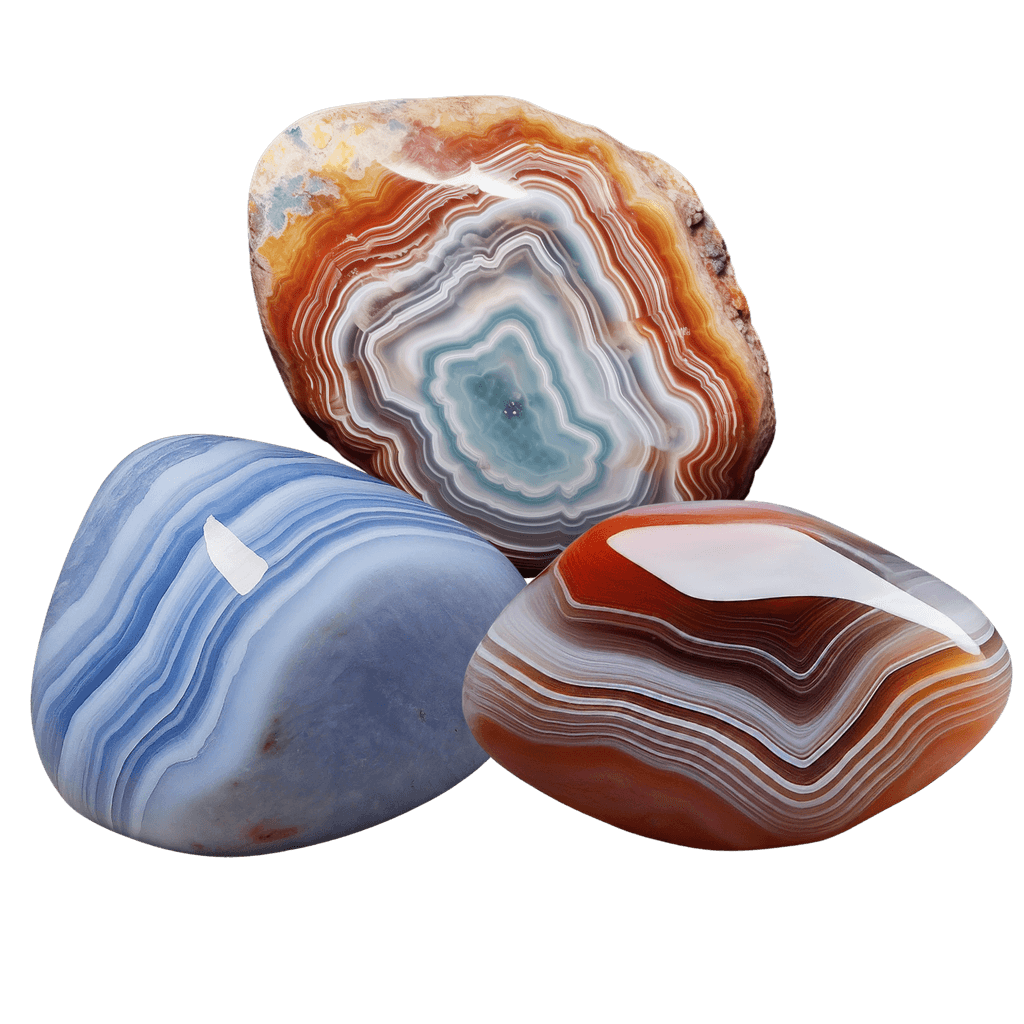
Agate is a banded crystal used in modern crystal healing for grounding, calm, and protection. It measures 7 on the Mohs hardness scale. In the chakra tradition, Agate is associated with the Root chakra.
Worth knowing: Why agate bands at all is still unsettled: the literature divides between external rhythm models, which read the stripes as pulses of fluid entering the cavity, and internal rhythm models, in which the pattern self organizes inside the stone with no external clock.
“Banded translucent chalcedony, the parent of fifteen catalog varieties, four of which carry the name without the banding that defines it.”
- Chakra
- Root (Muladhara)
- Zodiac
- Gemini ♊, Virgo ♍
- Element
- Earth 🌍
- Planet
- Mercury ☿
- Hardness
- 7 / 10 (Mohs)
- Colors
- Banded, Grey, White, Blue, Brown, Red, Black, Multicolored
- Origin
- Brazil, Uruguay, India, Botswana, Namibia, Mexico, USA
- Availability
- Not sold here yet
Care + Safety
Agate at a glance
- Water: brief rinse safe
- Sun: fades in prolonged direct sun
- Mohs hardness: 7 (durable for daily-wear jewelry)
What is Agate?
Agate is banded chalcedony, which makes it a rock name rather than a mineral species. Geology.com defines agate as a translucent variety of microcrystalline quartz, and translucency together with visible banding is the whole of the definition: opaque microcrystalline quartz is jasper, translucent unbanded material is plain chalcedony, and only once bands appear does the trade say agate. Nothing governs the word, so it stretches. Four of the fifteen agates in the CrystalStones.com catalog are not banded at all: moss, tree and dendritic agate are chalcedony carrying mineral inclusions, and turritella agate is a silicified shell bed. The physical properties are quartz properties throughout, Mohs 7, no cleavage, conchoidal fracture, and enough microscopic porosity between the bands to drink dye, which turns out to be the most consequential fact about this family.
Agate measures 7 on the Mohs scale and shows banded, grey, or white coloring. Practitioners shelve it with the keeper stones at the protective end of the catalog, where grounding, calm, and protection are the standing requests.
The stone connects primarily to the Root (Muladhara) chakra, carrying Earth energy. Sources include Brazil, Uruguay, India, Botswana, Namibia, Mexico, and USA; deposit matters more than beginners expect, and collectors learn to recognize where a piece of Agate was mined by its color depth and pattern.
Agate is a pattern with a rule attached, and the rule is easy to check by hand. Hold a cut piece up against a window and notice two things at once: light coming through, and stripes. Translucent plus banded is agate. Take away the light and you have jasper; take away the stripes and you have plain chalcedony. Fifteen stones in the CrystalStones.com catalog carry the name, and four of them fail that test in the same way, by being beautiful chalcedony full of something other than bands. The family is held together by a habit of the cutting trade rather than by any authority, which is worth knowing before you pay for a name.
Also catalogued as Banded Chalcedony and Achates, whether it is your first stone or your fiftieth, Agate tends to find its role quickly, and grounding is the natural place to begin.
15 stones are catalogued under the agate name, each with its own entry: Blue Lace Agate, Fire Agate, Dendritic Agate, Moss Agate, Crazy Lace Agate, Botswana Agate, Carnelian Agate, Tree Agate, Turritella Agate, Apricot Agate, Green Agate, Purple Agate, Yellow Agate, Blue Agate, Black Agate.
History and Mythology
Agate is named after a river, and the naming is nearly as old as written mineralogy: both Theophrastus and Pliny record that the stone took its name from the Achates in Sicily, now called the Dirillo, where it was first found in quantity.
What the ancients could describe, nobody has fully explained since. Agate forms when silica rich water fills a gas cavity in volcanic rock, and Geology.com describes the material depositing in concentric layers around the walls of the cavity, or in horizontal layers building up from the bottom. Why it bands at all remains an open question in the research literature, where the competing accounts divide into two families. External rhythm models read the bands as a record of pulses of fluid and changing conditions outside the cavity, an environmental clock written into the stone. Internal rhythm models treat the same banding as self organization arising inside the developing agate, with no external clock at all. A stone this ordinary, sliced open in every rock shop on earth, is still an active research problem.
The modern chapter is chemical, and it is the reason this family needs a buyer with their eyes open. Agate takes colour better than almost any other stone, because its bands differ in porosity and each layer drinks dye at a different strength, so treatment sharpens the banding rather than flattening it. The German cutting town of Idar Oberstein industrialised the process in the nineteenth century. Geology.com states the result plainly: most of the spectacularly colored agates sold in the gemstone trade have been dyed.
Agate Meaning and Metaphysical Properties
First Touch
The first touch of Agate is cooler than you expect, and the banded polish is slick as bottle glass. Mohs 7 stones hold their temperature, and that slow warming is part of their character. While it rests in your hand, let attention drop to wherever your body meets the floor; the grounding stones speak in weight first and words never.
Primary Properties
Agate keeps a guard-duty property list: grounding, calm, protection, clarity, and stress relief. What the protective family teaches is edges, where you stop, where the room starts, and the settled breath that comes from knowing the difference. Take the list as shorthand from tradition and let your own steadiness define the assignment.
How Crystal Energy Works
In traditional crystal healing Agate is read through the Root center, the body's claim to ground, and grounding is the quality it is most often asked to bring there. Root work is low and slow, seated practice, feet flat, with grounding, calm, and protection as the standing assignment. In Melody's Love Is in the Earth the grounding family is framed through the root connection, an energetic cord imagined running from the spine's base down into the earth.
Amplification Through Intention
Earth stones such as Agate are traditionally treated as keel rather than sail; they hold a grounding course. Give the assignment once, clearly, and then let routine carry it.
Healing Benefits
Emotional Support
Emotionally, Agate is traditionally associated with grounding, calm, and protection, the felt sense of being defended and rooted. Many people keep it close on the days when other people's weather gets in too easily. Tradition, not treatment: grounding work with a stone sits beside professional support, never in place of it.
Spiritual Connection
In spiritual work Agate plays the doorkeeper: it is the stone tradition assigns to opening and closing practice, the grounding breath before inner work and the deliberate return after. Boundaries, in this family, are a devotion of their own.
Physical Presence
Tradition reads Earth stones like Agate through the soles of the feet: stance, weight, the felt fact of standing somewhere while you work on grounding. Try standing barefoot with the stone in hand when the day goes abstract; the practice is awareness, not medicine.
Chakra Connection
Agate resonates most strongly with the Root (Muladhara), the energy center traditionally drawn in red and the traditional seat of this stone's grounding work. When this center runs clear, the classical markers are rootedness, calm in the body, and trust in your own footing; grounding, calm, and protection are what Agate is most often asked to bring to it.
Work it seated and slow; put Agate on the floor where your gaze lands, feet flat, and breathe down toward it. Root work is the least dramatic chakra work there is, which is exactly why grounding grows well in it.
Zodiac and Astrological Connection
Astrological tradition links Agate with Gemini ♊ (May 21 to Jun 20) and Virgo ♍ (Aug 23 to Sep 22), and practitioners often suggest the stone meets Gemini placements with the least friction.
Correspondence is a suggestion, not a bouncer; plenty of devoted Agate keepers have no Gemini in their chart at all, and being drawn to the stone is the credential that matters.
In the planetary layer of the system, Mercury ☿ holds the rulership, and that planet's prominent transits are the traditional windows for deeper grounding work with Agate.
How to Use Agate
Five practices suit Agate especially well. Pick the one that fits the day you are actually having rather than the routine you think you should have.
- 1
Meditation Hold
Begin the sit with Agate against the skin and use its coolness as the focus; at Mohs 7 it holds that freshness for a while before giving in to body heat.
- 2
Body Placement
Floor and hip are the two Root stations in the old placement charts, and Agate takes either one: by the feet during seated work, at the hips when lying back. In my practice the interesting part is never the position itself but what you catch yourself noticing once you stop expecting anything from it, which is how the tradition's grounding work was meant to be entered.
- 3
Sleep Companion
Agate can still earn the nightstand even though its brief is grounding rather than rest: setting the stone down as you set the day down marks the switch from doing to sleeping.
- 4
Carry With You
Bring Agate along when the calendar promises crowds, noise, or rooms you would rather skip. Each touch-check restates the boundary, two seconds of contact saying that grounding travels with you.
- 5
Crystal Grid Anchor
For grid work, give Agate the anchor position and run Agate Blue Lace and Botswana Agate on the outer points, all matched to a single grounding intention. Rebuild it when it goes stale; a grounding grid you have stopped seeing has stopped working.
How to Cleanse and Charge
Agate works best when it is cleansed on a rhythm; tradition pictures a stone absorbing what it meets, and a saturated stone has nothing left to give. The complete water, sun, and salt safety profile, plus the storage instructions I give my clients, lives in the dedicated Agate care guide.
- 1
Moonlight
Set Agate on a windowsill or ledge under the full moon and collect it in the morning. Moonlight is the gentlest cleanse in the tradition, safe for every stone in the collection and impossible to overdo.
- 2
Water
A short rinse cleanses Agate: cool water, gentle rotation, sixty seconds, towel dry. Keep it brief; even water-safe stones prefer not to soak.
- 3
Sage
Smoke-cleanse Agate: light the sage, let it settle to a smolder, and move the stone through the rising smoke until your sense of it lightens, usually under a minute.
- 4
Sound
A minute inside strong, sustained tone, bowl, chime, even a steady hum, resets Agate without physical risk, which makes sound the safest deep cleanse for fragile stones.
- 5
Selenite
Keep a selenite dish where you empty your pockets and drop Agate there at day's end; the resting place does the cleansing while you sleep.
How often to cleanse
Monthly is the floor for Agate; step the cadence up whenever the stone is in daily rotation or the season is emotionally loud. With practice you will feel the tell yourself, a worked stone reads heavier and flatter in the palm.
Charging after cleansing
After cleansing, charge Agate by setting it on a selenite plate overnight or bathing it in full moonlight. This restores its energetic vitality.
The Crystal Starter Library
A free guide from Crystal Cassandra: the twelve stones that cover almost everything, a one page care matrix for water, sun and salt, and how to build a first intention practice.
We respect your inbox. Unsubscribe anytime.
Crystal Pairings
Think of pairing Agate as staffing a gate: something heavy to hold the line, something quick to keep watch. The traditional companions split exactly that work, boundary on one side, vigilance on the other. Before settling on a pair, hold both for a moment; comfort in the hand is the yes.
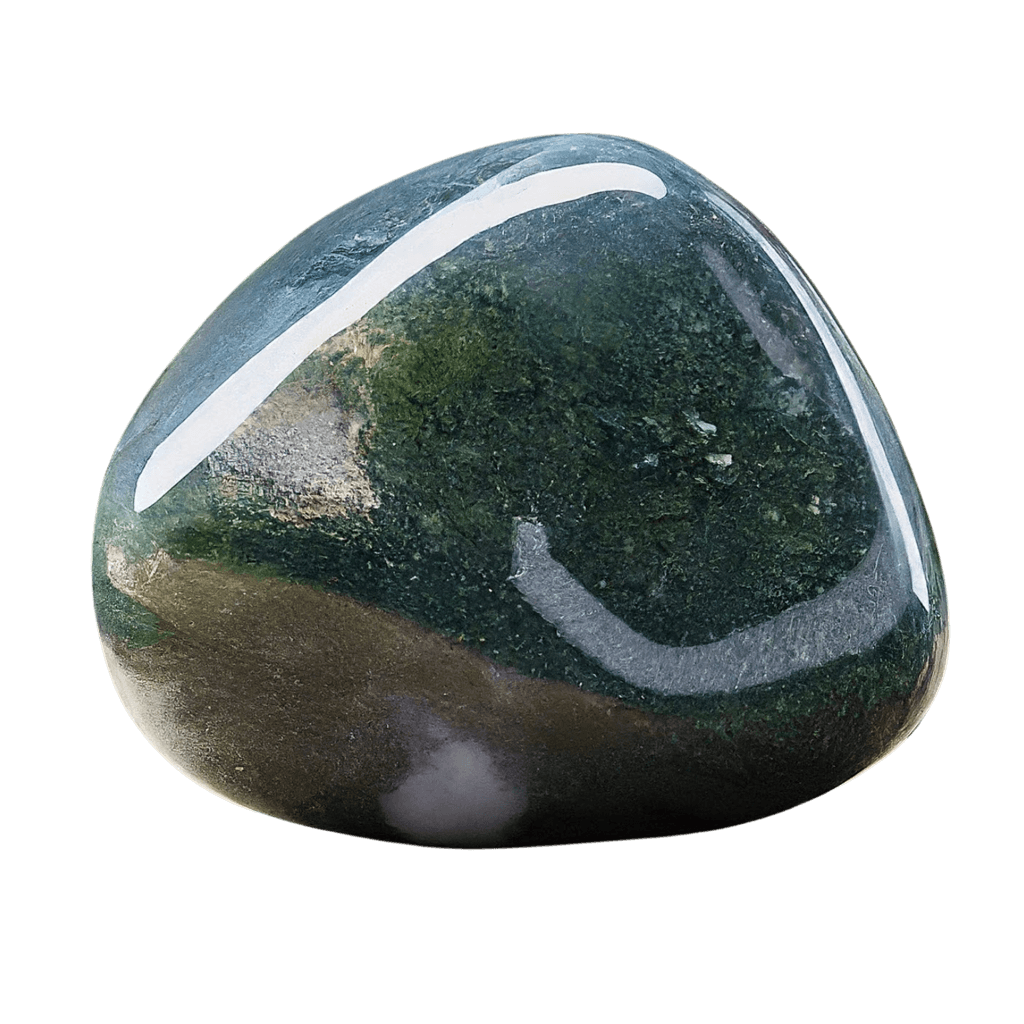
Buying Agate: Price, Quality, and Jewelry
Decide first whether you are buying a colour or a pattern, because that single choice sorts this whole family and it also decides how careful you need to be.
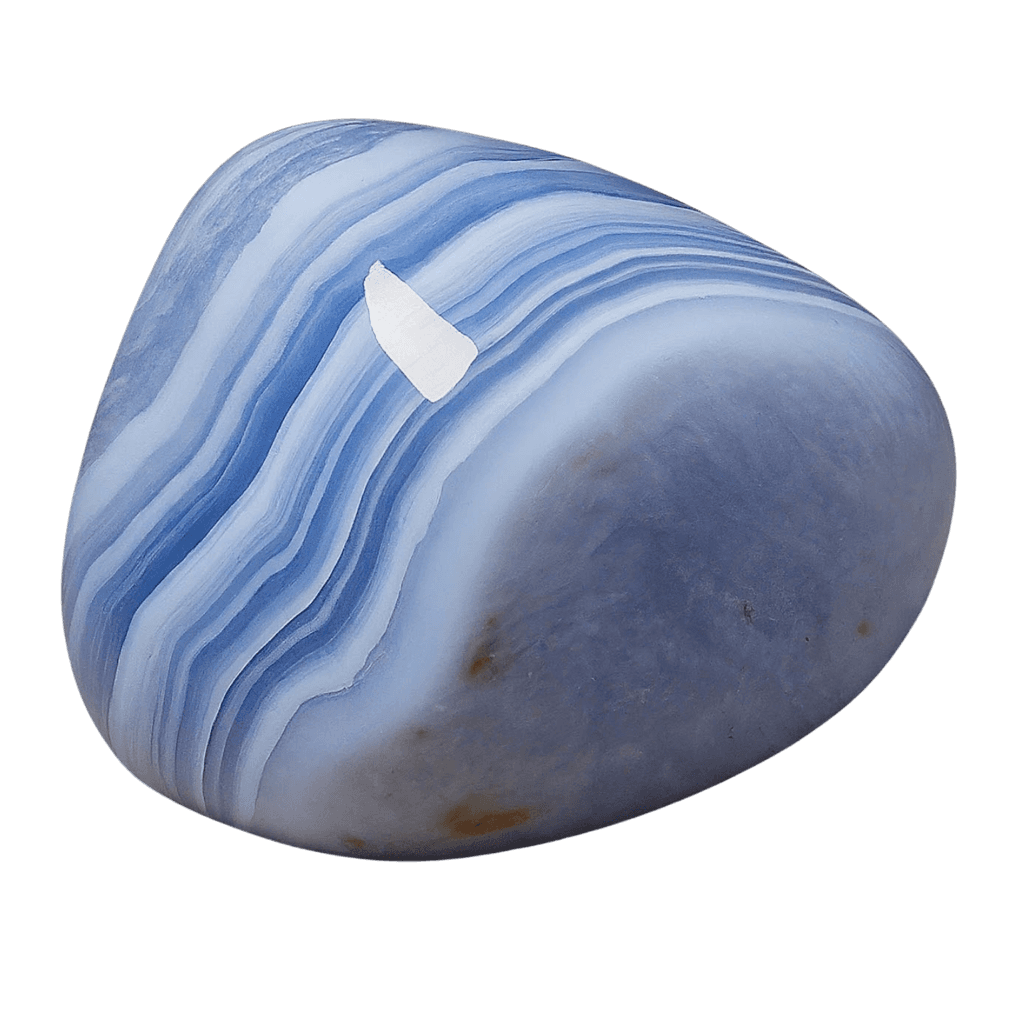
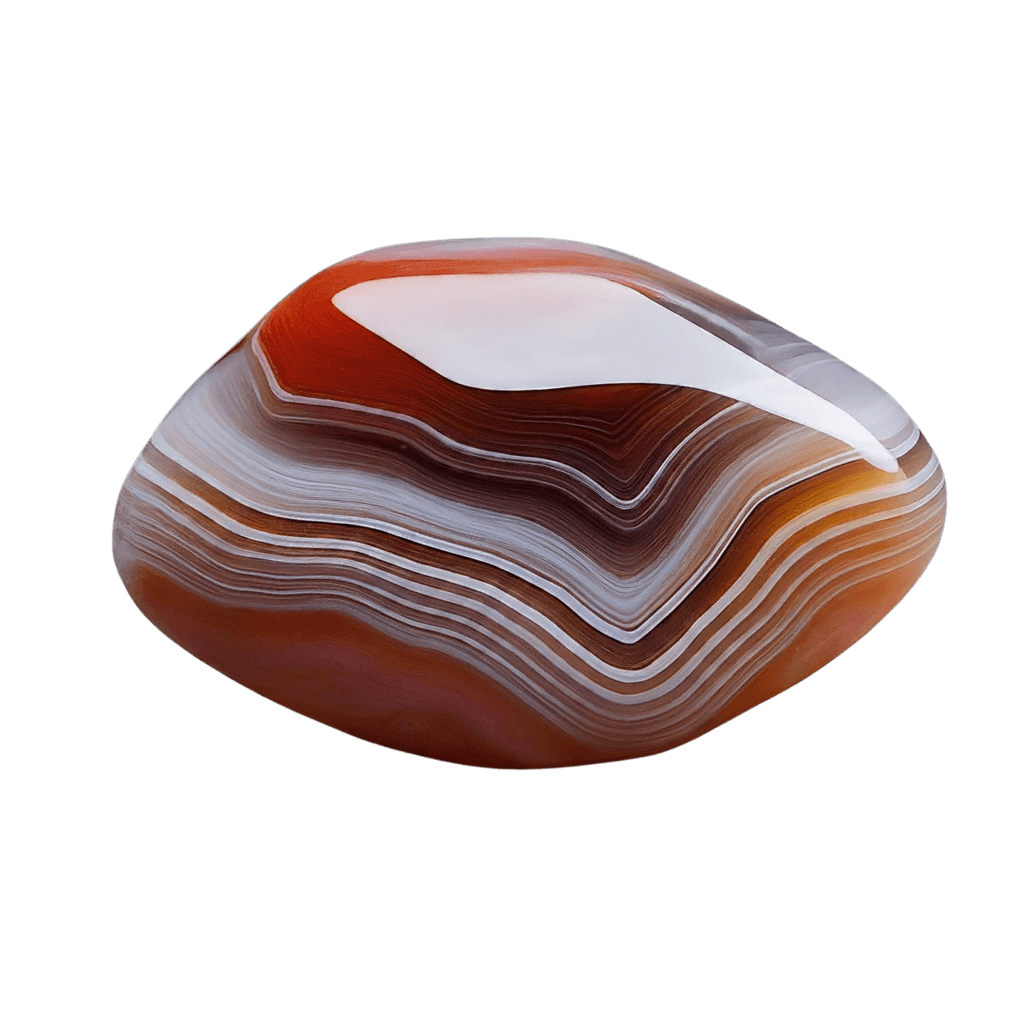
If you want a pattern, buy a named locality. Blue lace agate is the pale blue and white scalloped material from southern Namibia, Botswana agate is the tightly banded pink and grey material from the east of that country, crazy lace is the chaotic Mexican material, and fire agate is the botryoidal Mexican and southwestern American stone whose flashes come from thin films of iron oxide rather than from dye. Locality named material is where the money in agate honestly sits, because the pattern cannot be manufactured.
If you want a colour, slow down. Five of the fifteen agates in this catalog are routinely colour treated: green, purple, yellow, blue and black. Black agate is the oldest case and it is not a dye at all but the sugar and acid method, which carbonises sugar inside the pores, a recipe the cutting houses have run since the 1800s. The others are pigment. None of that makes a treated agate a bad stone, and it has been standard practice for two centuries, but it should be disclosed and it should be reflected in the price. Two tells are worth learning: dyed colour often sits stronger in surface cracks than it does through the stone itself, and natural agate banding varies in intensity from band to band while a dye bath tends to even it out.
Four of these are not banded agate at all, and they are worth buying on their own terms rather than on the family name. Moss, tree and dendritic agate are translucent chalcedony carrying mineral inclusions that look botanical and are not, and turritella agate is a bed of fossil snails turned to stone.
Market figures, for orientation only. The CrystalStones.com store is not open, so none of this is an offer. Agate is one of the cheapest materials in the polished stone trade, because Brazil and Uruguay produce it by the tonne, it cuts and polishes easily and it needs no special handling, so tumbled pieces and small slices sit in the low single digit dollars. Prices climb for locality named material, for slabs with an unbroken pattern, and for anything from a closed source such as the Namibian blue lace workings. What moves a price, in order: whether the colour is natural or applied, how completely the pattern resolves, locality, size of a defect free slab, and polish quality. In my practice the plainest rule holds up best: a large, evenly vivid, very cheap agate has told you which of those five treated colours you are looking at.
How to Spot Real vs Fake Agate
The market in Agate has grown faster than its honesty, and banded pieces are easy to imitate on a screen. Here is how to check one before you pay for it:
Temperature: genuine Agate feels distinctly cool at first touch and gives that coolness up slowly; resin copies feel warm almost immediately, which is the quickest tell there is.
Weight and density: resin fakes run light for their size, while genuine Agate at Mohs 7 carries honest mineral density; weigh it in the palm against any real tumbled stone you own.
Color: expect banded, grey, or white with honest variation, banding, zoning, the odd inclusion; a batch where every stone matches exactly came out of a factory, not the ground.
Trust your source: provenance beats any hands-on check; ask where the Agate was mined and whether the banded material is treated, and expect straight answers rather than adjectives.
Frequently Asked Questions
What is Agate good for?
Agate is traditionally associated with grounding, calm, protection, and clarity. Many people find it supportive for grounding and for working with the Root chakra.
Can Agate go in water?
It can. Agate handles brief water contact without trouble at Mohs 7, and a short rinse under cool water makes a sound regular cleanse. Towel the stone off afterward and treat soaking as off the menu; brief contact is the whole agreement.
Can Agate be in the sun?
Not for long. Agate holds delicate banded color that extended sun exposure can bleach; charge it overnight in moonlight or on selenite instead.
What chakra is Agate?
Agate is primarily associated with the Root (Muladhara) chakra. Low placements serve it best, the hips or the floor between seated feet, since that is where root-center grounding work traditionally happens.
What zodiac sign is Agate for?
Agate is traditionally connected to Gemini and Virgo. If your signs differ, work with Agate anyway; resonance in the hand outranks resonance on paper in every practical tradition.
How do I cleanse Agate?
Stick to Moonlight, Water, and Sage for Agate; those are the methods its care profile recommends. A quick rinse remains an option at Mohs 7, but the listed methods are the ones that should carry the regular routine.
Is Agate real or fake, how can I tell?
Genuine Agate feels cool at first touch and warms slowly; at Mohs 7 it also resists the pocket scratches that mark softer fakes. Price is set by the specific variety rather than by the family name, so compare Agate against others of the same variety and treat honest natural variation as the good sign.
Is agate a mineral or a rock?
Agate is a rock name rather than a mineral species. Geology.com defines agate as a translucent variety of microcrystalline quartz, and the definition rests on appearance: translucency plus visible banding. No nomenclature authority governs the word, which is why the trade applies it to material that has no banding at all, and why four of the fifteen agates in the CrystalStones.com catalog are strictly chalcedony rather than agate.
What is the difference between agate and jasper?
Agate and jasper are both microcrystalline quartz, and light is what separates them. Hold a cut edge up to a window: if light passes through and stripes are visible, it is agate; if the stone stays opaque, it is jasper; if light passes through with no banding, it is plain chalcedony. The chemistry is essentially the same in each case, so the distinction is one of appearance rather than of substance.
Is moss agate a real agate?
Moss agate is not a true agate, because it has no bands. The green shapes suspended inside it are mineral inclusions rather than banding, which is why mineralogists file the material as mossy chalcedony. Tree agate and dendritic agate fail the same test for the same reason, carrying mineral dendrites instead of banding, and turritella agate is a silicified bed of fossil snails rather than banded material.
How can you tell if an agate has been dyed?
Dyed agate usually gives itself away by being too even. Geology.com states that most of the spectacularly colored agates sold in the gemstone trade have been dyed, so treat vivid blue, purple, green and hot pink as treated until told otherwise. Look for banding that is uniform in intensity, since natural bands vary from layer to layer, and for colour that has gathered along fractures instead of following the bands that should be carrying it.
Why is turritella agate misnamed?
Turritella agate is misnamed twice over. Geology.com records that the fossils packed inside it are the freshwater snail Elimia tenera, not the marine genus Turritella the original namer assumed, so the material should properly be called Elimia agate. It is not really an agate either, since it is a silicified shell bed in brown chalcedony rather than banded material, but the name spread through lapidary magazines before the correction did.
Which agate should a beginner start with?
Botswana agate is a sensible first agate, since its tight natural pink and grey banding shows what the family looks like without treatment, and it is inexpensive and honestly labelled almost everywhere. Blue lace agate is the better choice for anyone who wants the prettiest natural blue in the family, though the single southern Namibian source behind almost all of it is no longer worked at scale. Avoid vivid dyed slices until you can tell dye from natural banding.
What’s Next?
A few thoughtful next steps if Agate is calling to you.
Explore More Tools
Crystal Quiz
Discover which crystal matches your energy right now.
Open →Chakra Test
Find which chakras need attention and the crystals to balance them.
Open →Crystal Cleansing Guide
Learn how to safely cleanse and charge your crystals.
Open →Crystals by Intention
Find the perfect crystal for what you need right now.
Open →