
Quick Answer
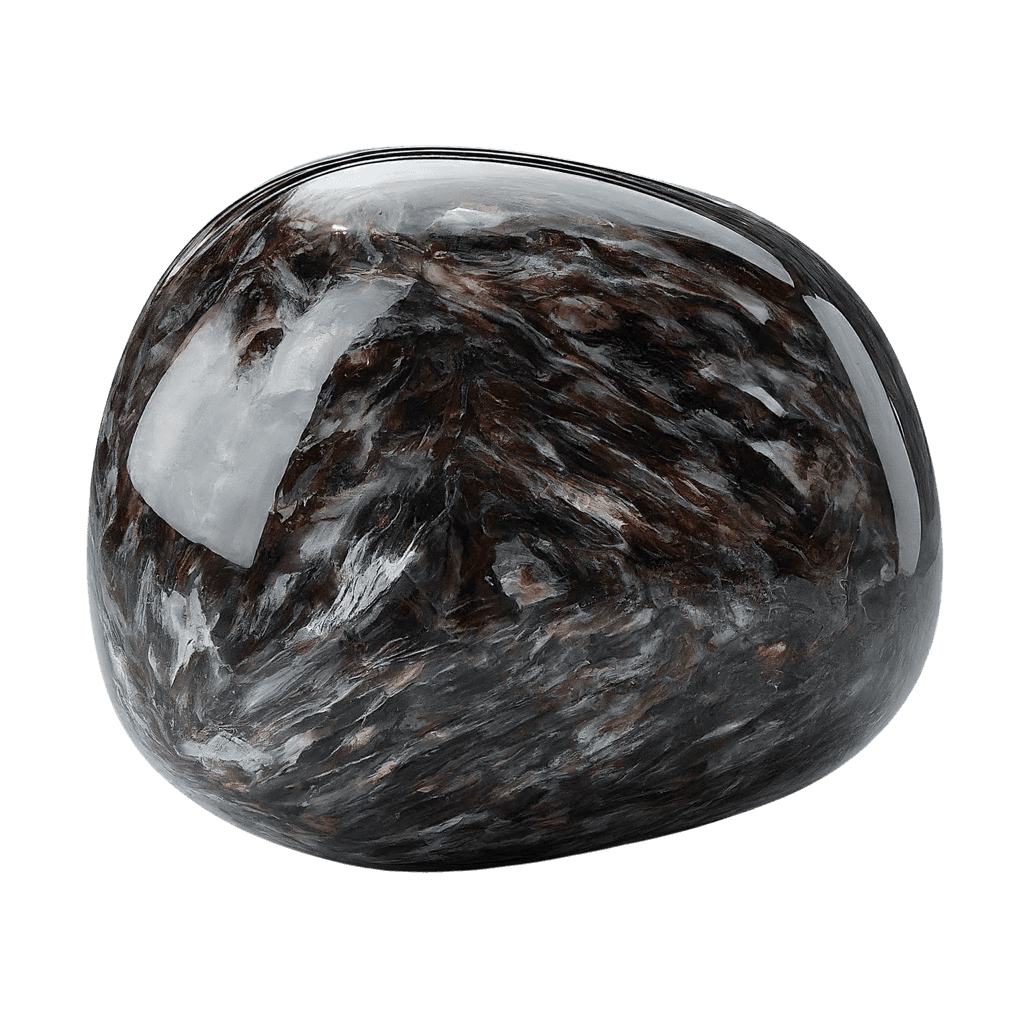
Astrophyllite is a bronze crystal used in modern crystal healing for transformation, shadow work, and meditation. It measures 3.5 on the Mohs hardness scale and typically costs $18 to $60 for a tumbled stone. In the chakra tradition, Astrophyllite is associated with the Third Eye and Crown chakras.
Worth knowing: Its name welds the Greek words for star and leaf, and the description is literal: the metallic blades cleave like mica leaves yet arrange themselves into starbursts.
“A bronze-gold star-burst mica revealing patterns of self and shedding old skins.”
- Chakra
- Third Eye (Ajna), Crown (Sahasrara)
- Zodiac
- Scorpio ♏, Cancer ♋
- Element
- Earth 🌍
- Planet
- Pluto ♇
- Hardness
- 3.5 / 10 (Mohs)
- Colors
- Bronze, Gold, Black matrix
- Origin
- Russia (Kola Peninsula), Canada, Greenland
- Availability
- Not sold here yet
Care + Safety
Astrophyllite at a glance
- Water: avoid, may damage or leach
- Sun: tolerates sunlight charging
- Mohs hardness: 3.5 (display + meditation only)
What is Astrophyllite?
Astrophyllite spreads bronze-gold blades in radiating stars through dark host rock, a brittle titanium-bearing layer silicate of about 3.5 hardness, with the showiest sunbursts coming from Russia's Kola Peninsula.
Astrophyllite measures 3.5 on the Mohs scale and shows bronze, gold, or black matrix coloring. Change is its department: a threshold stone by family, kept close for transformation, shadow work, and meditation and for the crossings they imply.
The stone connects primarily to the Third Eye (Ajna) and Crown (Sahasrara) chakras, carrying Earth energy. Commercial material comes from Russia (Kola Peninsula), Canada, and Greenland, and provenance shows: pieces from different deposits vary in saturation, veining, and clarity, which is why no two specimens of Astrophyllite read quite alike.
Astrophyllite forms radiating bronze-gold star bursts inside dark host rock, the very name means star-leaf. Hold this stone and notice how it draws attention to repeating patterns in your own life. The classical sources describe Astrophyllite as a stone of insight into one's own design, useful for shadow work without harshness.
Also catalogued as Star Leaf Stone and Bronze Star Mica, Astrophyllite earns its place in a working collection by being usable: start with transformation, the job it is best known for, and let the stone widen its own brief from there.
History and Mythology
There is no credible ancient chapter to tell about Astrophyllite. The species was described by modern science, and its associations with transformation were assigned by contemporary practitioners reading its color, structure, and feel. What the stone lacks in legend it makes up in geology, which asks for no embellishment; deposits worked today lie in Russia (Kola Peninsula), Canada, and Greenland.
Astrologically minded practitioners file Astrophyllite under Scorpio and Cancer and give Pluto ♇ the rulership. The pairing is a 20th century convention rather than an ancient decree, and it is read as favoring transformation work.
Hold the two timescales side by side, centuries of human use at most against epochs of formation behind every Mohs 3.5 specimen of Astrophyllite; the deep time is the one part no marketing can inflate.
Astrophyllite Meaning and Metaphysical Properties
What the Hand Learns First
In the hand Astrophyllite reads as gentle before you know anything else about it. Mohs 3.5 hardness means it gives up its coolness quickly, and the bronze polish carries a waxy, candle-like glow. Mind what surfaces unbidden in the first quiet minute; threshold stones have a way of bringing up exactly what is half-finished, and the visit means something.
Primary Properties
Astrophyllite is counted among the threshold stones: transformation, shadow work, meditation, and spiritual awakening. This family attends endings and beginnings, the habit being set down, the season being stepped into. The stone marks the process; the crossing is yours to make.
How Crystal Energy Works
Astrophyllite is filed under the Third Eye in the traditional system, the still observatory at the brow, and transformation is what practitioners ask of it there. Brow work stays brief and unforced, eyes soft, with transformation, shadow work, and meditation allowed to arrive instead of being called. Melody's entries for the transformation stones circle one verb, release: what is carried out of the system so that something new can be carried in.
Amplification Through Intention
The Earth designation means Astrophyllite favors repetition: daily handling, a fixed home on the shelf, the transformation intention restated in plain words. That steadiness is the whole method.
Healing Benefits
Emotional Support
Heavy seasons are Astrophyllite territory: transformation, shadow work, and meditation. Tradition casts it as company for grief, endings, and the honest inventory, not a stone that cheers you up so much as one that stays in the room. Tradition, not treatment: transformation work with a stone sits beside professional support, never in place of it.
Spiritual Connection
Threshold rituals are where Astrophyllite earns its spiritual keep: the page written and burned, the inventory taken at season's end, the goodbye said on purpose. Its presence marks a completion handled with care instead of left to trail off.
Physical Presence
Tradition reads Earth stones like Astrophyllite through the soles of the feet: stance, weight, the felt fact of standing somewhere while you work on transformation. Try standing barefoot with the stone in hand when the day goes abstract; the practice is awareness, not medicine.
Chakra Connection
Astrophyllite resonates most strongly with the Third Eye (Ajna), the energy center traditionally drawn in indigo and the traditional seat of this stone's transformation work. When this center runs clear, the classical markers are a quiet knowing, sharp inner sight, and perception that trusts itself; transformation, shadow work, and meditation are what Astrophyllite is most often asked to bring to it.
Keep sessions with Astrophyllite brief and unforced: stone at the brow, eyes closed, attention loose. The third eye responds to invitation rather than pressure, and that is the posture transformation asks for too.
Because Astrophyllite is also associated with the Crown (Sahasrara), it moves well in multi-stone layouts: one stone, two stations, worked on different days.
Zodiac and Astrological Connection
Astrophyllite appears under Scorpio ♏ (Oct 23 to Nov 21) and Cancer ♋ (Jun 21 to Jul 22) in the standard correspondence tables; if those signs are loud in your chart, expect the introduction to feel familiar.
None of this is exclusionary. If Astrophyllite keeps catching your eye, that interest counts for more than whether Scorpio appears anywhere in your chart.
The assigned ruler is Pluto ♇; in practice that means Astrophyllite comes out when that planet is prominent in the sky or in your chart, and transformation is the work it is handed.
How to Use Astrophyllite
These are the five ways of working with Astrophyllite I suggest most often. Begin wherever your attention goes first; the sequence matters far less than starting.
- 1
Meditation Hold
Hold Astrophyllite for the length of your sit and notice the moment it stops feeling like an object and starts feeling like part of the hand; for a Mohs 3.5 stone, that shift comes early.
- 2
Body Placement
The brow is the seat the charts give Astrophyllite: lie back, close the eyes, hold the focus loose. Brief and unforced is the whole rule for brow work, and no count improves it. In the old language, the aim of the station is transformation.
- 3
Sleep Companion
Astrophyllite can still earn the nightstand even though its brief is transformation rather than rest: setting the stone down as you set the day down marks the switch from doing to sleeping.
- 4
Carry With You
Keep Astrophyllite on you through the endings; when the old habit comes calling, a touch logs the refusal, and the stone becomes a running tally of the larger transformation.
- 5
Crystal Grid Anchor
For grid work, give Astrophyllite the anchor position and run Arfvedsonite and Nuummite on the outer points, all matched to a single transformation intention. Rebuild it when it goes stale; a transformation grid you have stopped seeing has stopped working.
How to Cleanse and Charge
Keeping Astrophyllite energetically clear is essential, a crystal that's holding too much absorbed energy becomes less effective, like a sponge that's full. For the full water-safe / sun-safe / salt-safe profile, the recommended cleansing cadence, and the hands-on storage instructions I give my clients, see the dedicated Astrophyllite care guide.
- 1
Sage
For a deeper reset, hold Astrophyllite in sage smoke and name out loud what the stone has been carrying; the naming is half the cleanse.
- 2
Sound
A minute inside strong, sustained tone, bowl, chime, even a steady hum, resets Astrophyllite without physical risk, which makes sound the safest deep cleanse for fragile stones.
- 3
Moonlight
Give Astrophyllite a night outdoors or at the glass under a bright moon; the tradition holds moonlight to be the universal reset, slow, cool, and risk-free.
- 4
Selenite
Keep a selenite dish where you empty your pockets and drop Astrophyllite there at day's end; the resting place does the cleansing while you sleep.
How often to cleanse
Give Astrophyllite a clearing at least every month, and sooner after hard weeks or heavy daily use. The stone will teach you its own signal in time; most people describe it as dullness, weight, or a sense the stone has gone quiet.
Charging after cleansing
Follow every cleansing with a charge: for Astrophyllite that means placing it in morning sunlight for 30 minutes. A cleared stone is neutral, a charged one is ready.
The Crystal Starter Library
A free guide from Crystal Cassandra: the twelve stones that cover almost everything, a one page care matrix for water, sun and salt, and how to build a first intention practice.
We respect your inbox. Unsubscribe anytime.
Crystal Pairings
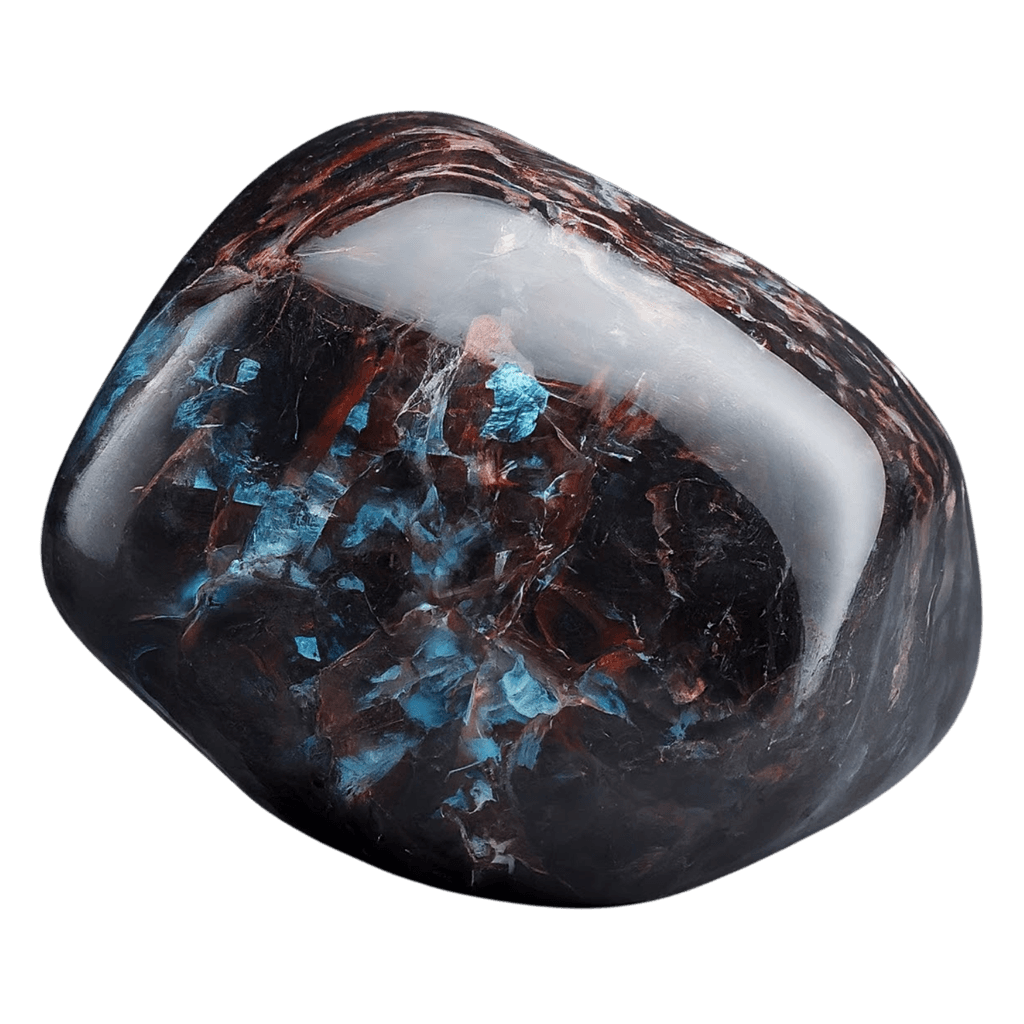
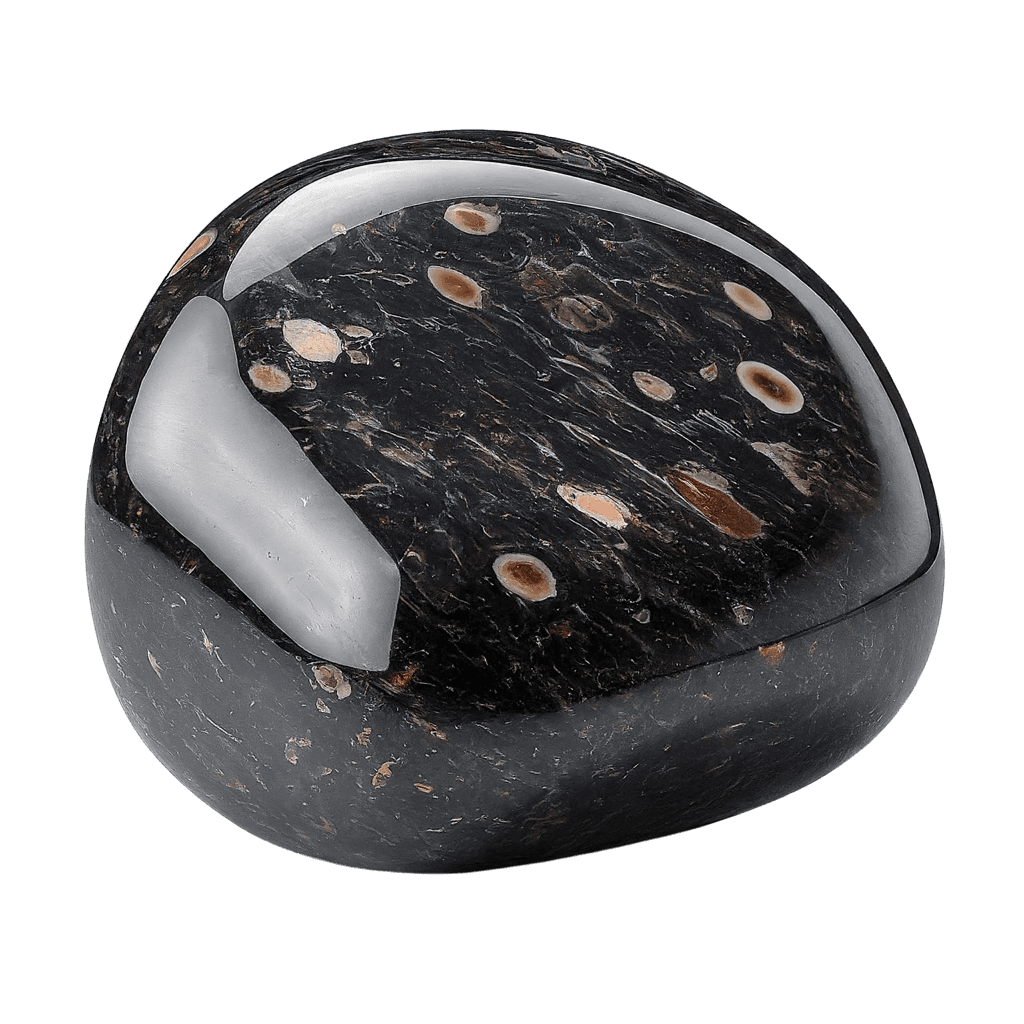
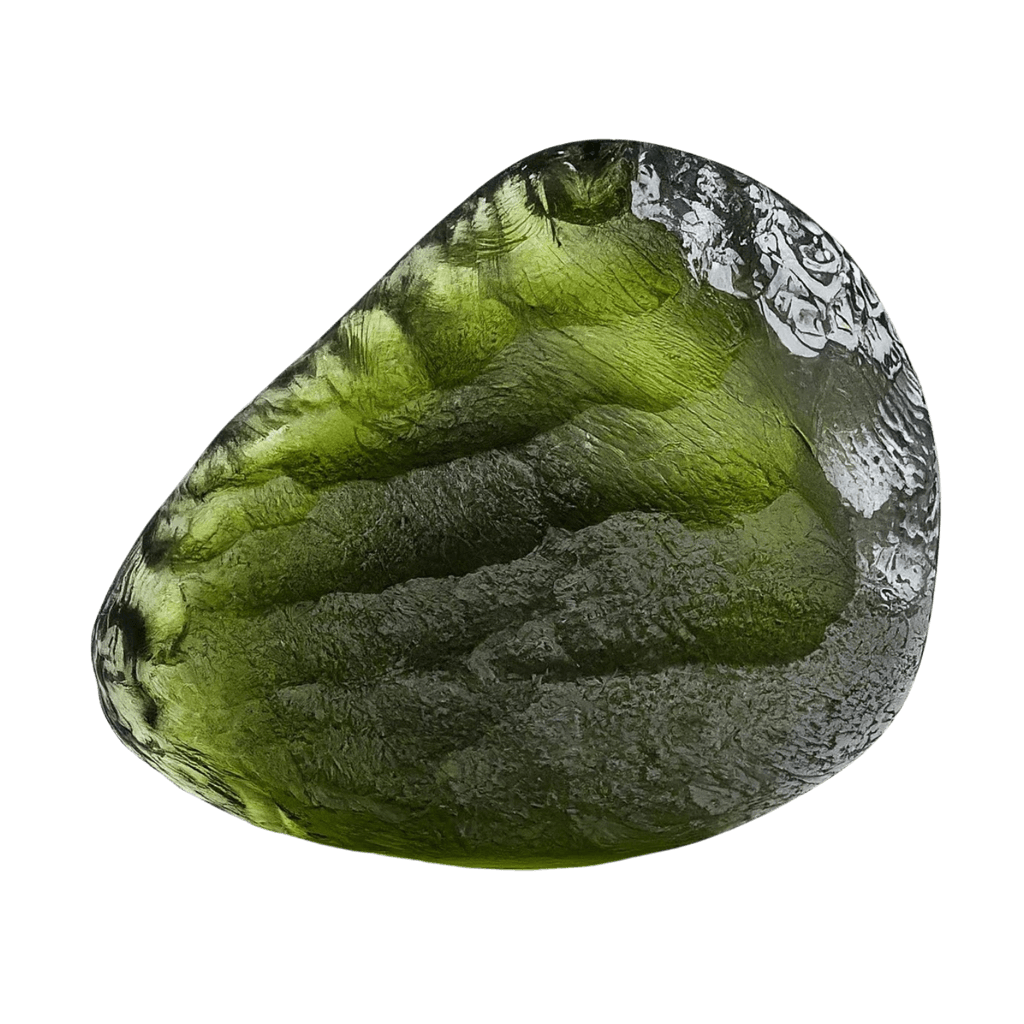
Astrophyllite pairs with stones that hold steady while it moves things; threshold work wants an anchor. Its traditional partners supply ground, heart, or light to the transformation process. Change the pairing as the season changes; that is part of the practice.
How to Spot Real vs Fake Astrophyllite
Imitations of Astrophyllite exist because demand does. A few hands-on checks separate genuine bronze material from glass, resin, and dye:
Temperature: at Mohs 3.5, genuine Astrophyllite warms in the hand noticeably faster than glass; an imitation in glass stays cold and slick well past the first minute.
Weight and density: resin fakes run light for their size, while genuine Astrophyllite at Mohs 3.5 carries honest mineral density; weigh it in the palm against any real tumbled stone you own.
Color and pattern: the real range is bronze, gold, or black matrix; treat neon saturation or flawless uniformity as a question for the seller, because nature rarely manages either.
Price reality: quality Astrophyllite runs roughly $18 to $60 for palm-sized pieces from reputable sellers; a price far below that range is usually answering a question you should have asked.
Trust your source: provenance beats any hands-on check; ask where the Astrophyllite was mined and whether the bronze material is treated, and expect straight answers rather than adjectives.
Sourcing
Buying Astrophyllite well
The CrystalStones.com crystal store is not open yet, so we do not sell Astrophyllite here. What we can give you is the part that matters most: how to tell a genuine piece from a treated or dyed one, and how to care for it once it is yours.
Frequently Asked Questions
What is Astrophyllite good for?
Astrophyllite is traditionally associated with transformation, shadow work, meditation, and spiritual awakening. Many people find it supportive for transformation and for working with the Third Eye and Crown chakras.
Can Astrophyllite go in water?
No. Astrophyllite should stay dry; cleanse it with Sage, Sound, and Moonlight instead, and keep every wet method off the table.
Can Astrophyllite be in the sun?
Sun is fine for Astrophyllite. A half hour of direct morning light both cleanses and charges it, and the bronze tones are stable enough to take it.
What chakra is Astrophyllite?
Astrophyllite is primarily associated with the Third Eye (Ajna) and Crown (Sahasrara) chakras. Brief brow placements are the convention: soft focus at the third eye while lying back, kept short by habit rather than by clock, which is the traditional handling of transformation.
What zodiac sign is Astrophyllite for?
Astrophyllite is traditionally connected to Scorpio and Cancer. That said, the zodiac correspondence is an invitation rather than a requirement; any chart can work with Astrophyllite, and attraction to the stone matters more than the calendar.
How do I cleanse Astrophyllite?
Stick to Sage, Sound, and Moonlight for Astrophyllite; those are the methods its care profile recommends. Notice that the whole list runs dry; for this stone's chemistry, that is a feature rather than a limitation.
Is Astrophyllite real or fake, how can I tell?
Genuine Astrophyllite warms quickly in the hand at Mohs 3.5, while glass imitations stay cold longer and feel slick rather than satiny. Expect natural variation in its bronze coloring and a price near $18 to $60 for tumbled pieces; uniform color at a bargain price is the classic warning sign.
What’s Next?
A few thoughtful next steps if Astrophyllite is calling to you.
Explore More Tools
Crystal Quiz
Discover which crystal matches your energy right now.
Open →Chakra Test
Find which chakras need attention and the crystals to balance them.
Open →Crystal Cleansing Guide
Learn how to safely cleanse and charge your crystals.
Open →Crystals by Intention
Find the perfect crystal for what you need right now.
Open →