Quick Answer
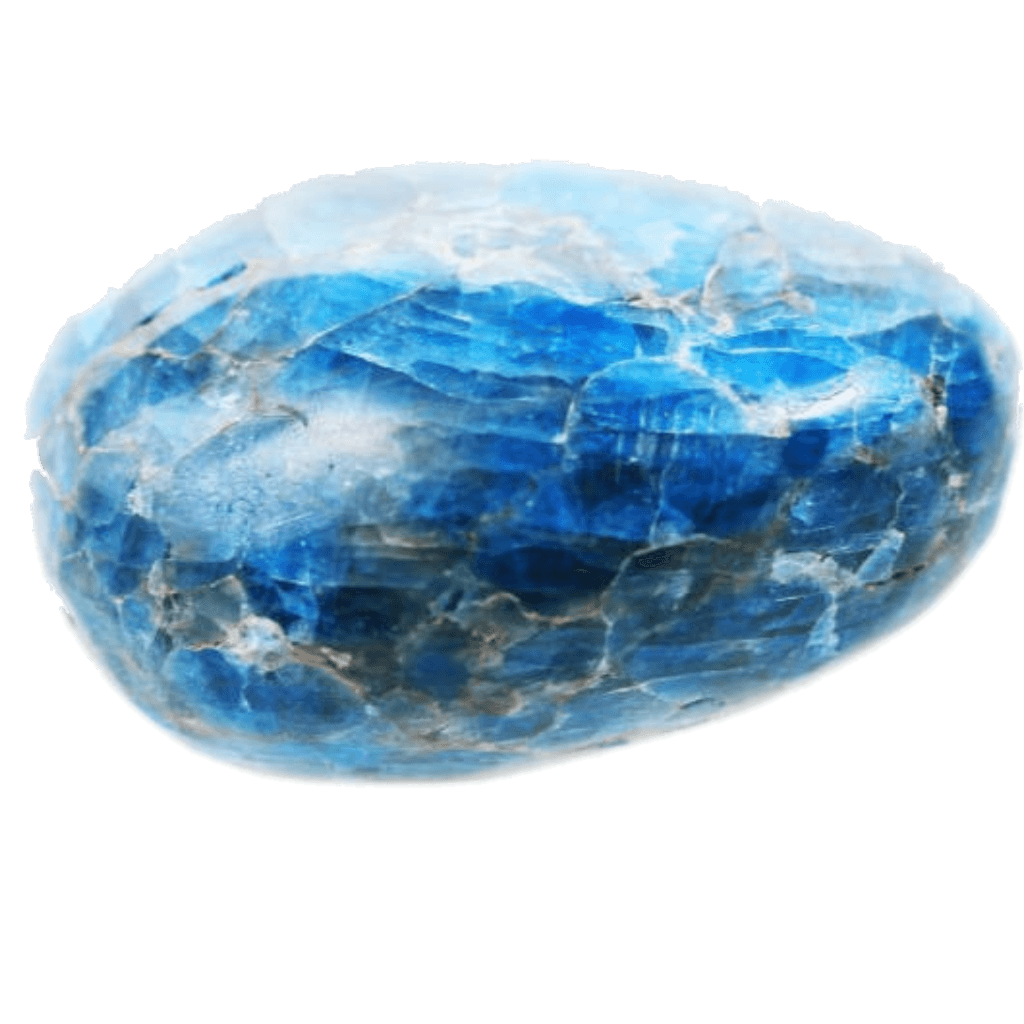
Blue Apatite is a blue crystal used in modern crystal healing for inspiration, communication, and clarity. It measures 5 on the Mohs hardness scale and typically costs $8 to $32 for a tumbled stone. In the chakra tradition, Blue Apatite is associated with the Throat and Third Eye chakras.
Worth knowing: When Friedrich Mohs assembled his hardness scale in 1812 he made apatite the defining mineral for grade 5, so every scratch kit and geology classroom on earth quietly references this stone.
“The vivid blue-green form of apatite, used for inspiration, communication, and clear goals.”
- Chakra
- Throat (Vishuddha), Third Eye (Ajna)
- Zodiac
- Gemini ♊, Aquarius ♒
- Element
- Air 💨, Water 💧
- Planet
- Mercury ☿
- Hardness
- 5 / 10 (Mohs)
- Colors
- Blue, Teal, Blue-green
- Origin
- Brazil, Madagascar, Mexico
- Availability
- Not sold here yet
Care + Safety
Blue Apatite at a glance
- Water: avoid, may damage or leach
- Sun: fades in prolonged direct sun
- Mohs hardness: 5 (occasional wear only)
What is Blue Apatite?
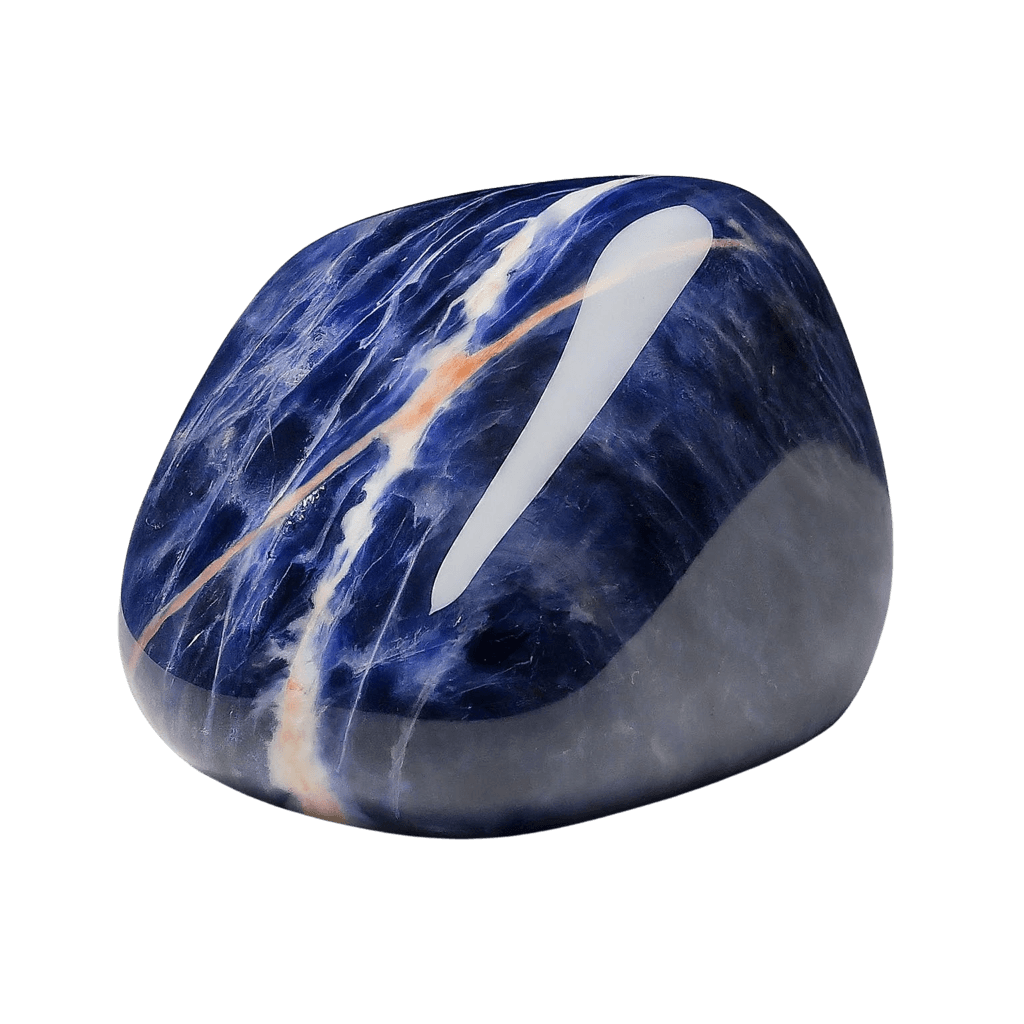
Blue apatite is the saturated teal to electric-blue face of the phosphate mineral apatite, mined in Brazil and Madagascar. Glassy and a little brittle on the wheel, it cuts soft and is best kept out of ring settings.
Blue Apatite measures 5 on the Mohs scale and shows blue, teal, or blue-green coloring. As a working stone it runs warm: an activator by family, asked for inspiration, communication, and clarity at the moments that require a push.
The stone connects primarily to the Throat (Vishuddha) and Third Eye (Ajna) chakras, carrying Air and Water energy. Commercial material comes from Brazil, Madagascar, and Mexico, and provenance shows: pieces from different deposits vary in saturation, veining, and clarity, which is why no two specimens of Blue Apatite read quite alike.
Blue Apatite is the teal-to-deep-blue variety of apatite, a calcium phosphate colored by trace elements. Take it out first thing, before the day has closed in, and let the teal blue do what a window thrown open does. In the crystal-healing tradition Blue Apatite is used for honest self-expression, inspiration, and setting clear intentions, and many people pair it with study or creative work. It is fairly soft and brittle, so I treat it gently, with only a brief rinse and no long exposure to sun.
Also catalogued as Teal Apatite and Blue Calcium Phosphate, this is a stone that rewards regular handling more than display. Give Blue Apatite a week of inspiration duty in the pocket before deciding what it is for.
History and Mythology
Blue Apatite entered the record through mineralogy rather than mythology: the species was identified and named in the modern era, and its healing use begins with the 20th and 21st century crystal literature rather than any ancient source. That recency is worth stating plainly, because honest provenance is rarer than it should be in this field. The material itself is sourced today from Brazil, Madagascar, and Mexico.
Astrologically minded practitioners file Blue Apatite under Gemini and Aquarius and give Mercury ☿ the rulership. The pairing is a 20th century convention rather than an ancient decree, and it is read as favoring inspiration work.
However young or old the human story, the stone outruns it: Blue Apatite formed over deep time, and the Mohs 5 piece on your shelf is the newest chapter of a very old book.
Blue Apatite Meaning and Metaphysical Properties
What the Hand Learns First
Pick up Blue Apatite and warmth is the first report: at Mohs 5 it is a mid-soft mineral that takes body heat within a minute, and its blue surface polishes to a satin sheen rather than a hard glitter. Check in with your spine after a minute of holding. What you find is yours to read; this family is simply worked from that end of the body rather than from the heart.
Primary Properties
The properties filed under Blue Apatite all lean forward: inspiration, communication, clarity, and manifestation. Activating stones belong to thresholds, and the old instruction is simple, touch the stone before the door opens, not after. Read each property as a cue card rather than a contract.
How Crystal Energy Works
Blue Apatite is read through the Throat center, the channel between inner knowing and spoken word, and the bridge is asked here to carry inspiration. Throat practice is brief and honest: one true sentence about inspiration, communication, and clarity, said aloud with the stone in hand. Both of the modern handbooks, Hall's and Melody's, station the activating stones at the lower three centers and describe them in the language of will and creative fire, never luck.
Amplification Through Intention
As an Air-element stone, Blue Apatite is worked where thinking happens, the desk, the journal, the conversation where inspiration is on the line. Keep it in view rather than in a drawer, and let each glance quietly reset the inspiration intention.
Healing Benefits
Emotional Support
Blue Apatite meets emotion at the confidence layer: inspiration, communication, and clarity. It is traditionally handled before the moments that ask you to take up space, and the small ritual of pocketing it steadies more than you might expect. These are traditional inspiration associations rather than medical claims; for anything heavy or persistent, a qualified professional belongs in the picture alongside any stone.
Spiritual Connection
Dedication is the spiritual work Blue Apatite is built for: tradition has you hold it while speaking an intention aloud, the minor ceremony that converts wanting into committing. Beginnings are its season, new projects, new chapters, new moons.
Physical Presence
Physically, Blue Apatite suits the desk-bound body: a cool object for the hand during screen hours, a cue to unclench the jaw and drop the shoulders on the way to inspiration. Awareness, not treatment, is the honest claim.
Chakra Connection
Blue Apatite resonates most strongly with the Throat (Vishuddha), the energy center traditionally drawn in blue and the traditional seat of this stone's inspiration work. When this center runs clear, the classical markers are words that match what you mean and a voice you recognize as your own; inspiration, communication, and clarity are what Blue Apatite is most often asked to bring to it.
Lying down, settle Blue Apatite at the throat with the jaw soft, counting nothing; that is the traditional throat station, and the session is aimed at inspiration.
Blue Apatite also keeps a working line to the Third Eye (Ajna), which widens its range in layouts; let the primary placement lead, and add the second position once the first feels familiar.
Zodiac and Astrological Connection
Astrological tradition links Blue Apatite with Gemini ♊ (May 21 to Jun 20) and Aquarius ♒ (Jan 20 to Feb 18), and practitioners often suggest the stone meets Gemini placements with the least friction.
Correspondence is a suggestion, not a bouncer; plenty of devoted Blue Apatite keepers have no Gemini in their chart at all, and being drawn to the stone is the credential that matters.
The assigned ruler is Mercury ☿; in practice that means Blue Apatite comes out when that planet is prominent in the sky or in your chart, and inspiration is the work it is handed.
How to Use Blue Apatite
Here are five ways I recommend working with Blue Apatite. Start with whichever feels most natural, there's no wrong entry point.
- 1
Meditation Hold
Take up Blue Apatite as you settle in; at Mohs 5 it takes on your warmth within a minute or two, and that slow merge is a useful anchor whenever the mind wanders.
- 2
Body Placement
Throat-center work keeps Blue Apatite close by while the jaw stays soft. Lie back, make no attempt to time the sit, and notice how long the stone keeps its coolness there before your warmth reaches it. The tradition ties this station to inspiration.
- 3
Sleep Companion
At night, park Blue Apatite on the nightstand rather than working it; its job is the day's inspiration, and ending the day cleanly is how tomorrow's session starts well.
- 4
Carry With You
Take Blue Apatite along to the thresholds, the interview, the first day, the opening night, and give it one deliberate touch at the door; the gesture cues the stance that inspiration takes in a body.
- 5
Crystal Grid Anchor
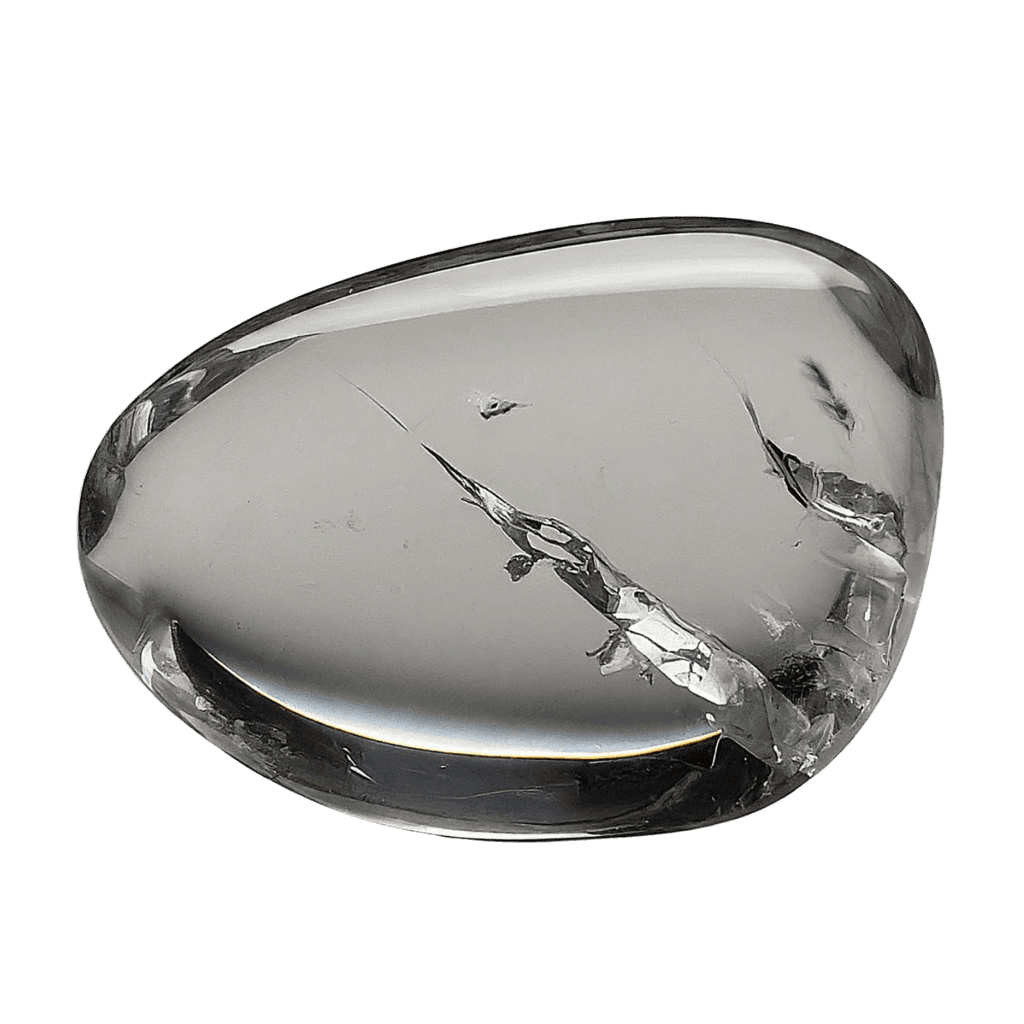
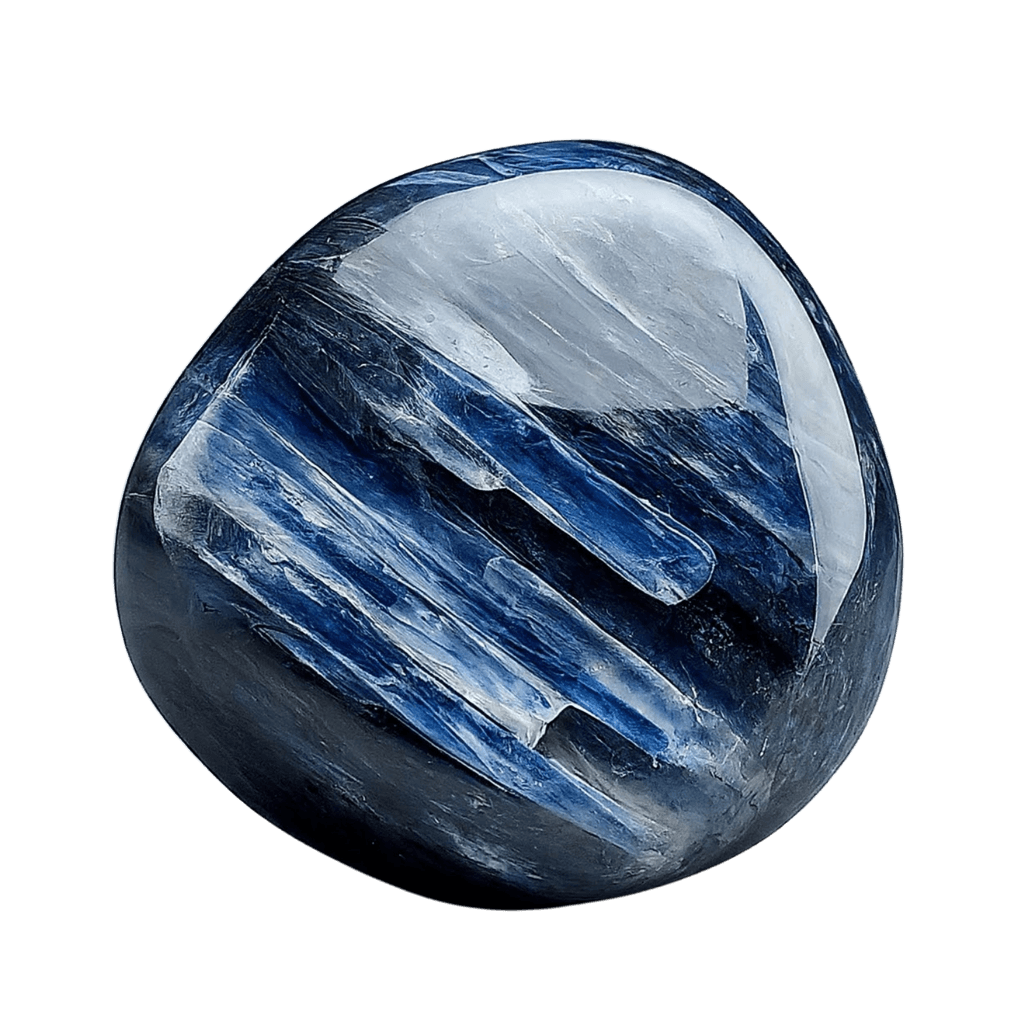
For grid work, give Blue Apatite the anchor position and run Clear Quartz and Kyanite Blue on the outer points, all matched to a single inspiration intention. Rebuild it when it goes stale; a inspiration grid you have stopped seeing has stopped working.
How to Cleanse and Charge
A worked stone needs clearing, and Blue Apatite is no exception; practitioners describe an uncleansed crystal as muffled, present but quieter than it should be. For the full safety profile and the cadence I recommend, see the dedicated Blue Apatite care guide.
- 1
Moonlight
Give Blue Apatite a night outdoors or at the glass under a bright moon; the tradition holds moonlight to be the universal reset, slow, cool, and risk-free.
- 2
Selenite
Overnight on selenite is the lowest-maintenance cleanse Blue Apatite can get: set it down at bedtime, pick it up cleared in the morning.
- 3
Sage
Pass Blue Apatite through the smoke of white sage or rosemary for about thirty seconds, turning it so the smoke wraps every face, while you hold a clear intention of release.
- 4
Sound
Sound-cleanse Blue Apatite by striking a bowl or bell, letting each tone fade completely before the next; the vibration does the clearing, and no contact is needed.
How often to cleanse
Give Blue Apatite a clearing at least every month, and sooner after hard weeks or heavy daily use. The stone will teach you its own signal in time; most people describe it as dullness, weight, or a sense the stone has gone quiet.
Charging after cleansing
Follow every cleansing with a charge: for Blue Apatite that means setting it on a selenite plate overnight or bathing it in full moonlight. A cleared stone is neutral, a charged one is ready.
The Crystal Starter Library
A free guide from Crystal Cassandra: the twelve stones that cover almost everything, a one page care matrix for water, sun and salt, and how to build a first intention practice.
We respect your inbox. Unsubscribe anytime.
Crystal Pairings
Pair Blue Apatite for ignition and steering both: an activator needs a grounding partner or the spark scatters. Its traditional companions act as governor and amplifier in turn. Run a new pair on one small inspiration task first and watch what your focus does.
How to Spot Real vs Fake Blue Apatite
Imitations of Blue Apatite exist because demand does. A few hands-on checks separate genuine blue material from glass, resin, and dye:
Temperature: at Mohs 5, genuine Blue Apatite warms in the hand noticeably faster than glass; an imitation in glass stays cold and slick well past the first minute.
Weight: real Blue Apatite should feel like stone rather than plastic pretending; if a palm-sized piece feels nearly weightless, walk away from it.
Color and pattern: the real range is blue, teal, or blue-green; treat neon saturation or flawless uniformity as a question for the seller, because nature rarely manages either.
Price: expect $8 to $32 for a decent tumbled or palm piece of Blue Apatite; dramatic discounts mean dye, resin, or mislabeling more often than they mean luck.
Trust your source: provenance beats any hands-on check; ask where the Blue Apatite was mined and whether the blue material is treated, and expect straight answers rather than adjectives.
Sourcing
Buying Blue Apatite well
The CrystalStones.com crystal store is not open yet, so we do not sell Blue Apatite here. What we can give you is the part that matters most: how to tell a genuine piece from a treated or dyed one, and how to care for it once it is yours.
Frequently Asked Questions
What is Blue Apatite good for?
Blue Apatite is traditionally associated with inspiration, communication, clarity, and manifestation. Many people find it supportive for inspiration and for working with the Throat and Third Eye chakras.
Can Blue Apatite go in water?
Avoid it. Water can damage Blue Apatite, so stay with the dry methods its care profile lists, Moonlight, Selenite, and Sage, which cover everything this stone needs. Soft phosphate (Mohs 5), brittle. Brief rinse only; avoid soaking, salt, and prolonged sun. Dry-cleanse preferred.
Can Blue Apatite be in the sun?
Keep it brief. Prolonged direct sun can fade the blue coloring of Blue Apatite, so a few morning minutes are fine but moonlight is the safer charging method.
What chakra is Blue Apatite?
Blue Apatite is primarily associated with the Throat (Vishuddha) and Third Eye (Ajna) chakras. Either of two stations works: the throat in placement practice, or a short chain that keeps it there all day, each serving its inspiration role.
What zodiac sign is Blue Apatite for?
Blue Apatite is traditionally connected to Gemini and Aquarius. If your signs differ, work with Blue Apatite anyway; resonance in the hand outranks resonance on paper in every practical tradition.
How do I cleanse Blue Apatite?
The best methods for Blue Apatite are Moonlight, Selenite, and Sage. Soft phosphate (Mohs 5), brittle. Brief rinse only; avoid soaking, salt, and prolonged sun. Dry-cleanse preferred.
Is Blue Apatite real or fake, how can I tell?
Genuine Blue Apatite warms quickly in the hand at Mohs 5, while glass imitations stay cold longer and feel slick rather than satiny. Expect natural variation in its blue coloring and a price near $8 to $32 for tumbled pieces; uniform color at a bargain price is the classic warning sign.
What’s Next?
A few thoughtful next steps if Blue Apatite is calling to you.
Explore More Tools
Crystal Quiz
Discover which crystal matches your energy right now.
Open →Chakra Test
Find which chakras need attention and the crystals to balance them.
Open →Crystal Cleansing Guide
Learn how to safely cleanse and charge your crystals.
Open →Crystals by Intention
Find the perfect crystal for what you need right now.
Open →