Quick Answer
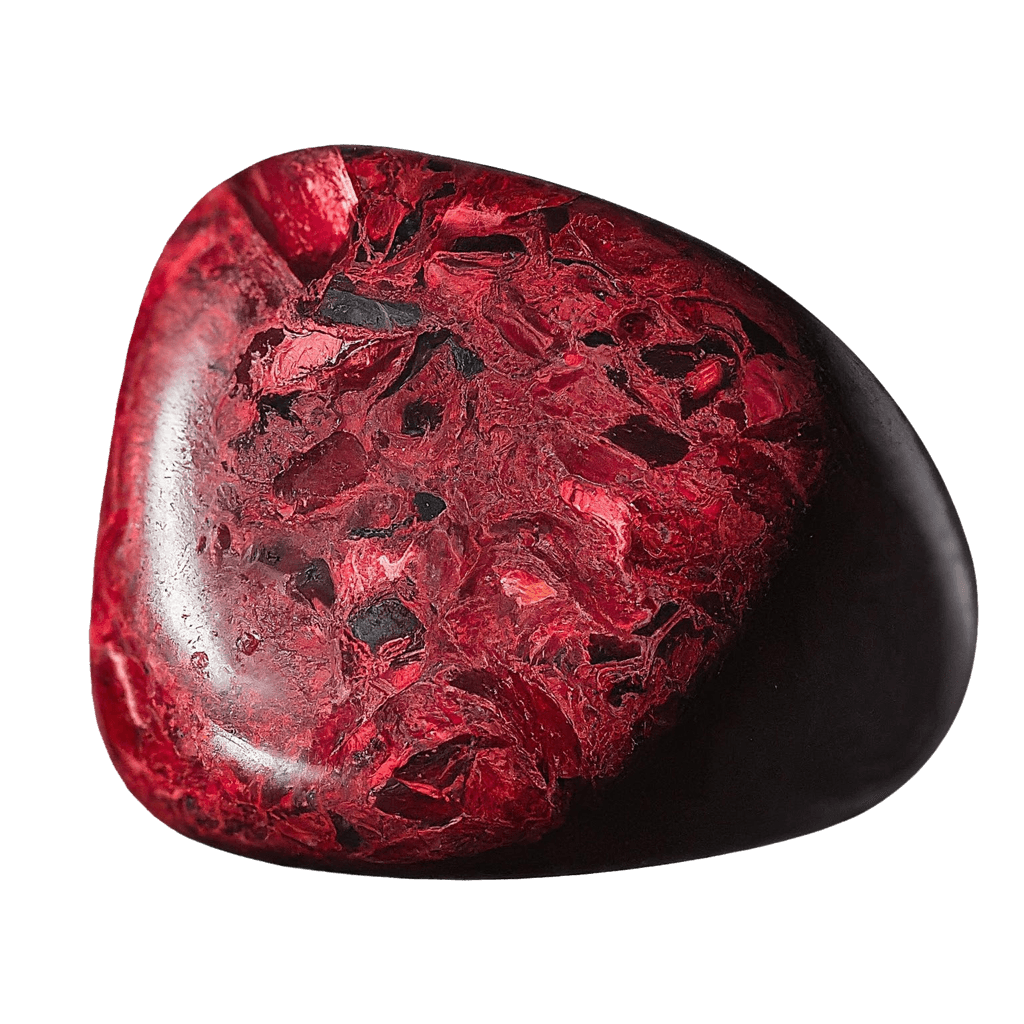
Cinnabar is a crimson crystal used in modern crystal healing for transformation, manifestation, and spiritual awakening. It measures 2.5 on the Mohs hardness scale. In the chakra tradition, Cinnabar is associated with the Root and Sacral chakras.
Worth knowing: The Almaden mine in Spain yielded mercury from cinnabar for over two thousand years, by some estimates a third of all mercury ever produced, and joined the UNESCO World Heritage list in 2012.
“A deep crimson mercury sulfide, alchemical, powerful, and HIGHLY TOXIC. Educational reference only.”
- Chakra
- Root (Muladhara), Sacral (Svadhisthana)
- Zodiac
- Scorpio ♏
- Element
- Fire 🔥
- Planet
- Pluto ♇
- Hardness
- 2.5 / 10 (Mohs)
- Colors
- Crimson, Deep red, Scarlet
- Origin
- Spain, China, USA
- Availability
- Reference only, not sold
Care + Safety
Cinnabar at a glance
- Water: avoid, may damage or leach
- Sun: fades in prolonged direct sun
- Mohs hardness: 2.5 (display + meditation only)
What is Cinnabar?
Cinnabar is mercury sulfide, the principal ore of mercury, crystallizing in the trigonal system with a scarlet streak and a density near 8.1, remarkably heavy for a nonmetallic-looking stone. Ground cinnabar served for millennia as the pigment vermilion, coloring Roman frescoes, Chinese carved lacquerware, and medieval manuscripts.
Cinnabar measures 2.5 on the Mohs scale and shows crimson, deep red, or scarlet coloring. Keepers count it among the threshold stones, the ones that accompany transformation, manifestation, and spiritual awakening through the seasons that remake a life.
The stone connects primarily to the Root (Muladhara) and Sacral (Svadhisthana) chakras, carrying Fire energy. Today the material is drawn from Spain, China, and USA. Hold pieces from two different sources side by side and the differences in the crimson material, tone, translucency, pattern, become obvious fast.
Cinnabar (mercury sulfide, HgS) is one of the most storied stones in alchemical and Daoist tradition, the very source of elemental mercury, treated by classical practitioners as the marriage of fire and water. Its color is a deep arterial crimson. CrystalStones.com lists Cinnabar as an educational reference, not a wearable or working stone: it contains mercury and is genuinely dangerous in any form that involves dust, water, heat, or skin contact. Read about it; do not handle it.
Also catalogued as Dragon's Blood, Mercury Ore, and Stone of the Alchemist, Cinnabar earns its place in a working collection by being usable: start with transformation, the job it is best known for, and let the stone widen its own brief from there.
History and Mythology
Cinnabar belongs to the small set of stones with a genuinely old paper trail: it appears in lapidary and trade records written long before modern mineralogy existed. People knew it the way working hands know materials, by color, by weight, by how it cut and polished. Today's supply is drawn mainly from Spain, China, and USA, the recent end of a very long chain of human attention.
The correspondence tables used by today's practitioners assign Cinnabar to Scorpio under the rulership of Pluto ♇. In that system, work centered on transformation is said to land best while those signs are in season.
Whatever the age of the name, the geology is patient: every piece of Cinnabar took shape over geological timescales, arriving at its Mohs 2.5 hardness through slow heat, pressure, and chemistry long before any hand reached for it.
Cinnabar Meaning and Metaphysical Properties
How It Feels in the Hand
At Mohs 2.5, Cinnabar barely argues with the world. Expect a feather-light coolness that vanishes the moment skin touches the crimson surface, and handle it like the delicate thing it is. Notice which memory arrives first while you hold it; the threshold stones tend to surface whatever is mid-release, and that arrival is information.
Primary Properties
Every property attached to Cinnabar concerns passage: transformation, manifestation, and spiritual awakening. The threshold family accompanies endings into beginnings, the put-down habit, the picked-up season, and it does so as a witness rather than an engine. The stone keeps the record; the step is still yours.
How Crystal Energy Works
In traditional crystal healing Cinnabar is read through the Root center, the body's claim to ground, and transformation is the quality it is most often asked to bring there. Root work is low and slow, seated practice, feet flat, with transformation, manifestation, and spiritual awakening as the standing assignment. Melody's entries for the transformation stones circle one verb, release: what is carried out of the system so that something new can be carried in.
Amplification Through Intention
Fire-element stones like Cinnabar are read as accelerants for an intention such as transformation. The tradition says to give them one clear assignment and to revisit it often rather than setting and forgetting.
Healing Benefits
Emotional Support
Emotionally, Cinnabar walks the harder passages: transformation, manifestation, and spiritual awakening. Its traditional role is witness rather than fixer, a presence for grief, for endings, for the clear-eyed accounting, the kind of company that does not leave early. Tradition, not treatment: transformation work with a stone sits beside professional support, never in place of it.
Spiritual Connection
Cinnabar keeps company with the threshold rituals: the written-and-released page, the season-end inventory, the deliberate goodbye. In spiritual work it marks that something is being completed with attention rather than abandonment.
Physical Presence
On the physical level, tradition reads Fire stones like Cinnabar through warmth and appetite: morning energy, circulation of effort, the body's readiness to move toward transformation. Carry it on active days and let it cue the stretch, the walk, the standing up from the desk; the awareness is the genuine benefit, and it is never a substitute for medical care.
Chakra Connection
Cinnabar resonates most strongly with the Root (Muladhara), the energy center traditionally drawn in red and the traditional seat of this stone's transformation work. When this center runs clear, the classical markers are steadiness, physical security, and a settled sense of ground; transformation, manifestation, and spiritual awakening are what Cinnabar is most often asked to bring to it.
Work it seated and slow; put Cinnabar on the floor where your gaze lands, feet flat, and breathe down toward it. Root work is the least dramatic chakra work there is, which is exactly why transformation grows well in it.
Because Cinnabar is also associated with the Sacral (Svadhisthana), it moves well in multi-stone layouts: one stone, two stations, worked on different days.
Zodiac and Astrological Connection
Astrological tradition links Cinnabar with Scorpio ♏ (Oct 23 to Nov 21), and practitioners often suggest the stone meets Scorpio placements with the least friction.
The gate, though, stands open: you do not need a Scorpio Sun to work with Cinnabar, and a genuine pull toward the stone outweighs its paper assignments.
In the planetary layer of the system, Pluto ♇ holds the rulership, and that planet's prominent transits are the traditional windows for deeper transformation work with Cinnabar.
How to Use Cinnabar
Five practices suit Cinnabar especially well. Pick the one that fits the day you are actually having rather than the routine you think you should have.
- 1
Meditation Hold
Hold Cinnabar with a light grip while you sit. At Mohs 2.5 it reaches body temperature almost instantly, so let the boundary between hand and stone blur and keep your attention on the breath.
- 2
Body Placement
Hip level when reclining, floor level when seated, that is where the chakra charts kept a Root stone like Cinnabar. Nothing here is meant to be strenuous. Set the stone down, stay a while, and see where your attention keeps going back to. The transformation heading belongs to the tradition, and it stays a tradition rather than a promise.
- 3
Sleep Companion
Cinnabar can still earn the nightstand even though its brief is transformation rather than rest: setting the stone down as you set the day down marks the switch from doing to sleeping.
- 4
Carry With You
Through a season that is closing, Cinnabar makes a good pocket companion: each time the old pattern knocks and you touch the stone instead, another small entry gets added to the transformation ledger.
- 5
Crystal Grid Anchor
Set Cinnabar at the center of a grid built for transformation and ring it with complementary stones at the points. Speak the intention once as you place each stone; a grid is a sentence written in minerals, and saying the transformation aloud is the punctuation.
How to Cleanse and Charge
A worked stone needs clearing, and Cinnabar is no exception; practitioners describe an uncleansed crystal as muffled, present but quieter than it should be. For the full safety profile and the cadence I recommend, see the dedicated Cinnabar care guide.
- 1
Sound
Hold Cinnabar near a singing bowl, bell, or tuning fork and let a full minute of tone wash over it; sound reaches stones that water, salt, and sun cannot safely touch.
How often to cleanse
I recommend cleansing Cinnabar at least once a month, more frequently if you're using it daily or during emotionally intense periods. You'll also learn to feel when a stone needs cleansing; it may feel heavier, duller, or simply “off.”
Charging after cleansing
After cleansing, charge Cinnabar by setting it on a selenite plate overnight or bathing it in full moonlight. This restores its energetic vitality.
The Crystal Starter Library
A free guide from Crystal Cassandra: the twelve stones that cover almost everything, a one page care matrix for water, sun and salt, and how to build a first intention practice.
We respect your inbox. Unsubscribe anytime.
How to Spot Real vs Fake Cinnabar
Imitations of Cinnabar exist because demand does. A few hands-on checks separate genuine crimson material from glass, resin, and dye:
Touch and surface: real Cinnabar is genuinely soft, Mohs 2.5, so tumbled pieces show gentle rounding and tiny natural imperfections, while molded resin looks suspiciously flawless and feels faintly plastic under a fingernail.
Weight and density: resin fakes run light for their size, while genuine Cinnabar at Mohs 2.5 carries honest mineral density; weigh it in the palm against any real tumbled stone you own.
Color and pattern: the real range is crimson, deep red, or scarlet; treat neon saturation or flawless uniformity as a question for the seller, because nature rarely manages either.
Reference only: because Cinnabar is toxic, any genuine specimen belongs in a documented collection from a reputable mineral dealer rather than a healing kit; confirm the identification and locality, and follow safe-handling guidance instead of buying it to work with.
Frequently Asked Questions
What is Cinnabar good for?
Cinnabar is traditionally associated with transformation, manifestation, and spiritual awakening. Many people find it supportive for transformation and for working with the Root and Sacral chakras.
Can Cinnabar go in water?
No. Cinnabar should stay dry; cleanse it with Sound instead, and keep every wet method off the table.
Can Cinnabar be in the sun?
Not for long. Cinnabar holds delicate crimson color that extended sun exposure can bleach; charge it overnight in moonlight or on selenite instead.
What chakra is Cinnabar?
Cinnabar is primarily associated with the Root (Muladhara) and Sacral (Svadhisthana) chakras. Traditional use keeps it near the ground: at the hips, or set between the feet during seated practice, the root station for transformation.
What zodiac sign is Cinnabar for?
Cinnabar is traditionally connected to Scorpio. Astrological correspondence is one tradition among several, and nothing about your chart disqualifies you; people without a Scorpio placement work with Cinnabar all the time.
How do I cleanse Cinnabar?
Stick to Sound for Cinnabar; those are the methods its care profile recommends. Dry methods make up the entire list on purpose, since this stone's chemistry asks to be kept away from moisture.
Is Cinnabar real or fake, how can I tell?
Genuine Cinnabar is genuinely soft at Mohs 2.5, so real pieces show gentle wear and tiny imperfections while molded resin looks suspiciously perfect. Expect natural variation across its crimson range and honest inclusions; because this is a reference specimen rather than something to buy, judge it by its physical traits and a dealer's documented locality, not by price.
What’s Next?
A few thoughtful next steps if Cinnabar is calling to you.
Explore More Tools
Crystal Quiz
Discover which crystal matches your energy right now.
Open →Chakra Test
Find which chakras need attention and the crystals to balance them.
Open →Crystal Cleansing Guide
Learn how to safely cleanse and charge your crystals.
Open →Crystals by Intention
Find the perfect crystal for what you need right now.
Open →