Quick Answer
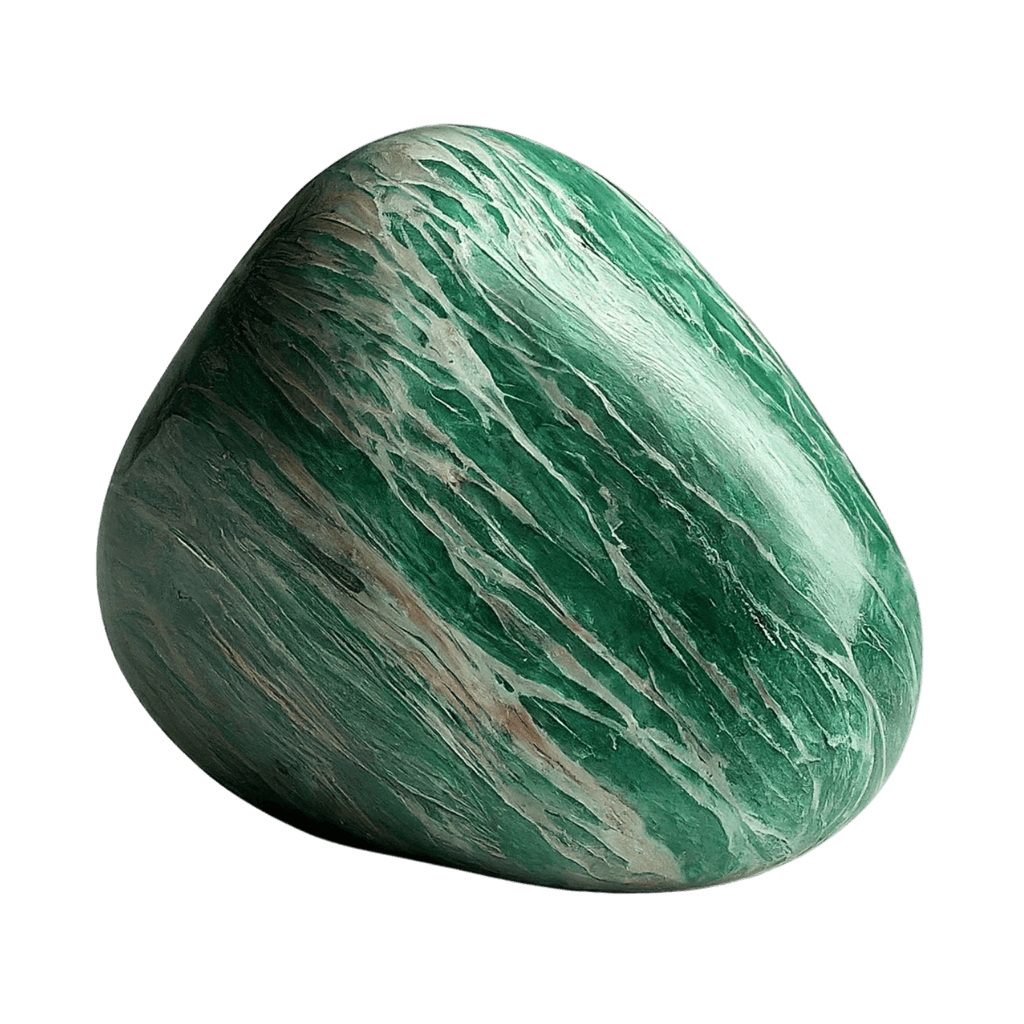
Fuchsite is a green crystal used in modern crystal healing for heart healing, healing, and release. It measures 3 on the Mohs hardness scale and typically costs $8 to $26 for a tumbled stone. In the chakra tradition, Fuchsite is associated with the Heart chakra.
Worth knowing: In ruby in fuchsite, one element colours both halves of the rock: chromium makes the mica green and the same chromium makes the corundum red, because the colour depends on the host lattice the chromium sits in rather than on the element itself.
“The chromium-rich green mica behind green aventurine, verdite and ruby in fuchsite, and a variety of muscovite rather than a species of its own.”
- Chakra
- Heart (Anahata)
- Zodiac
- Pisces ♓, Aquarius ♒
- Element
- Earth 🌍
- Planet
- Venus ♀
- Hardness
- 3 / 10 (Mohs)
- Colors
- Green
- Origin
- India, Brazil, Russia, South Africa, Zimbabwe, USA
- Availability
- Not sold here yet
Care + Safety
Fuchsite at a glance
- Water: avoid, may damage or leach
- Sun: tolerates sunlight charging
- Mohs hardness: 3 (display + meditation only)
What is Fuchsite?
Fuchsite is a variety, not a mineral species. Geology.com describes it as a green variety of muscovite mica in which chromium is the source of the green, and the depth of that green tracks how much chromium is present: a small substitution gives pale green, and abundant chromium takes it to a rich emerald green. Structurally it is ordinary muscovite, a potassium aluminium sheet silicate, with chromium sitting in aluminium's place in the lattice. The working numbers are the ones that matter in the hand: Mohs 2 to 3 and perfect cleavage, so it parts into sheets and scratches against almost anything it is stored with. Geology.com places it in phyllites and schists of the greenschist facies, which is the same metamorphic setting that produces most of the rocks it turns up inside.
Fuchsite measures 3 on the Mohs scale and shows green coloring. It is filed with the heart stones, and the work it is most often asked to do is relational: heart healing, healing, and release.
The stone connects primarily to the Heart (Anahata) chakra, carrying Earth energy. Sources include India, Brazil, Russia, South Africa, Zimbabwe, and USA; deposit matters more than beginners expect, and collectors learn to recognize where a piece of Fuchsite was mined by its color depth and pattern.
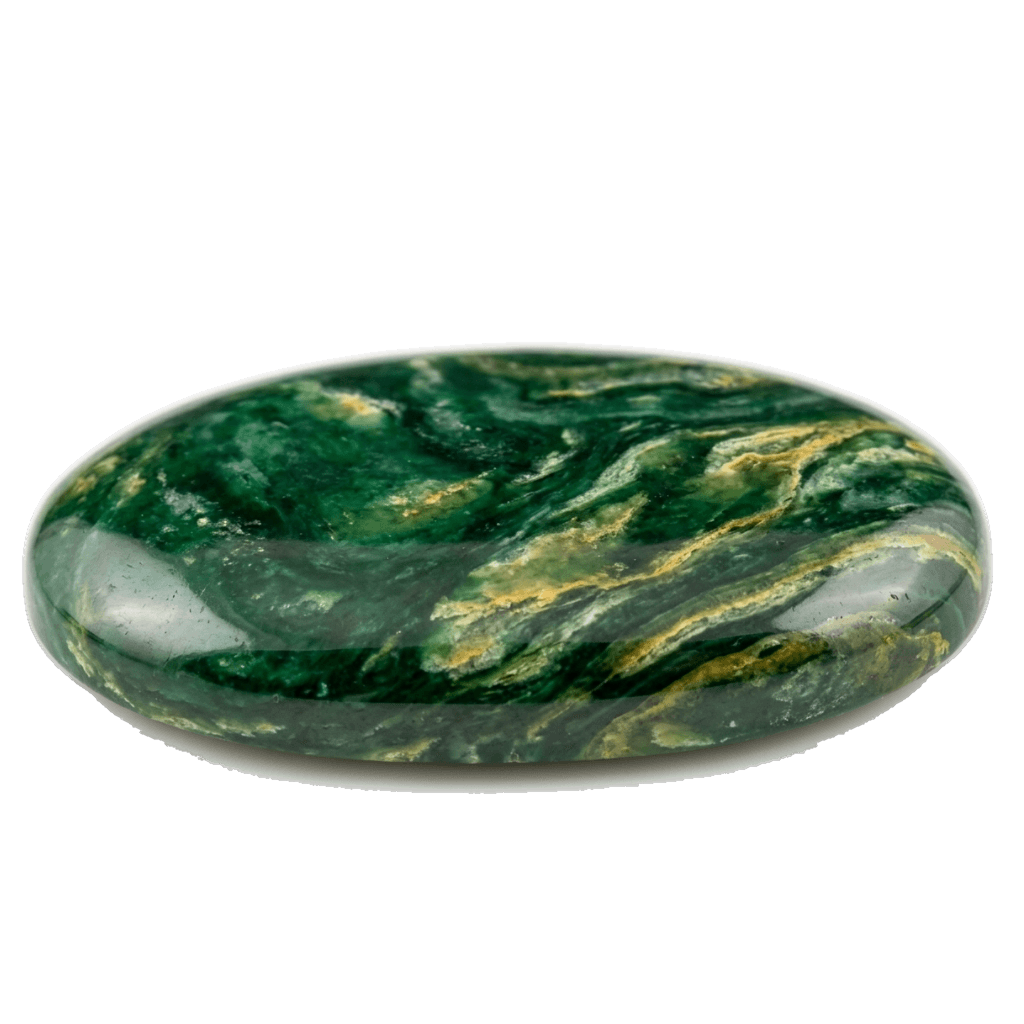
Fuchsite is usually the green in something else. Four stones in the CrystalStones.com catalog owe their colour to it, and most people who own a piece bought it under one of those four names without ever meeting the mica itself. It is worth learning by hand, because it gives itself away twice over. Draw a fingernail across a clean flake and notice how easily it marks, then tilt the piece and notice that the shine is soft and metallic rather than glassy. Soft enough to scratch with a fingernail, bright enough to glitter: nothing else green behaves that way.
Also catalogued as Chrome Mica and Green Muscovite, this is a stone that rewards regular handling more than display. Give Fuchsite a week of heart healing duty in the pocket before deciding what it is for.
History and Mythology
The mineral carries a person's name rather than a place or a colour. It honours Johann Nepomuk von Fuchs, the German mineralogist and chemist who lived from 1774 to 1856, and the naming is a small piece of nineteenth century mineralogical manners: green micas had been noticed for a long time before anyone tied the colour to chromium and gave the variety a formal label.
Its real history, though, is a history of aliases. Fuchsite is one of the most widely owned minerals almost nobody buys under its own name, because it does its work as an ingredient. Geology.com describes rocks composed almost entirely of fuchsite as verdite, describes green aventurine as quartz with small platelets of fuchsite or other green micas suspended in it, and describes ruby in fuchsite as corundum crystals sitting in fuchsite. Add the altered serpentinite of the California gold country, sold as mariposite, and one mica accounts for four separate entries in this catalog, each of them a different rock and each of them green for the same reason.
That is also why the trade name African jade, applied to verdite, and Indian jade, applied to green aventurine, both attach to material with no jade in it. Neither rock is nephrite or jadeite. What they have in common is a chromium mica and a colour.
Fuchsite Meaning and Metaphysical Properties
What the Hand Learns First
In the hand Fuchsite reads as gentle before you know anything else about it. Mohs 3 hardness means it gives up its coolness quickly, and the green polish carries a waxy, candle-like glow. Give a heart stone its first minute at the chest rather than reaching for words about it; whatever you find there is yours to name, and nobody can name it ahead of you.
Primary Properties
Fuchsite carries a relational property list: heart healing, healing, release, and intuition. Stones in the heart family do their work by softening, never by force, and the earliest evidence is usually the tone you take with yourself. Read the list as invitations to begin, not promises to collect.
How Crystal Energy Works
Fuchsite works through the Heart center in the traditional map, the middle station where the lower and upper energies cross, and heart healing is its assignment there. Let the breath set the tempo, stone resting over the heart, heart healing, healing, and release held softly in mind, with nothing pushed. In Judy Hall's The Crystal Bible the heart family is treated as relationship territory, with the recurring note that compassion turned inward comes before compassion shared.
Amplification Through Intention
Earth stones such as Fuchsite are traditionally treated as keel rather than sail; they hold a heart healing course. Give the assignment once, clearly, and then let routine carry it.
Healing Benefits
Emotional Support
Fuchsite does its emotional work at the tender layer, heart healing, healing, and release, where connection lives. Keep it in hand for the conversations that invite armor, and let the stone stand for the choice to stay open instead. As with all crystal healing, heart healing support from a stone is reflective practice rather than medicine; significant emotional concerns deserve qualified human help.
Spiritual Connection
Spiritually, the heart stones frame connection as practice rather than reward, and Fuchsite is traditionally used to keep the Heart center engaged during loving-kindness style meditation. It suits the prayers and sits that are about people.
Physical Presence
Physically, Fuchsite belongs to the slow systems: steady meals, regular sleep, the unglamorous maintenance that heart healing actually rests on. Keep it where the routines happen as a quiet vote for keeping them; anything clinical belongs with clinicians.
Chakra Connection
Fuchsite resonates most strongly with the Heart (Anahata), the energy center traditionally drawn in green / pink and the traditional seat of this stone's heart healing work. When this center runs clear, the classical markers are love, compassion, and emotional openness; heart healing, healing, and release are what Fuchsite is most often asked to bring to it.
Lie down with Fuchsite at the heart center, letting the breath rock it; a quiet unmeasured stretch of that is the oldest heart-stone session in the book, and heart healing is the usual request.
Zodiac and Astrological Connection
In the modern correspondence tables Fuchsite is assigned to Pisces ♓ (Feb 19 to Mar 20) and Aquarius ♒ (Jan 20 to Feb 18); a Sun, Moon, or rising placement there is read as a head start with this stone, nothing more.
None of this is exclusionary. If Fuchsite keeps catching your eye, that interest counts for more than whether Pisces appears anywhere in your chart.
In the planetary layer of the system, Venus ♀ holds the rulership, and that planet's prominent transits are the traditional windows for deeper heart healing work with Fuchsite.
How to Use Fuchsite
These are the five ways of working with Fuchsite I suggest most often. Begin wherever your attention goes first; the sequence matters far less than starting.
- 1
Meditation Hold
Take up Fuchsite as you settle in; at Mohs 3 it takes on your warmth within a minute or two, and that slow merge is a useful anchor whenever the mind wanders.
- 2
Body Placement
Center-chest is the station the chakra charts give Fuchsite: lie back, set it over the heart, and let each breath rock it gently. Keep the attention on the stone rather than on yourself, which is harder than it sounds and is most of the skill. The standing association at this center is heart healing.
- 3
Sleep Companion
At night, park Fuchsite on the nightstand rather than working it; its job is the day's heart healing, and ending the day cleanly is how tomorrow's session starts well.
- 4
Carry With You
Carry Fuchsite when the day belongs to other people's hearts, the hospital visit, the apology owed, the first date. Touching it once before you speak and once after makes it a small heart healing checkpoint you can keep in a pocket.
- 5
Crystal Grid Anchor
For grid work, give Fuchsite the anchor position and run Green Aventurine and Ruby In Fuchsite on the outer points, all matched to a single heart healing intention. Rebuild it when it goes stale; a heart healing grid you have stopped seeing has stopped working.
How to Cleanse and Charge
Keeping Fuchsite energetically clear is essential, a crystal that's holding too much absorbed energy becomes less effective, like a sponge that's full. For the full water-safe / sun-safe / salt-safe profile, the recommended cleansing cadence, and the hands-on storage instructions I give my clients, see the dedicated Fuchsite care guide.
- 1
Sage
Pass Fuchsite through the smoke of white sage or rosemary for about thirty seconds, turning it so the smoke wraps every face, while you hold a clear intention of release.
- 2
Sound
A minute inside strong, sustained tone, bowl, chime, even a steady hum, resets Fuchsite without physical risk, which makes sound the safest deep cleanse for fragile stones.
- 3
Moonlight
Give Fuchsite a night outdoors or at the glass under a bright moon; the tradition holds moonlight to be the universal reset, slow, cool, and risk-free.
- 4
Selenite
Keep a selenite dish where you empty your pockets and drop Fuchsite there at day's end; the resting place does the cleansing while you sleep.
How often to cleanse
Monthly is the floor for Fuchsite; step the cadence up whenever the stone is in daily rotation or the season is emotionally loud. With practice you will feel the tell yourself, a worked stone reads heavier and flatter in the palm.
Charging after cleansing
Once it is cleansed, recharge Fuchsite by placing it in morning sunlight for 30 minutes; cleansing empties the stone, charging refills it.
The Crystal Starter Library
A free guide from Crystal Cassandra: the twelve stones that cover almost everything, a one page care matrix for water, sun and salt, and how to build a first intention practice.
We respect your inbox. Unsubscribe anytime.
Crystal Pairings
Temperament decides the partners for Fuchsite: the heart family asks for company that gentles the room rather than edges it. A good traditional pairing supplies what tenderness lacks by itself, footing beneath it or brightness above it. Hold the candidate pair for a slow minute and notice which stone you set down first; the one still in your hand is the match.
Buying Fuchsite: Price, Quality, and Jewelry
The first thing to settle is what you are actually buying, because pure fuchsite is rarely the product. Fuchsite on its own is a soft flaky mica, sold as small specimens and rough plates rather than as jewellery, and it is inexpensive. What most buyers want is one of the rocks it colours, so choose by rock first and mica second.
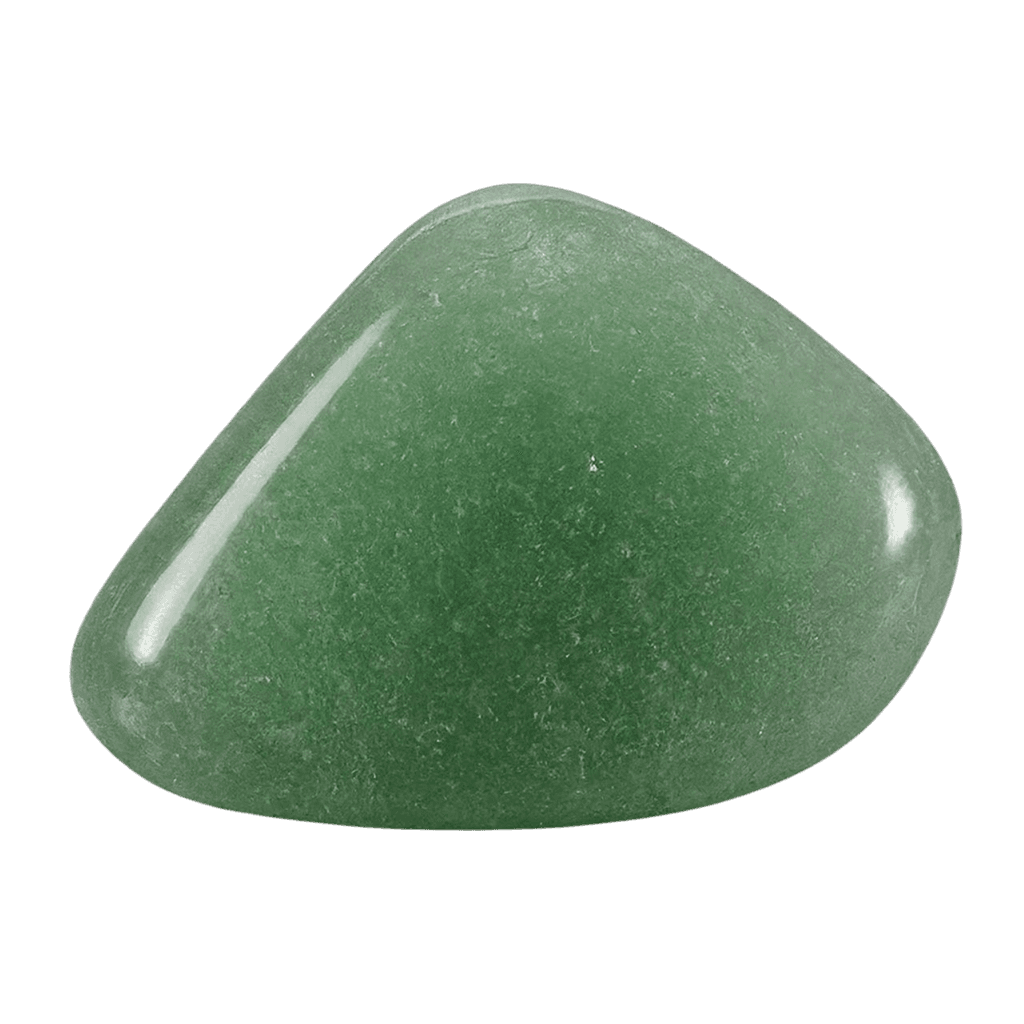
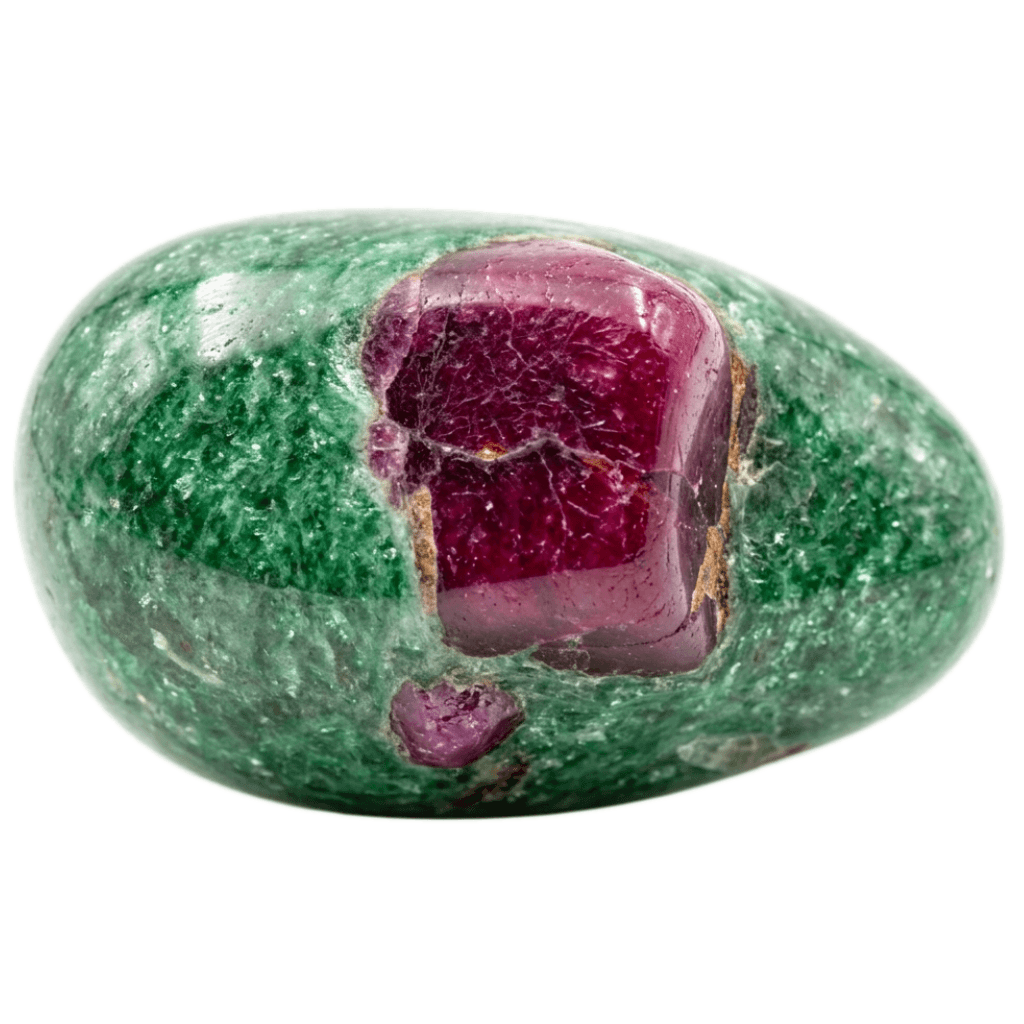
Green aventurine is the hard one, quartzite at Mohs 7, where the fuchsite is present as scattered platelets and supplies sparkle rather than body. It is the only member of this group that survives daily wear. Verdite is nearly all fuchsite, soft and carvable, which is exactly why southern African workshops have used it for carving rather than for rings. Ruby in fuchsite is the composite, red corundum sitting in green mica. Mariposite is the Californian rock. If a piece is being sold for a ring or a bracelet and the green is doing the work, aventurine is very likely the only honest answer.
Identification is easier than in most green stones, because softness is diagnostic. Fuchsite at Mohs 2 to 3 marks with a fingernail. That single test separates it from every green quartz, from serpentine, and from both true jades. It also settles the ruby in zoisite question without a loupe, because zoisite runs at least 6 and will not mark at all. Look as well for the sheet structure: fuchsite splits into flat plates and shows a soft, faintly metallic sheen along them, where a green quartzite breaks with a granular fracture instead.
Market figures, for orientation only. The CrystalStones.com store is not open, so none of this is an offer. Fuchsite is inexpensive wherever it appears, because chromium mica is not rare and the material is too soft to carry gem pricing: small specimens and rough plates sit in the single digit dollars, and carved verdite and polished ruby in fuchsite reach the low tens depending on size and workmanship. What moves a price, in order: which rock it is, depth and evenness of the green, size of an intact carving or slab, quality of the polish, and for ruby in fuchsite the size and definition of the red crystals. In my practice one caution matters more than the rest: an intensely uniform green stone that does NOT mark with a fingernail is not fuchsite, and the likeliest candidate is dyed quartzite.
How to Spot Real vs Fake Fuchsite
The market in Fuchsite has grown faster than its honesty, and green pieces are easy to imitate on a screen. Here is how to check one before you pay for it:
Temperature: at Mohs 3, genuine Fuchsite warms in the hand noticeably faster than glass; an imitation in glass stays cold and slick well past the first minute.
Weight: real Fuchsite should feel like stone rather than plastic pretending; if a palm-sized piece feels nearly weightless, walk away from it.
Color: expect green with honest variation, banding, zoning, the odd inclusion; a batch where every stone matches exactly came out of a factory, not the ground.
Price reality: the fair range for Fuchsite sits near $8 to $26 at palm size; below that, assume treatment or imitation until the seller proves otherwise.
Trust your source: provenance beats any hands-on check; ask where the Fuchsite was mined and whether the green material is treated, and expect straight answers rather than adjectives.
Sourcing
Buying Fuchsite well
The CrystalStones.com crystal store is not open yet, so we do not sell Fuchsite here. What we can give you is the part that matters most: how to tell a genuine piece from a treated or dyed one, and how to care for it once it is yours.
Frequently Asked Questions
What is Fuchsite good for?
Fuchsite is traditionally associated with heart healing, healing, release, and intuition. Many people find it supportive for heart healing and for working with the Heart chakra.
Can Fuchsite go in water?
No. Fuchsite should stay dry; cleanse it with Sage, Sound, and Moonlight instead, and keep every wet method off the table.
Can Fuchsite be in the sun?
Sun is fine for Fuchsite. A half hour of direct morning light both cleanses and charges it, and the green tones are stable enough to take it.
What chakra is Fuchsite?
Fuchsite is primarily associated with the Heart (Anahata) chakra. The heart center is its traditional seat: lie down, let the stone ride the breath, and the heart healing work takes care of the rest.
What zodiac sign is Fuchsite for?
Fuchsite is traditionally connected to Pisces and Aquarius. If your signs differ, work with Fuchsite anyway; resonance in the hand outranks resonance on paper in every practical tradition.
How do I cleanse Fuchsite?
The best methods for Fuchsite are Sage, Sound, and Moonlight. Treat fuchsite as the soft mica it is: Mohs 2 to 3 with perfect cleavage in one direction, which means it parts into sheets rather than chipping. Dry cleansing only. Water works into the cleavage planes and lifts flakes at the edges, salt grains are far harder than the mineral and will scratch a polished face, and rubbing a wet piece is the reliable way to shed it. Dust it, do not wash it, and give it a compartment of its own.
Is Fuchsite real or fake, how can I tell?
Genuine Fuchsite warms quickly in the hand at Mohs 3, while glass imitations stay cold longer and feel slick rather than satiny. Expect natural variation in its green coloring and a price near $8 to $26 for tumbled pieces; uniform color at a bargain price is the classic warning sign.
Is fuchsite a real mineral?
Fuchsite is a variety rather than a mineral species. Geology.com describes it as a green variety of muscovite mica coloured by chromium, so its formal species name is muscovite and fuchsite is the label for the chromium-bearing green form. The distinction matters in practice: everything about how it behaves, its softness, its perfect cleavage and its sheet structure, is muscovite behaviour with a colour added.
What is the difference between fuchsite and green aventurine?
Fuchsite is the mica, and green aventurine is a rock containing it. Geology.com describes green aventurine as quartz with small platelets of fuchsite suspended in it, which means the fuchsite supplies the colour and the sparkle while the quartz supplies the hardness. That is why aventurine survives daily wear at Mohs 7 while fuchsite itself, at Mohs 2 to 3, marks with a fingernail.
How can you tell fuchsite from jade or serpentine?
Softness separates fuchsite from every green stone it is confused with. At Mohs 2 to 3 it marks with a fingernail, where nephrite and jadeite are 6 to 7 and serpentine runs about 3 to 5 and resists a nail on most pieces. Look also at the structure: fuchsite splits into flat sheets with a faintly metallic sheen along them, while jade is fibrous and tough and serpentine tends to feel waxy.
Why is fuchsite green?
Fuchsite is green because chromium takes aluminium's place in the muscovite lattice. Geology.com notes that a small chromium substitution gives a light green, deepening to a rich emerald green when abundant chromium is present. The same element behaves differently in a different host: chromium in corundum produces the red of ruby rather than green, which is why ruby in fuchsite carries both colours from one chromophore.
Can fuchsite go in water?
Fuchsite should be kept dry. It has perfect cleavage in one direction and a hardness of only 2 to 3, so water works into the cleavage planes and lifts flakes along the edges, and rubbing a wet piece sheds the surface. Dry cleansing suits it: smoke, sound, moonlight or a selenite plate. Salt is also a poor choice, since salt grains are considerably harder than the mica and will scratch a polished face.
What’s Next?
A few thoughtful next steps if Fuchsite is calling to you.
Explore More Tools
Crystal Quiz
Discover which crystal matches your energy right now.
Open →Chakra Test
Find which chakras need attention and the crystals to balance them.
Open →Crystal Cleansing Guide
Learn how to safely cleanse and charge your crystals.
Open →Crystals by Intention
Find the perfect crystal for what you need right now.
Open →