Quick Answer
Horn Coral is a tan crystal used in modern crystal healing for grounding, calm, and transformation. It measures 4 on the Mohs hardness scale and typically costs $7 to $26 for a tumbled stone. In the chakra tradition, Horn Coral is associated with the Root and Sacral chakras.
Worth knowing: By counting daily growth lines on Devonian horn corals, paleontologist John W. Wells showed in 1963 that the Devonian year ran roughly 400 days, direct fossil evidence that Earth's spin has been slowing.
“A horn-shaped fossil coral of deep-time grounding, patience, and ancestral steadiness.”
- Chakra
- Root (Muladhara), Sacral (Svadhisthana)
- Zodiac
- Capricorn ♑, Scorpio ♏
- Element
- Earth 🌍, Water 💧
- Planet
- Saturn ♄
- Hardness
- 4 / 10 (Mohs)
- Colors
- Tan, Brown, Grey, Amber
- Origin
- USA, Morocco
- Availability
- Not sold here yet
Care + Safety
Horn Coral at a glance
- Water: avoid, may damage or leach
- Sun: tolerates sunlight charging
- Mohs hardness: 4 (display + meditation only)
What is Horn Coral?
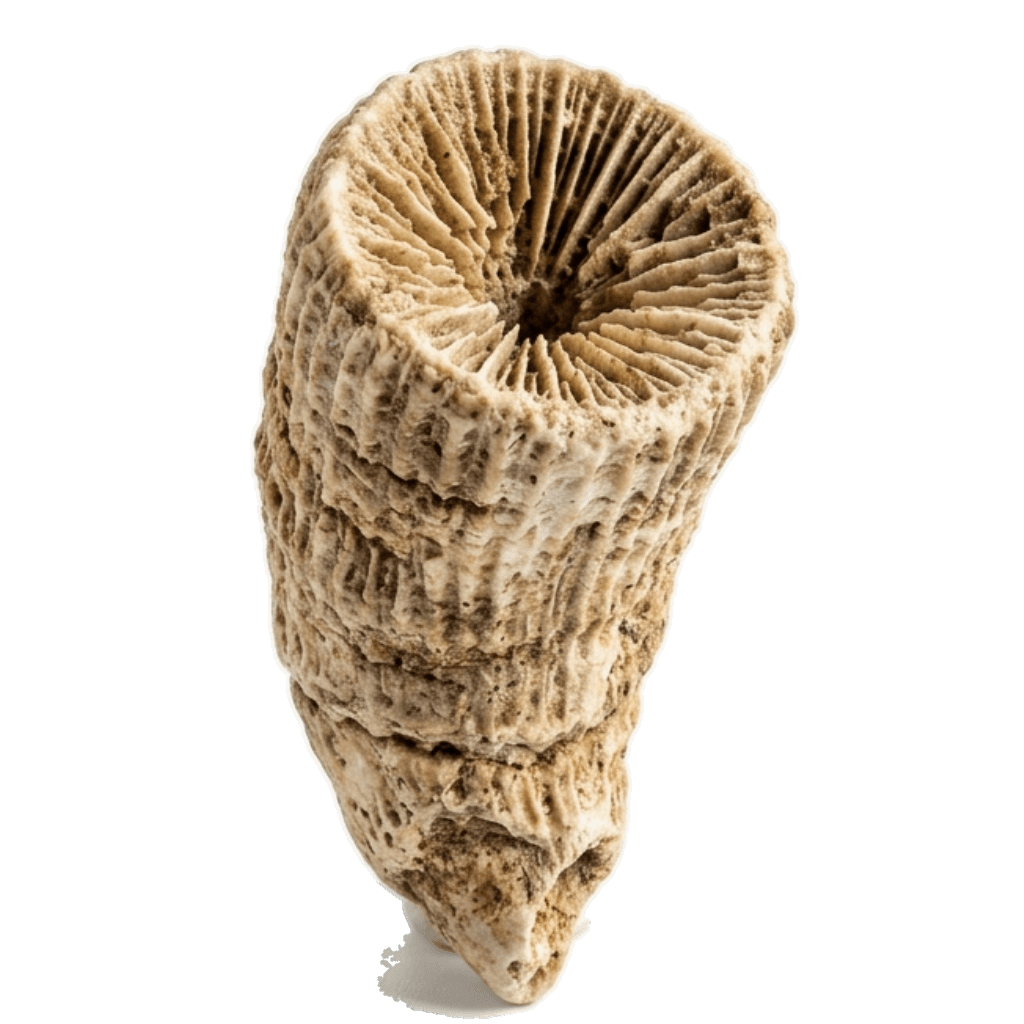
Horn corals are fossils of the order Rugosa, solitary sea animals that secreted calcite skeletons, unlike the aragonite of modern corals, in a curved horn shape as each polyp grew upward from its cup. They flourished from the Ordovician onward and vanished completely in the end-Permian mass extinction about 252 million years ago.
Horn Coral measures 4 on the Mohs scale and shows tan, brown, or grey coloring. By temperament it is a keeper stone, the guarding end of the collection, and grounding, calm, and transformation are what it is most often handed.
The stone connects primarily to the Root (Muladhara) and Sacral (Svadhisthana) chakras, carrying Earth and Water energy. Sources include USA and Morocco; deposit matters more than beginners expect, and collectors learn to recognize where a piece of Horn Coral was mined by its color depth and pattern.
Horn Coral is the fossilized remains of rugose corals, solitary, horn-shaped sea animals that lived hundreds of millions of years ago and are now preserved in calcite or agate. Hold this stone and notice a slow, settled, deep-time steadiness. In the crystal-healing tradition fossils like Horn Coral are used for grounding, patience, and a sense of connection to ancestors and long cycles of change. When it is calcite-replaced it is soft, so I keep it out of long water and salt; agatized pieces are tougher.
Also catalogued as Rugose Coral and Fossil Horn Coral, whether it is your first stone or your fiftieth, Horn Coral tends to find its role quickly, and grounding is the natural place to begin.
History and Mythology
There is no credible ancient chapter to tell about Horn Coral. The species was described by modern science, and its associations with grounding were assigned by contemporary practitioners reading its color, structure, and feel. What the stone lacks in legend it makes up in geology, which asks for no embellishment; deposits worked today lie in USA and Morocco.
In modern astrological correspondence Horn Coral is linked with Capricorn and Scorpio, with Saturn ♄ named as its planetary ruler. Practitioners who keep these tables often work the stone hardest during those sun-sign seasons, especially for grounding.
Hold the two timescales side by side, centuries of human use at most against epochs of formation behind every Mohs 4 specimen of Horn Coral; the deep time is the one part no marketing can inflate.
Horn Coral Meaning and Metaphysical Properties
What the Hand Learns First
In the hand Horn Coral reads as gentle before you know anything else about it. Mohs 4 hardness means it gives up its coolness quickly, and the tan polish carries a waxy, candle-like glow. Notice your weight while you hold it, feet on the floor, seat in the chair; with grounding stones the tradition points attention toward ballast rather than toward tingle.
Primary Properties
Horn Coral keeps a guard-duty property list: grounding, calm, transformation, and protection. What the protective family teaches is edges, where you stop, where the room starts, and the settled breath that comes from knowing the difference. Take the list as shorthand from tradition and let your own steadiness define the assignment.
How Crystal Energy Works
In traditional crystal healing Horn Coral is read through the Root center, the body's claim to ground, and grounding is the quality it is most often asked to bring there. Root work is low and slow, seated practice, feet flat, with grounding, calm, and transformation as the standing assignment. In Melody's Love Is in the Earth the grounding family is framed through the root connection, an energetic cord imagined running from the spine's base down into the earth.
Amplification Through Intention
Earth stones such as Horn Coral are traditionally treated as keel rather than sail; they hold a grounding course. Give the assignment once, clearly, and then let routine carry it.
Healing Benefits
Emotional Support
Horn Coral works the defended-and-rooted layer of feeling: grounding, calm, and transformation are its traditional emotional assignments. Keep it near on the porous days, the ones where every mood in the room seems to walk straight in. Tradition, not treatment: grounding work with a stone sits beside professional support, never in place of it.
Spiritual Connection
In spiritual work Horn Coral plays the doorkeeper: it is the stone tradition assigns to opening and closing practice, the grounding breath before inner work and the deliberate return after. Boundaries, in this family, are a devotion of their own.
Physical Presence
Physically, Horn Coral belongs to the slow systems: steady meals, regular sleep, the unglamorous maintenance that grounding actually rests on. Keep it where the routines happen as a quiet vote for keeping them; anything clinical belongs with clinicians.
Chakra Connection
Horn Coral resonates most strongly with the Root (Muladhara), the energy center traditionally drawn in red and the traditional seat of this stone's grounding work. When this center runs clear, the classical markers are safety, stability, and groundedness; grounding, calm, and transformation are what Horn Coral is most often asked to bring to it.
For placement, go low: lie down with Horn Coral resting at the hip points, or sit on the floor and set it between your feet. Attention on weight and ground, for as long as that stays comfortable, is the classic root session the tradition records for grounding.
Horn Coral also keeps a working line to the Sacral (Svadhisthana), which widens its range in layouts; let the primary placement lead, and add the second position once the first feels familiar.
Zodiac and Astrological Connection
Horn Coral appears under Capricorn ♑ (Dec 22 to Jan 19) and Scorpio ♏ (Oct 23 to Nov 21) in the standard correspondence tables; if those signs are loud in your chart, expect the introduction to feel familiar.
Correspondence is a suggestion, not a bouncer; plenty of devoted Horn Coral keepers have no Capricorn in their chart at all, and being drawn to the stone is the credential that matters.
The assigned ruler is Saturn ♄; in practice that means Horn Coral comes out when that planet is prominent in the sky or in your chart, and grounding is the work it is handed.
How to Use Horn Coral
Here are five ways I recommend working with Horn Coral. Start with whichever feels most natural, there's no wrong entry point.
- 1
Meditation Hold
Take up Horn Coral as you settle in; at Mohs 4 it takes on your warmth within a minute or two, and that slow merge is a useful anchor whenever the mind wanders.
- 2
Body Placement
Hip level when reclining, floor level when seated, that is where the chakra charts kept a Root stone like Horn Coral. Nothing here is meant to be strenuous. Set the stone down, stay a while, and see where your attention keeps going back to. The grounding heading belongs to the tradition, and it stays a tradition rather than a promise.
- 3
Sleep Companion
At night, park Horn Coral on the nightstand rather than working it; its job is the day's grounding, and ending the day cleanly is how tomorrow's session starts well.
- 4
Carry With You
Bring Horn Coral along when the calendar promises crowds, noise, or rooms you would rather skip. Each touch-check restates the boundary, two seconds of contact saying that grounding travels with you.
- 5
Crystal Grid Anchor
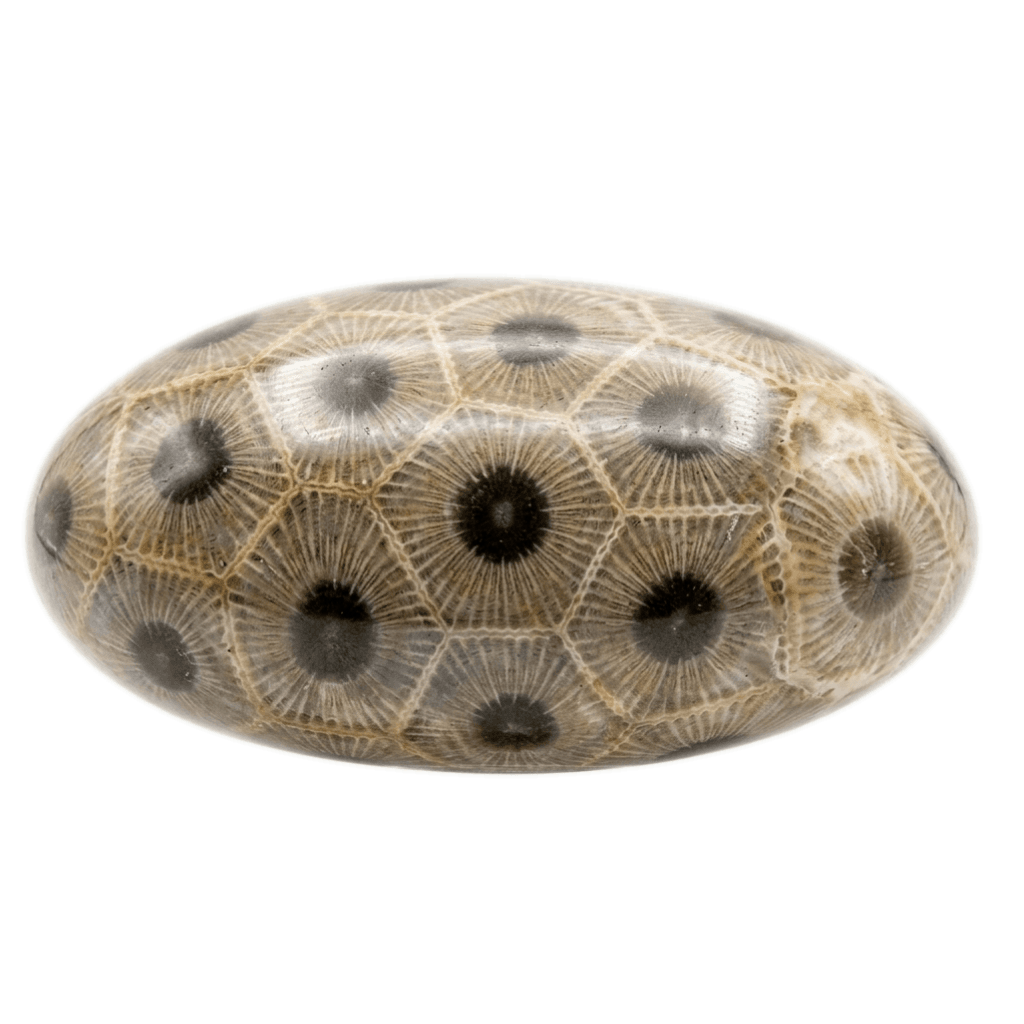
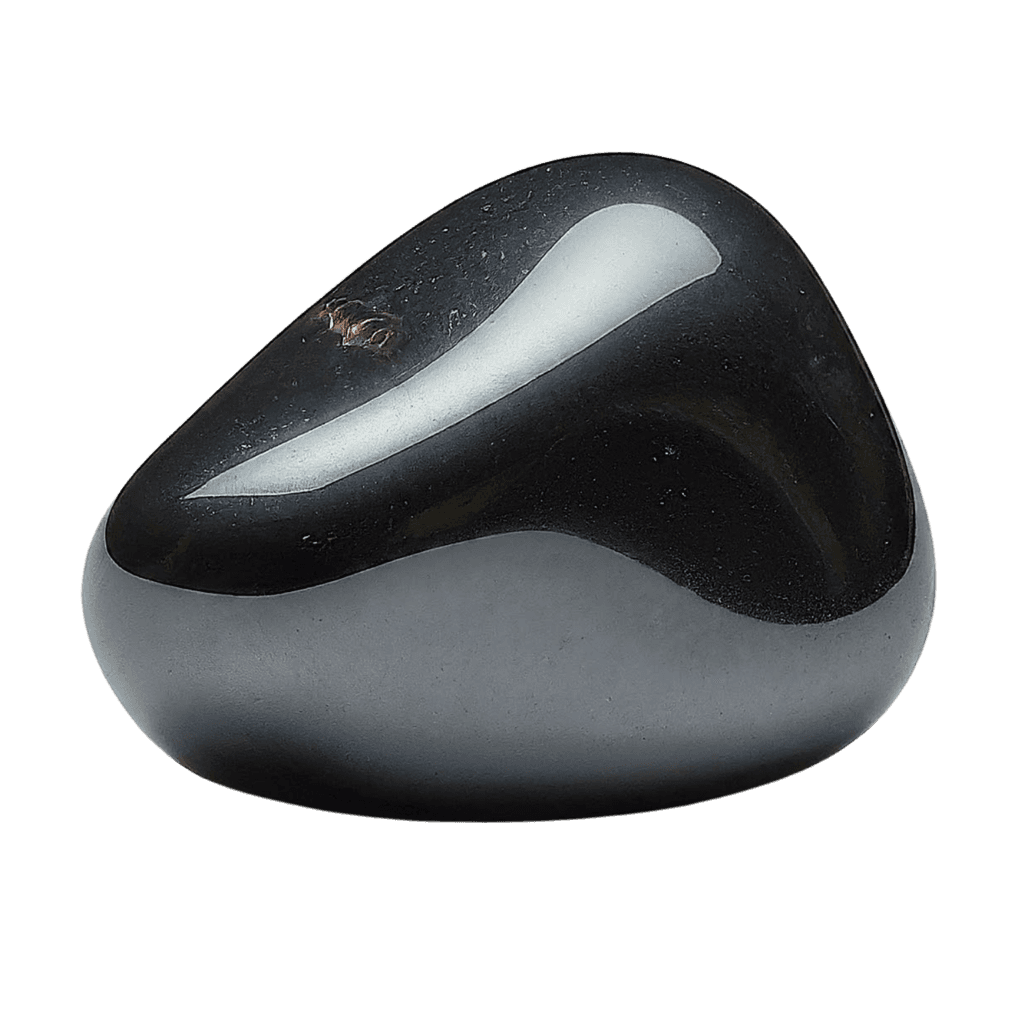
Use Horn Coral as the heart of a small grid for grounding, with Petoskey Stone and Hematite alternating on the spokes. Place the stones slowly and set the last one down with the grounding intention named out loud.
How to Cleanse and Charge
A worked stone needs clearing, and Horn Coral is no exception; practitioners describe an uncleansed crystal as muffled, present but quieter than it should be. For the full safety profile and the cadence I recommend, see the dedicated Horn Coral care guide.
- 1
Moonlight
Give Horn Coral a night outdoors or at the glass under a bright moon; the tradition holds moonlight to be the universal reset, slow, cool, and risk-free.
- 2
Sage
Pass Horn Coral through the smoke of white sage or rosemary for about thirty seconds, turning it so the smoke wraps every face, while you hold a clear intention of release.
- 3
Sound
A minute inside strong, sustained tone, bowl, chime, even a steady hum, resets Horn Coral without physical risk, which makes sound the safest deep cleanse for fragile stones.
- 4
Earth
Rest Horn Coral overnight in a shallow pocket of potting soil when it needs grounding, then brush it clean rather than washing it; the earth does the drawing-out.
How often to cleanse
I recommend cleansing Horn Coral at least once a month, more frequently if you're using it daily or during emotionally intense periods. You'll also learn to feel when a stone needs cleansing; it may feel heavier, duller, or simply “off.”
Charging after cleansing
Once it is cleansed, recharge Horn Coral by placing it in morning sunlight for 30 minutes; cleansing empties the stone, charging refills it.
The Crystal Starter Library
A free guide from Crystal Cassandra: the twelve stones that cover almost everything, a one page care matrix for water, sun and salt, and how to build a first intention practice.
We respect your inbox. Unsubscribe anytime.
Crystal Pairings
Pair Horn Coral the way you would build a wall: one stone for mass, one for watch. Its traditional partners divide that labor, boundary-holding on one side, alertness on the other. Hold any two together briefly before committing; ease in the hand is the green light.
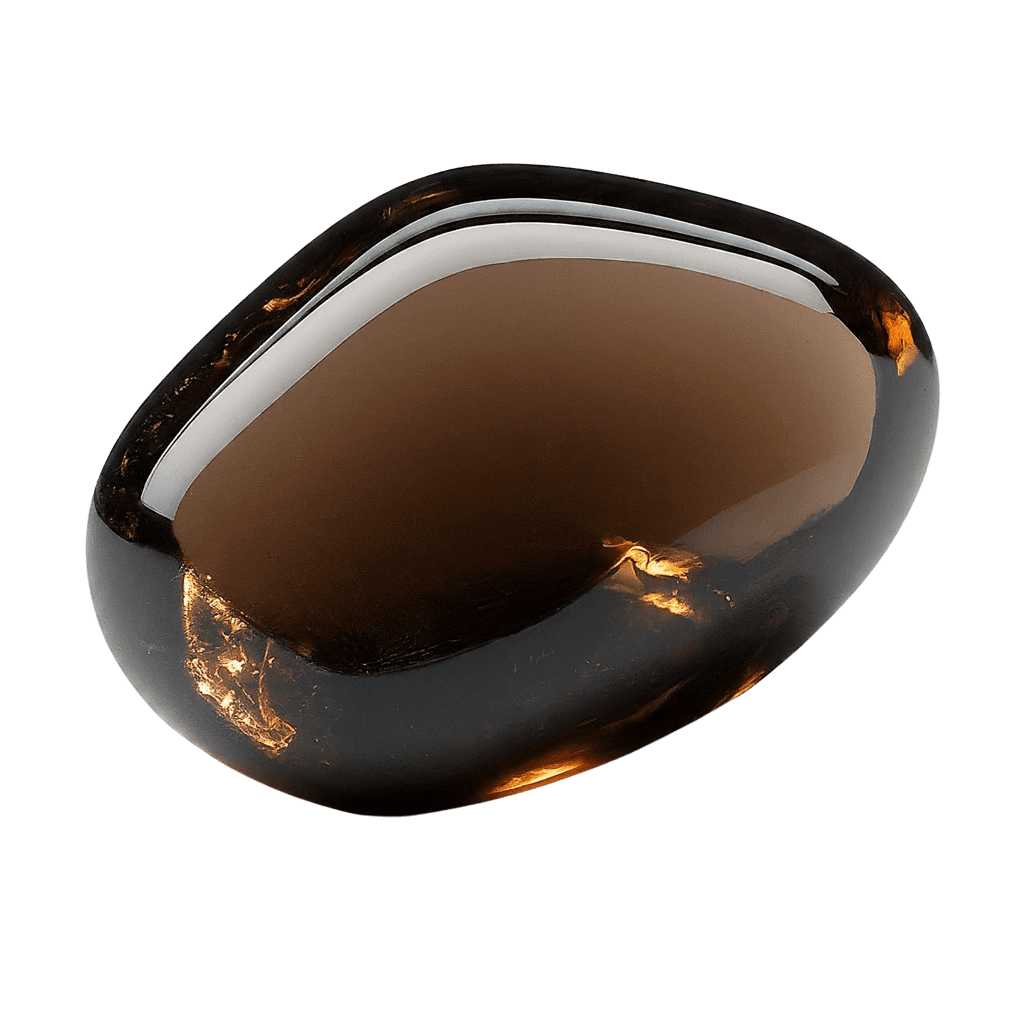
How to Spot Real vs Fake Horn Coral
Before buying Horn Coral, run the piece through these checks; nothing here needs equipment, just your hands, the tan stone in question, and a healthy skepticism:
Temperature: at Mohs 4, genuine Horn Coral warms in the hand noticeably faster than glass; an imitation in glass stays cold and slick well past the first minute.
Weight: real Horn Coral should feel like stone rather than plastic pretending; if a palm-sized piece feels nearly weightless, walk away from it.
Color: expect tan, brown, or grey with honest variation, banding, zoning, the odd inclusion; a batch where every stone matches exactly came out of a factory, not the ground.
Price reality: quality Horn Coral runs roughly $7 to $26 for palm-sized pieces from reputable sellers; a price far below that range is usually answering a question you should have asked.
Trust your source: provenance beats any hands-on check; ask where the Horn Coral was mined and whether the tan material is treated, and expect straight answers rather than adjectives.
Sourcing
Buying Horn Coral well
The CrystalStones.com crystal store is not open yet, so we do not sell Horn Coral here. What we can give you is the part that matters most: how to tell a genuine piece from a treated or dyed one, and how to care for it once it is yours.
Frequently Asked Questions
What is Horn Coral good for?
Horn Coral is traditionally associated with grounding, calm, transformation, and protection. Many people find it supportive for grounding and for working with the Root and Sacral chakras.
Can Horn Coral go in water?
No, water and Horn Coral do not mix; moisture can compromise the surface or the structure itself. Fossil coral, often calcite-replaced and soft (Mohs 3-4). Brief wipe only; avoid soaking and salt. Agatized pieces are more durable.
Can Horn Coral be in the sun?
Yes, Horn Coral can sit in sunlight safely; its tan coloring holds up, and thirty minutes of morning sun is the traditional charge.
What chakra is Horn Coral?
Horn Coral is primarily associated with the Root (Muladhara) and Sacral (Svadhisthana) chakras. Low placements serve it best, the hips or the floor between seated feet, since that is where root-center grounding work traditionally happens.
What zodiac sign is Horn Coral for?
Horn Coral is traditionally connected to Capricorn and Scorpio. That said, the zodiac correspondence is an invitation rather than a requirement; any chart can work with Horn Coral, and attraction to the stone matters more than the calendar.
How do I cleanse Horn Coral?
The best methods for Horn Coral are Moonlight, Sage, and Sound. Fossil coral, often calcite-replaced and soft (Mohs 3-4). Brief wipe only; avoid soaking and salt. Agatized pieces are more durable.
Is Horn Coral real or fake, how can I tell?
Genuine Horn Coral warms quickly in the hand at Mohs 4, while glass imitations stay cold longer and feel slick rather than satiny. Expect natural variation in its tan coloring and a price near $7 to $26 for tumbled pieces; uniform color at a bargain price is the classic warning sign.
What’s Next?
A few thoughtful next steps if Horn Coral is calling to you.
Explore More Tools
Crystal Quiz
Discover which crystal matches your energy right now.
Open →Chakra Test
Find which chakras need attention and the crystals to balance them.
Open →Crystal Cleansing Guide
Learn how to safely cleanse and charge your crystals.
Open →Crystals by Intention
Find the perfect crystal for what you need right now.
Open →