Quick Answer
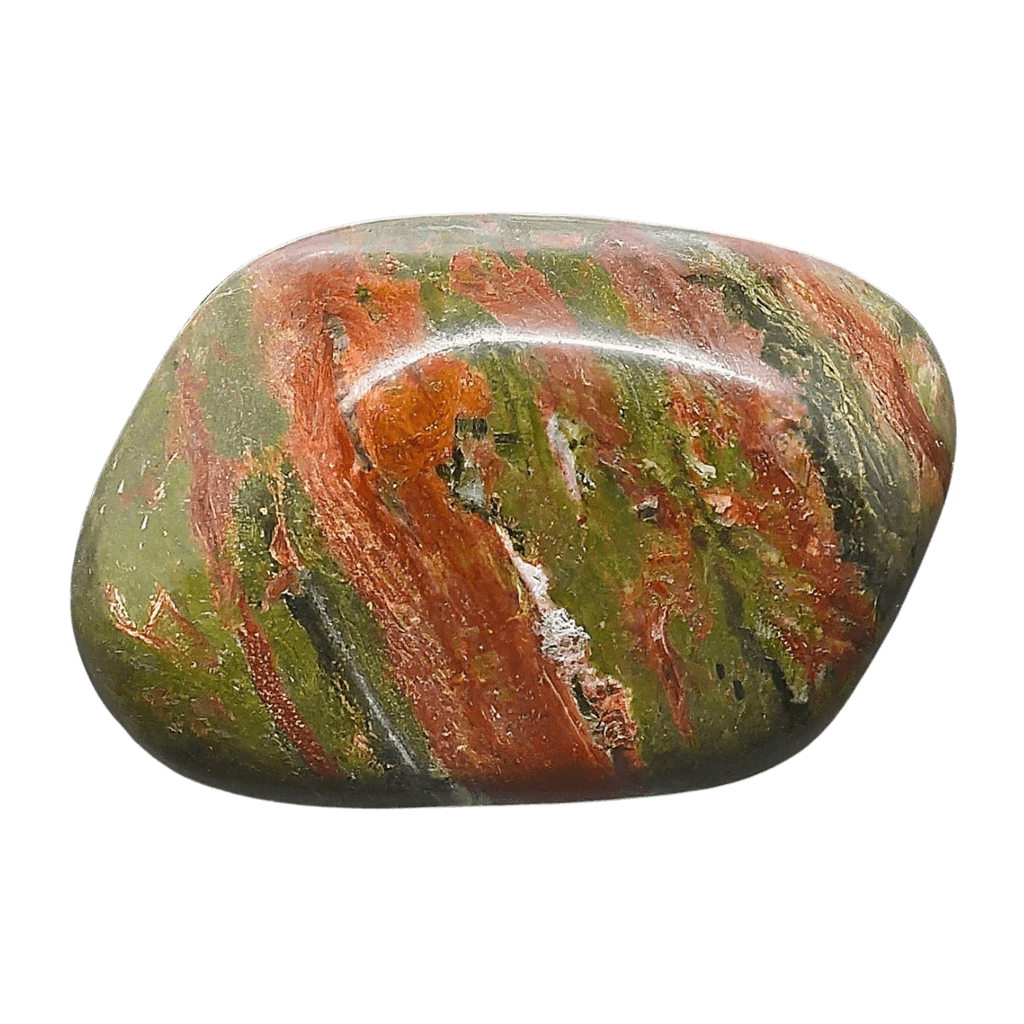
Rhyolite is a green crystal used in modern crystal healing for creativity, grounding, and calm. It measures 6.5 on the Mohs hardness scale and typically costs $8 to $22 for a tumbled stone. In the chakra tradition, Rhyolite is associated with the Root and Heart chakras.
Worth knowing: Rhyolite was named in 1860 by the German geologist Ferdinand von Richthofen, from the Greek for flowing stream, and he is remembered for something else too: his nephew Manfred became the Red Baron.
“A volcanic rhyolite often sold as Rainforest Jasper, of creative endurance and earth-connection.”
- Chakra
- Root (Muladhara), Heart (Anahata)
- Zodiac
- Sagittarius ♐, Gemini ♊
- Element
- Earth 🌍, Fire 🔥
- Planet
- Mercury ☿
- Hardness
- 6.5 / 10 (Mohs)
- Colors
- Green, Brown, Cream, Patterned
- Origin
- Australia, USA, Mexico
- Availability
- Not sold here yet
Care + Safety
Rhyolite at a glance
- Water: brief rinse safe
- Sun: tolerates sunlight charging
- Mohs hardness: 6.5 (occasional wear only)
What is Rhyolite?
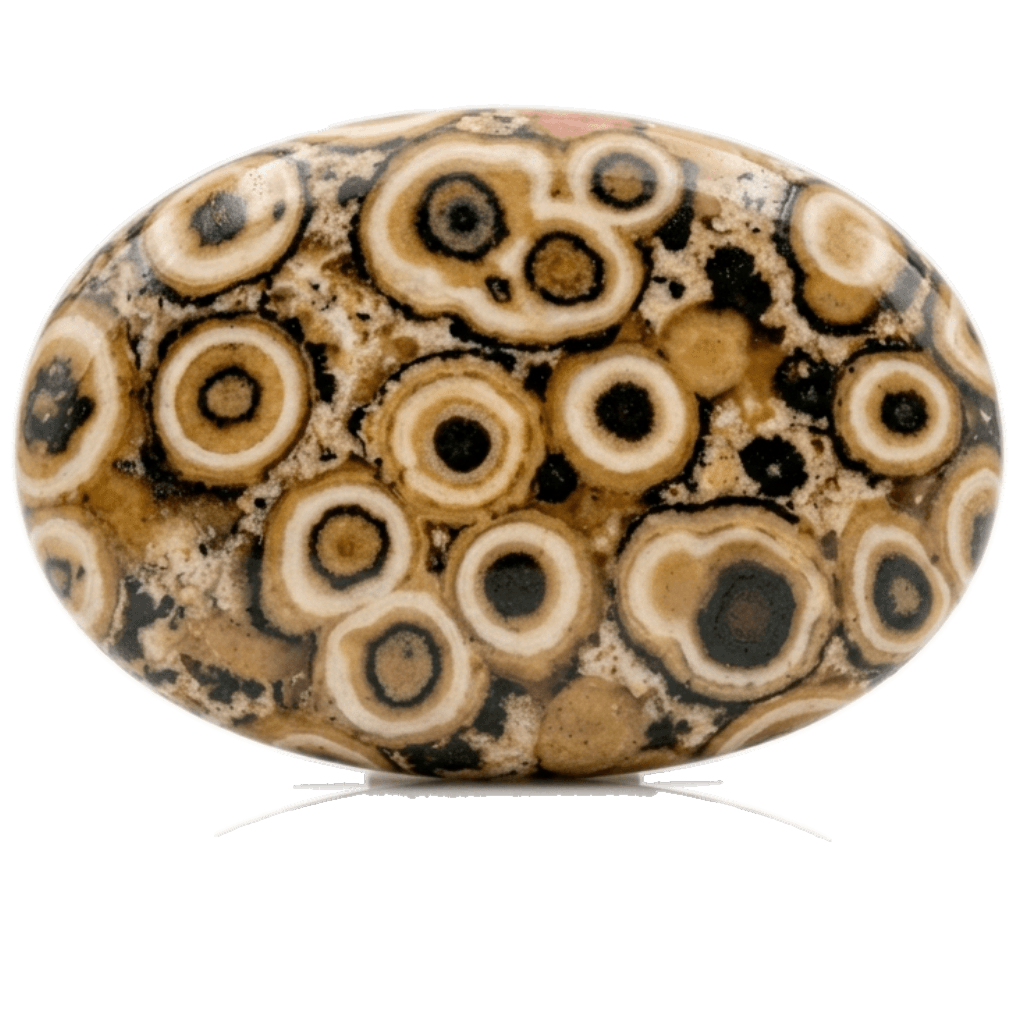
Rhyolite is the volcanic twin of granite, a silica-rich lava so viscous it traps gas and tends to erupt explosively rather than flow. The patterned lapidary material called rainforest jasper is an orb-studded rhyolite from Mount Hay in Queensland, its green and cream spherulites formed as the glassy rock devitrified.
Rhyolite measures 6.5 on the Mohs scale and shows green, brown, or cream coloring. It sits with the activating stones, the ones brought out for creativity, grounding, and calm when a threshold needs crossing.
The stone connects primarily to the Root (Muladhara) and Heart (Anahata) chakras, carrying Earth and Fire energy. Sources include Australia, USA, and Mexico; deposit matters more than beginners expect, and collectors learn to recognize where a piece of Rhyolite was mined by its color depth and pattern.
Rhyolite is a volcanic igneous rock with the same chemistry as granite, often patterned in green, brown, and cream and sold as Rainforest Jasper or Leopard Jasper. Hold this stone and notice a steady, almost rainforest-deep creative endurance. The classical sources describe Rhyolite as a stone of creative endurance and earth connection.
Also catalogued as Rainforest Jasper and Leopard Rhyolite, Rhyolite earns its place in a working collection by being usable: start with creativity, the job it is best known for, and let the stone widen its own brief from there.
History and Mythology
Rhyolite is a modern entry in the crystal canon. Its mineral identity was established in the scientific era, the healing vocabulary around it dates to recent decades, and any claim of ancient ritual use should be met with a raised eyebrow. The stone itself, formed in deposits now mined in Australia, USA, and Mexico, is of course older than every book ever written about it.
In modern astrological correspondence Rhyolite is linked with Sagittarius and Gemini, with Mercury ☿ named as its planetary ruler. Practitioners who keep these tables often work the stone hardest during those sun-sign seasons, especially for creativity.
However young or old the human story, the stone outruns it: Rhyolite formed over deep time, and the Mohs 6.5 piece on your shelf is the newest chapter of a very old book.
Rhyolite Meaning and Metaphysical Properties
First Touch
Rhyolite announces itself through temperature: a cool, green, glass-polished weight at Mohs 6.5 that warms deliberately, not instantly, inside a closed palm. Check in with your spine after a minute of holding. What you find is yours to read; this family is simply worked from that end of the body rather than from the heart.
Primary Properties
Momentum is the family business, and the Rhyolite property list reads accordingly: creativity, grounding, calm, and manifestation. Tradition says to take the stone in hand just before the moments that ask for your full voltage, the audition, the opening day, the empty page. None of it is a guarantee; all of it is a prompt.
How Crystal Energy Works
In traditional crystal healing Rhyolite is read through the Root center, the body's claim to ground, and creativity is the quality it is most often asked to bring there. Root work is low and slow, seated practice, feet flat, with creativity, grounding, and calm as the standing assignment. Both of the modern handbooks, Hall's and Melody's, station the activating stones at the lower three centers and describe them in the language of will and creative fire, never luck.
Amplification Through Intention
Rhyolite is classed as an Earth stone, patient, bodily, hard to knock over, which sets the pace of its creativity work. Prefer routines over ceremonies, the same pocket, the same desk corner, and let consistency do for creativity, grounding, and calm what intensity cannot.
Healing Benefits
Emotional Support
On the emotional map, Rhyolite covers the taking-up-space territory: creativity, grounding, and calm. Slip it into a pocket before the room that requires your full height; many people find the gesture itself does half the steadying. As with all crystal healing, creativity support from a stone is reflective practice rather than medicine; significant emotional concerns deserve qualified human help.
Spiritual Connection
The spiritual register of Rhyolite is dedication: it is traditionally held while naming an intention out loud, the small ceremony that turns a wish into a commitment. Use it at beginnings, new projects, new chapters, new moons.
Physical Presence
Tradition reads Earth stones like Rhyolite through the soles of the feet: stance, weight, the felt fact of standing somewhere while you work on creativity. Try standing barefoot with the stone in hand when the day goes abstract; the practice is awareness, not medicine.
Chakra Connection
Rhyolite resonates most strongly with the Root (Muladhara), the energy center traditionally drawn in red and the traditional seat of this stone's creativity work. When this center runs clear, the classical markers are safety, stability, and groundedness; creativity, grounding, and calm are what Rhyolite is most often asked to bring to it.
Work it seated and slow; put Rhyolite on the floor where your gaze lands, feet flat, and breathe down toward it. Root work is the least dramatic chakra work there is, which is exactly why creativity grows well in it.
Because Rhyolite is also associated with the Heart (Anahata), it moves well in multi-stone layouts: one stone, two stations, worked on different days.
Zodiac and Astrological Connection
Rhyolite appears under Sagittarius ♐ (Nov 22 to Dec 21) and Gemini ♊ (May 21 to Jun 20) in the standard correspondence tables; if those signs are loud in your chart, expect the introduction to feel familiar.
None of this is exclusionary. If Rhyolite keeps catching your eye, that interest counts for more than whether Sagittarius appears anywhere in your chart.
The assigned ruler is Mercury ☿; in practice that means Rhyolite comes out when that planet is prominent in the sky or in your chart, and creativity is the work it is handed.
How to Use Rhyolite
Five practices suit Rhyolite especially well. Pick the one that fits the day you are actually having rather than the routine you think you should have.
- 1
Meditation Hold
Begin the sit with Rhyolite against the skin and use its coolness as the focus; at Mohs 6.5 it holds that freshness for a while before giving in to body heat.
- 2
Body Placement
Floor and hip are the two Root stations in the old placement charts, and Rhyolite takes either one: by the feet during seated work, at the hips when lying back. In my practice the interesting part is never the position itself but what you catch yourself noticing once you stop expecting anything from it, which is how the tradition's creativity work was meant to be entered.
- 3
Sleep Companion
Rhyolite can still earn the nightstand even though its brief is creativity rather than rest: setting the stone down as you set the day down marks the switch from doing to sleeping.
- 4
Carry With You
Doorways are where Rhyolite does its carrying work: pocket it for interviews, first days, and openings, and touch it on purpose as you cross in. The contact is a cue, and the posture it prompts is what creativity looks like from the outside.
- 5
Crystal Grid Anchor
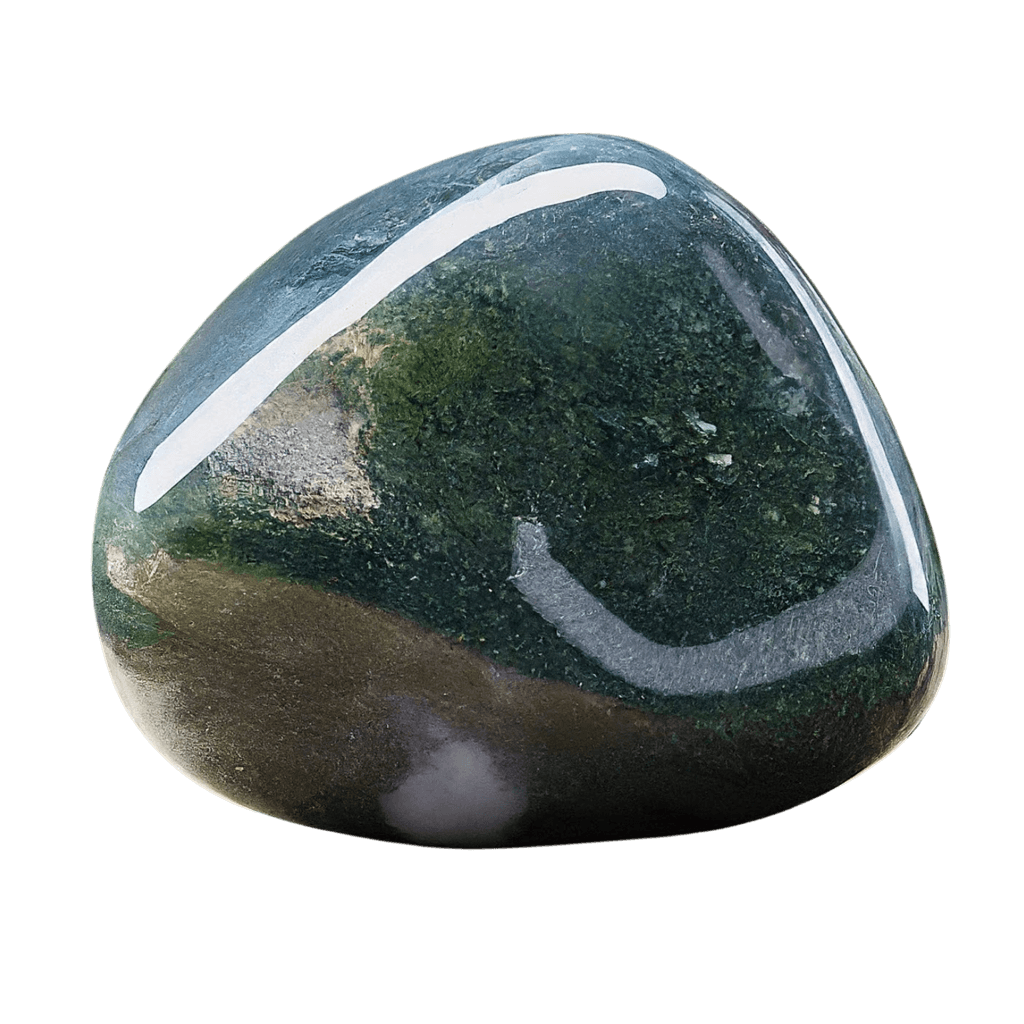
Use Rhyolite as the heart of a small grid for creativity, with Jasper Leopardskin and Agate Moss alternating on the spokes. Place the stones slowly and set the last one down with the creativity intention named out loud.
How to Cleanse and Charge
Keeping Rhyolite energetically clear is essential, a crystal that's holding too much absorbed energy becomes less effective, like a sponge that's full. For the full water-safe / sun-safe / salt-safe profile, the recommended cleansing cadence, and the hands-on storage instructions I give my clients, see the dedicated Rhyolite care guide.
- 1
Water
Run cool water over Rhyolite while turning it slowly; when the surface feels fresh under the thumb, dry it well and let it rest before its next use.
- 2
Moonlight
Once a month, let Rhyolite sit overnight in moonlight, on the full moon if you can manage it. Nothing in the cabinet is harmed by this method, which is why it anchors most cleansing routines.
- 3
Sage
Smoke-cleanse Rhyolite: light the sage, let it settle to a smolder, and move the stone through the rising smoke until your sense of it lightens, usually under a minute.
- 4
Sound
Sound-cleanse Rhyolite by striking a bowl or bell, letting each tone fade completely before the next; the vibration does the clearing, and no contact is needed.
- 5
Earth
Give Rhyolite twenty-four hours in the ground, with the spot marked so you can find it again; earth burial is the slow, thorough cleanse for stones that feel truly saturated.
How often to cleanse
Monthly is the floor for Rhyolite; step the cadence up whenever the stone is in daily rotation or the season is emotionally loud. With practice you will feel the tell yourself, a worked stone reads heavier and flatter in the palm.
Charging after cleansing
Follow every cleansing with a charge: for Rhyolite that means placing it in morning sunlight for 30 minutes. A cleared stone is neutral, a charged one is ready.
The Crystal Starter Library
A free guide from Crystal Cassandra: the twelve stones that cover almost everything, a one page care matrix for water, sun and salt, and how to build a first intention practice.
We respect your inbox. Unsubscribe anytime.
Crystal Pairings
Ignition without steering scatters, which is why Rhyolite pairs best with at least one grounding partner. The traditional companions alternate roles, throttle one day, brake the next. Trial any new pair on a single small creativity task and watch what happens to your focus.
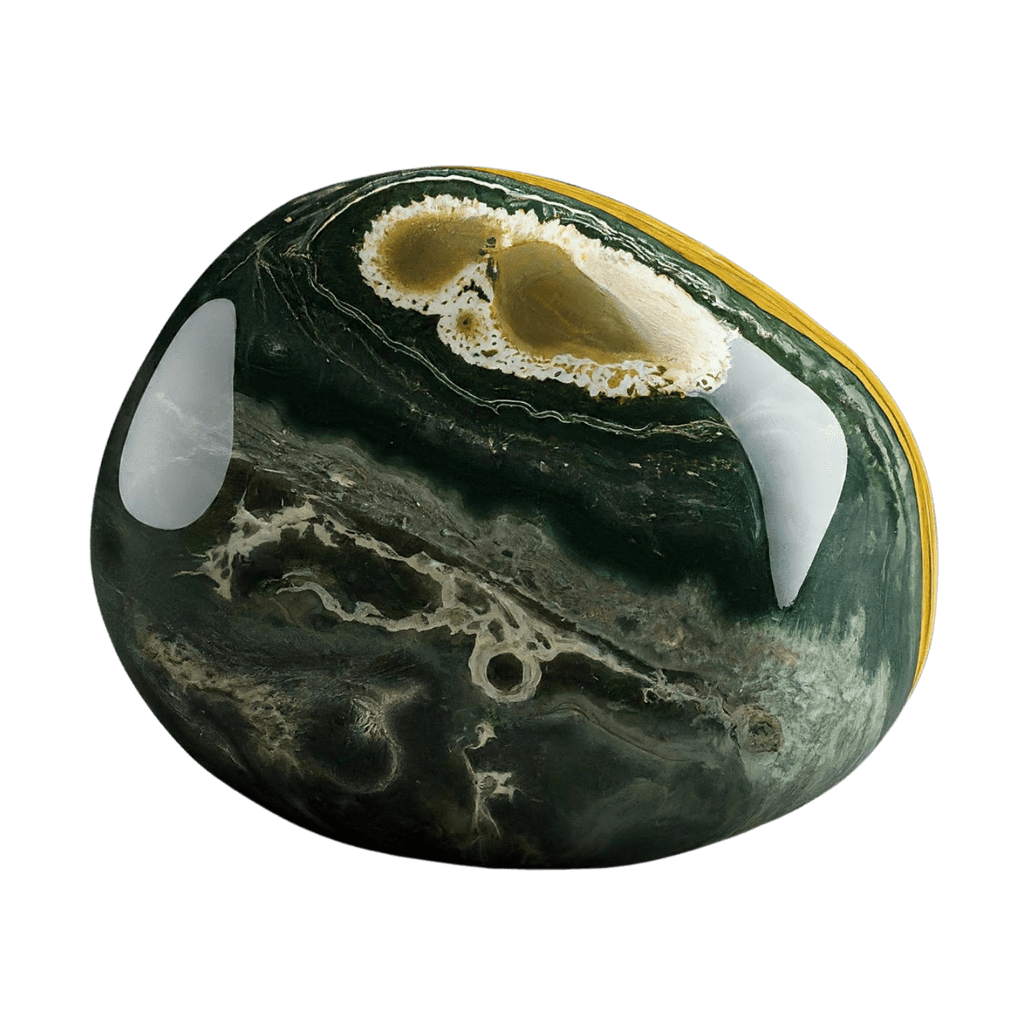
How to Spot Real vs Fake Rhyolite
Before buying Rhyolite, run the piece through these checks; nothing here needs equipment, just your hands, the green stone in question, and a healthy skepticism:
Temperature: genuine Rhyolite feels distinctly cool at first touch and gives that coolness up slowly; resin copies feel warm almost immediately, which is the quickest tell there is.
Weight and density: resin fakes run light for their size, while genuine Rhyolite at Mohs 6.5 carries honest mineral density; weigh it in the palm against any real tumbled stone you own.
Color and pattern: the real range is green, brown, or cream; treat neon saturation or flawless uniformity as a question for the seller, because nature rarely manages either.
Price reality: quality Rhyolite runs roughly $8 to $22 for palm-sized pieces from reputable sellers; a price far below that range is usually answering a question you should have asked.
Trust your source: buy Rhyolite from sellers who can name the mine or region behind their green stock and who disclose treatments without being chased. A seller who volunteers that information before you ask is the one worth returning to.
Sourcing
Buying Rhyolite well
The CrystalStones.com crystal store is not open yet, so we do not sell Rhyolite here. What we can give you is the part that matters most: how to tell a genuine piece from a treated or dyed one, and how to care for it once it is yours.
Frequently Asked Questions
What is Rhyolite good for?
Rhyolite is traditionally associated with creativity, grounding, calm, and manifestation. Many people find it supportive for creativity and for working with the Root and Heart chakras.
Can Rhyolite go in water?
Yes, Rhyolite tolerates water; at Mohs 6.5, a one to two minute rinse is fine. Pat it dry when you finish and avoid leaving it submerged overnight.
Can Rhyolite be in the sun?
Yes. Rhyolite is one of the sun-tolerant stones, so use morning light freely to charge the green material; just bring it in rather than leaving it out for whole days at a time.
What chakra is Rhyolite?
Rhyolite is primarily associated with the Root (Muladhara) and Heart (Anahata) chakras. Traditional use keeps it near the ground: at the hips, or set between the feet during seated practice, the root station for creativity.
What zodiac sign is Rhyolite for?
Rhyolite is traditionally connected to Sagittarius and Gemini. That said, the zodiac correspondence is an invitation rather than a requirement; any chart can work with Rhyolite, and attraction to the stone matters more than the calendar.
How do I cleanse Rhyolite?
Stick to Water, Moonlight, and Sage for Rhyolite; those are the methods its care profile recommends. Because the stone is water-tolerant at Mohs 6.5, an occasional rinse can supplement the list, with the named methods doing the steady monthly work.
Is Rhyolite real or fake, how can I tell?
Genuine Rhyolite feels cool at first touch and warms slowly; at Mohs 6.5 it also resists the pocket scratches that mark softer fakes. Expect natural variation in its green coloring and a price near $8 to $22 for tumbled pieces; uniform color at a bargain price is the classic warning sign.
What’s Next?
A few thoughtful next steps if Rhyolite is calling to you.
Explore More Tools
Crystal Quiz
Discover which crystal matches your energy right now.
Open →Chakra Test
Find which chakras need attention and the crystals to balance them.
Open →Crystal Cleansing Guide
Learn how to safely cleanse and charge your crystals.
Open →Crystals by Intention
Find the perfect crystal for what you need right now.
Open →