Quick Answer
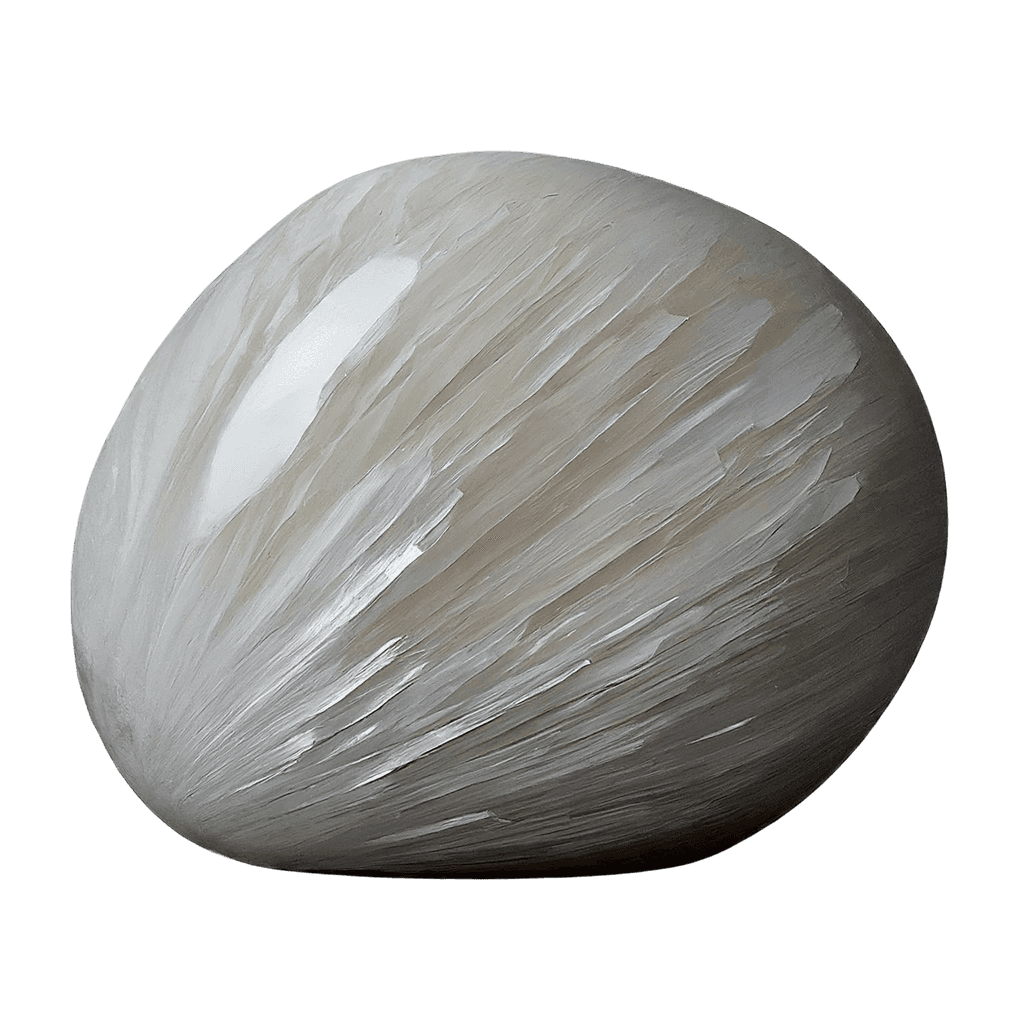
Scolecite is a white crystal used in modern crystal healing for calm, meditation, and spiritual awakening. It measures 5 on the Mohs hardness scale and typically costs $20 to $50 for a tumbled stone. In the chakra tradition, Scolecite is associated with the Crown and Third Eye chakras.
Worth knowing: Its name comes from the Greek skolex, meaning worm, coined in 1813 because a heated splinter of the mineral visibly curls like a worm in the blowpipe flame.
“A delicate fibrous zeolite of profound inner peace and dream-state meditation.”
- Chakra
- Crown (Sahasrara), Third Eye (Ajna)
- Zodiac
- Capricorn ♑
- Element
- Air 💨, Spirit ✨
- Planet
- Neptune ♆
- Hardness
- 5 / 10 (Mohs)
- Colors
- White, Translucent, Pale pink
- Origin
- India, Iceland, USA
- Availability
- Not sold here yet
Care + Safety
Scolecite at a glance
- Water: avoid, may damage or leach
- Sun: tolerates sunlight charging
- Mohs hardness: 5 (occasional wear only)
What is Scolecite?
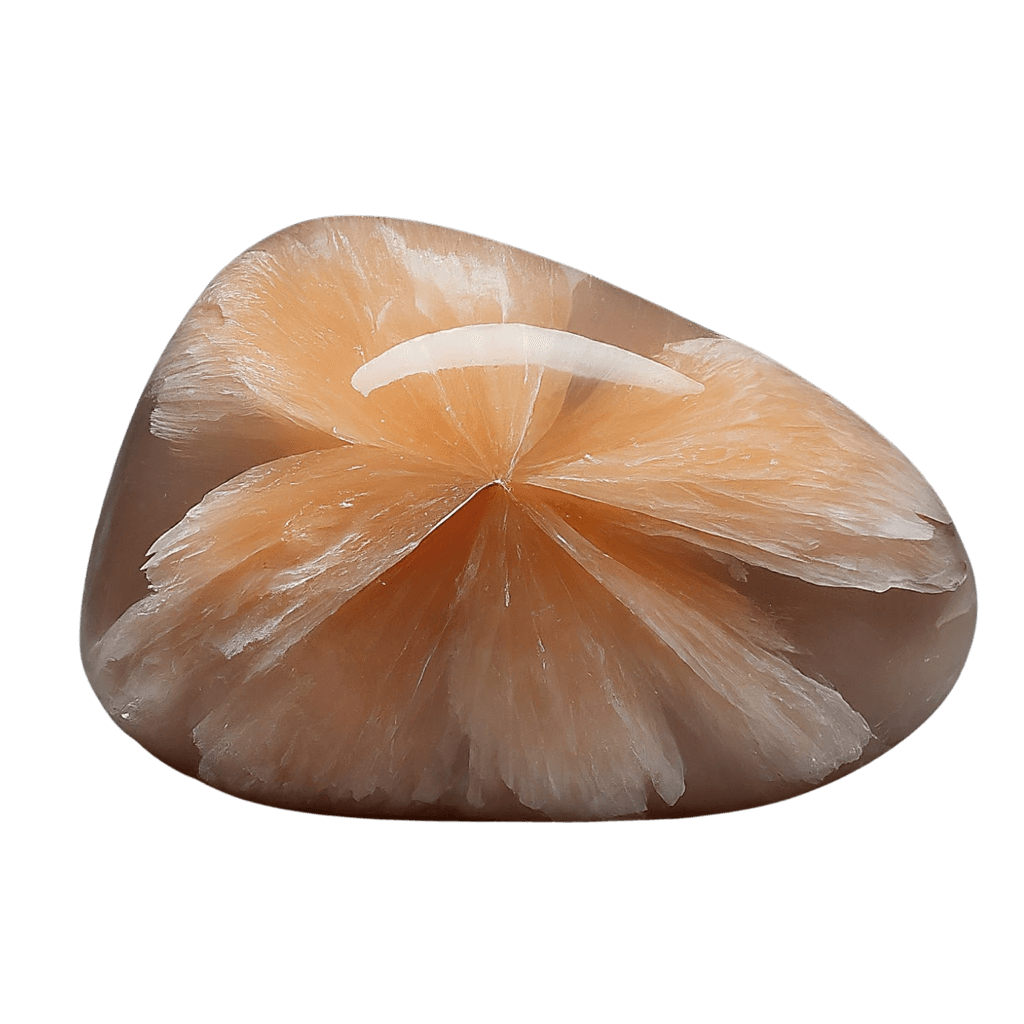
Scolecite is a calcium-dominant member of the zeolite family, a hydrated calcium aluminosilicate that crystallizes inside gas cavities in basalt as sprays of slender, glassy white needles. Nearly all specimens on the market come from quarries in the Deccan Traps flood basalts around Pune and Nashik in western India.
Scolecite measures 5 on the Mohs scale and shows white, translucent, or pale pink coloring. Within the catalog it sits on the quieting shelf, among the stones brought out for calm, meditation, and spiritual awakening.
The stone connects primarily to the Crown (Sahasrara) and Third Eye (Ajna) chakras, carrying Air and Spirit energy. Today the material is drawn from India, Iceland, and USA. Hold pieces from two different sources side by side and the differences in the white material, tone, translucency, pattern, become obvious fast.
Scolecite forms in delicate white needles that radiate from a central point, fragile-looking but quietly powerful. Place it under your pillow and notice the quality of your dreams shifting toward something more vivid, more peaceful. This is one of the highest-frequency calming stones, supporting deep meditative states.
Also catalogued as Stone of Peace and Zeolite of Tranquility, Scolecite earns its place in a working collection by being usable: start with calm, the job it is best known for, and let the stone widen its own brief from there.
History and Mythology
There is no credible ancient chapter to tell about Scolecite. The species was described by modern science, and its associations with calm were assigned by contemporary practitioners reading its color, structure, and feel. What the stone lacks in legend it makes up in geology, which asks for no embellishment; deposits worked today lie in India, Iceland, and USA.
In modern astrological correspondence Scolecite is linked with Capricorn, with Neptune ♆ named as its planetary ruler. Practitioners who keep these tables often work the stone hardest during those sun-sign seasons, especially for calm.
Hold the two timescales side by side, centuries of human use at most against epochs of formation behind every Mohs 5 specimen of Scolecite; the deep time is the one part no marketing can inflate.
Scolecite Meaning and Metaphysical Properties
What the Hand Learns First
The hand learns Scolecite fast: a Mohs 5 stone whose white face warms readily and carries a soft luster that invites the thumb to keep circling it. Pay attention to the out-breath as you settle. Classical practice reads the quieting family at the exhale, so that is where to put your listening first.
Primary Properties
Scolecite carries a soft-spoken property list: calm, meditation, spiritual awakening, and sleep. Downshift is the family trade, the wind-down hour, the gap between obligations, the recovery breath after something hard. Listen closely, because the quieting stones murmur where other families shout.
How Crystal Energy Works
At the top of the map is the Crown, the gate between personal energy and the larger field, and tradition keeps Scolecite there for calm. A light touch is the whole method: brief sessions, gentle attention, and calm, meditation, and spiritual awakening understood as the work of seasons rather than afternoons. Placement over promises is how Judy Hall handles the calming family; her entries point to the nightstand, the meditation corner, the hard-day pocket, and stop short of guarantees.
Amplification Through Intention
As an Air-element stone, Scolecite is worked where thinking happens, the desk, the journal, the conversation where calm is on the line. Keep it in view rather than in a drawer, and let each glance quietly reset the calm intention.
Healing Benefits
Emotional Support
The emotional register of Scolecite is quieting: calm, meditation, and spiritual awakening. Reach for it at the jagged hours, late-afternoon overwhelm, the racing mind at midnight, and let the stone's weight give the spiral somewhere to land. As with all crystal healing, calm support from a stone is reflective practice rather than medicine; significant emotional concerns deserve qualified human help.
Spiritual Connection
Spiritually, Scolecite belongs to the practices of winding down, the before-sleep review, the head-to-toe scan, the gradual unclenching that makes room for subtler knowing. In this family the quiet itself is the devotion, and the stone is simply its anchor on the nightstand.
Physical Presence
Physically, Scolecite suits the desk-bound body: a cool object for the hand during screen hours, a cue to unclench the jaw and drop the shoulders on the way to calm. Awareness, not treatment, is the honest claim.
Chakra Connection
Scolecite resonates most strongly with the Crown (Sahasrara), the energy center traditionally drawn in violet / white and the traditional seat of this stone's calm work. When this center runs clear, the classical markers are spiritual connection, divine wisdom, and unity; calm, meditation, and spiritual awakening are what Scolecite is most often asked to bring to it.
Lying down, keep Scolecite clear of the head altogether, near hair rather than against skin; crown placements sit at the body's edge, and soft attention rather than any measured stretch of it is the traditional calm session.
Scolecite also keeps a working line to the Third Eye (Ajna), which widens its range in layouts; let the primary placement lead, and add the second position once the first feels familiar.
Zodiac and Astrological Connection
In the modern correspondence tables Scolecite is assigned to Capricorn ♑ (Dec 22 to Jan 19); a Sun, Moon, or rising placement there is read as a head start with this stone, nothing more.
None of this is exclusionary. If Scolecite keeps catching your eye, that interest counts for more than whether Capricorn appears anywhere in your chart.
In the planetary layer of the system, Neptune ♆ holds the rulership, and that planet's prominent transits are the traditional windows for deeper calm work with Scolecite.
How to Use Scolecite
These are the five ways of working with Scolecite I suggest most often. Begin wherever your attention goes first; the sequence matters far less than starting.
- 1
Meditation Hold
Take up Scolecite as you settle in; at Mohs 5 it takes on your warmth within a minute or two, and that slow merge is a useful anchor whenever the mind wanders.
- 2
Body Placement
Crown placements sit off the body entirely: lying down, keep Scolecite clear of the head rather than against it. Edge placement is the crown's convention, and soft attention rather than duration is what the tradition describes for calm.
- 3
Sleep Companion
Give Scolecite the nightstand post: last thing touched before lights out, first thing seen on waking. For a stone that lists sleep beside calm in its brief, that small ceremony is the method.
- 4
Carry With You
Stash Scolecite where the overloaded day can reach it, the coat pocket, the desk's edge, the corner of the bag, and let a single slow touch substitute for the pause you are not getting; calm, carried this way, arrives in small repeated doses.
- 5
Crystal Grid Anchor
For grid work, give Scolecite the anchor position and run Selenite and Apophyllite on the outer points, all matched to a single calm intention. Rebuild it when it goes stale; a calm grid you have stopped seeing has stopped working.
How to Cleanse and Charge
A worked stone needs clearing, and Scolecite is no exception; practitioners describe an uncleansed crystal as muffled, present but quieter than it should be. For the full safety profile and the cadence I recommend, see the dedicated Scolecite care guide.
- 1
Moonlight
Give Scolecite a night outdoors or at the glass under a bright moon; the tradition holds moonlight to be the universal reset, slow, cool, and risk-free.
- 2
Selenite
Lay Scolecite on a selenite plate or alongside a selenite wand overnight; selenite is the tradition's self-cleaning shelf, no effort, no risk to the stone.
- 3
Sound
A minute inside strong, sustained tone, bowl, chime, even a steady hum, resets Scolecite without physical risk, which makes sound the safest deep cleanse for fragile stones.
- 4
Sage
For a deeper reset, hold Scolecite in sage smoke and name out loud what the stone has been carrying; the naming is half the cleanse.
How often to cleanse
I recommend cleansing Scolecite at least once a month, more frequently if you're using it daily or during emotionally intense periods. You'll also learn to feel when a stone needs cleansing; it may feel heavier, duller, or simply “off.”
Charging after cleansing
Once it is cleansed, recharge Scolecite by placing it in morning sunlight for 30 minutes; cleansing empties the stone, charging refills it.
The Crystal Starter Library
A free guide from Crystal Cassandra: the twelve stones that cover almost everything, a one page care matrix for water, sun and salt, and how to build a first intention practice.
We respect your inbox. Unsubscribe anytime.
Crystal Pairings
Scolecite pairs best with stones that respect its quiet; loud amplifiers defeat the point. The traditional combinations keep the register low and slow, which is where this stone does its calm work. If a pairing feels busy rather than restful, trust that and separate them.
How to Spot Real vs Fake Scolecite
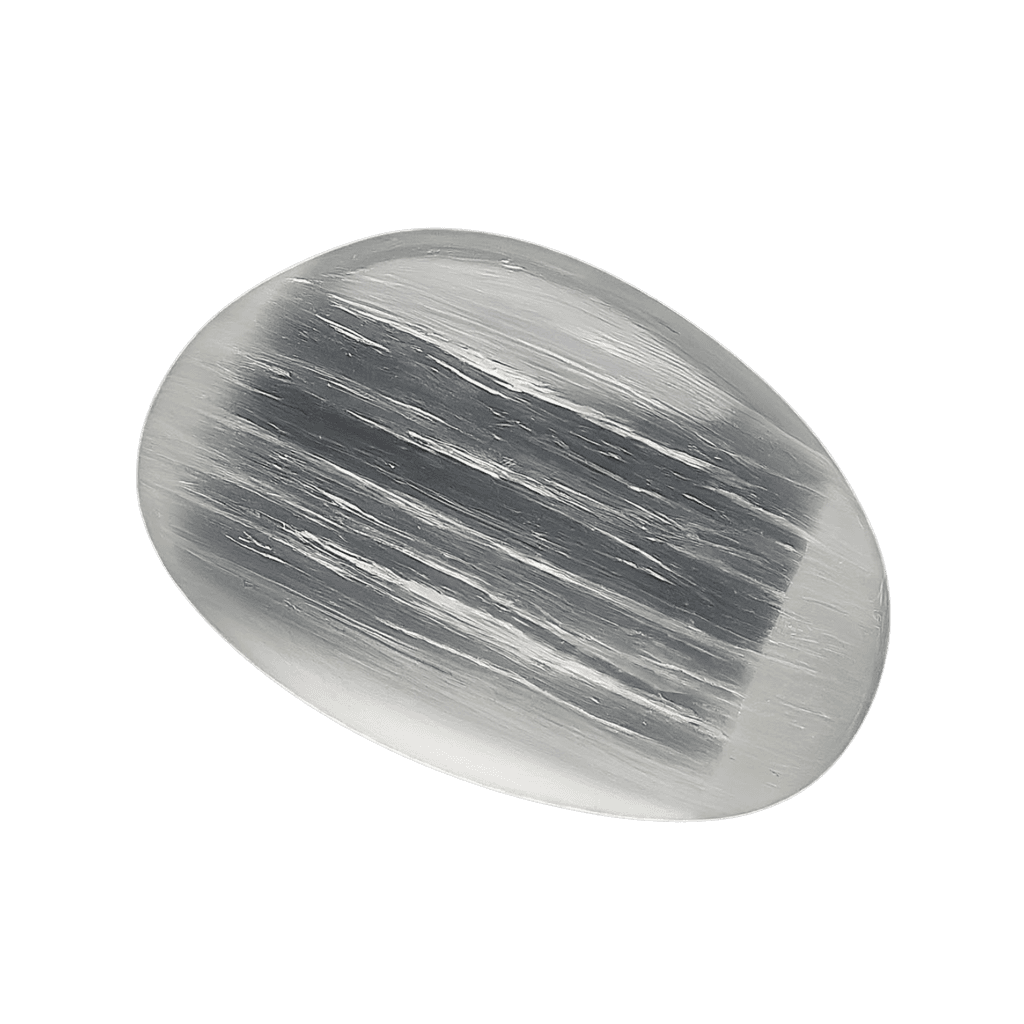
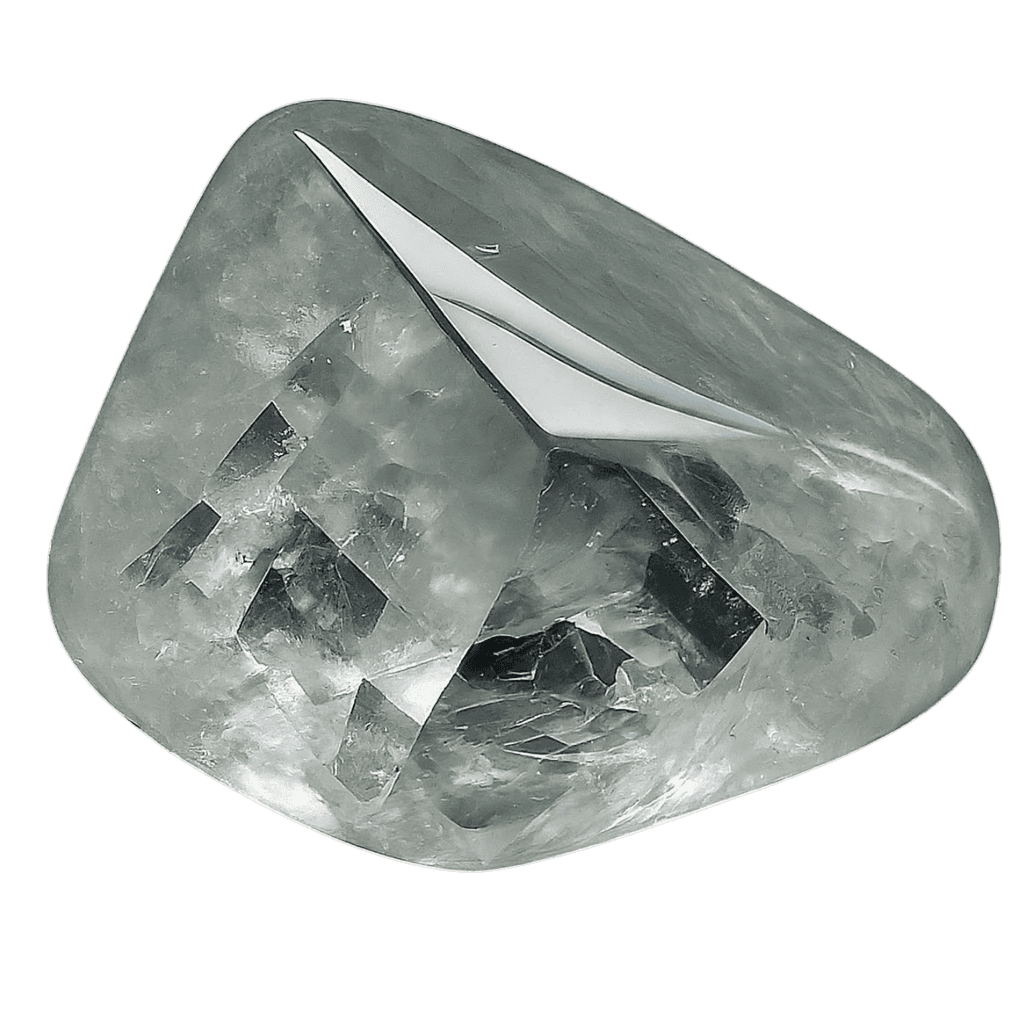
The market in Scolecite has grown faster than its honesty, and white pieces are easy to imitate on a screen. Here is how to check one before you pay for it:
Temperature: at Mohs 5, genuine Scolecite warms in the hand noticeably faster than glass; an imitation in glass stays cold and slick well past the first minute.
Weight: real Scolecite should feel like stone rather than plastic pretending; if a palm-sized piece feels nearly weightless, walk away from it.
Color and pattern: natural Scolecite runs white, translucent, or pale pink, with variation from piece to piece; perfectly uniform color across a whole tray is the classic mark of dye or synthetics.
Price: expect $20 to $50 for a decent tumbled or palm piece of Scolecite; dramatic discounts mean dye, resin, or mislabeling more often than they mean luck.
Trust your source: provenance beats any hands-on check; ask where the Scolecite was mined and whether the white material is treated, and expect straight answers rather than adjectives.
Sourcing
Buying Scolecite well
The CrystalStones.com crystal store is not open yet, so we do not sell Scolecite here. What we can give you is the part that matters most: how to tell a genuine piece from a treated or dyed one, and how to care for it once it is yours.
Frequently Asked Questions
What is Scolecite good for?
Scolecite is traditionally associated with calm, meditation, spiritual awakening, and sleep. Many people find it supportive for calm and for working with the Crown and Third Eye chakras.
Can Scolecite go in water?
No. Scolecite should stay dry; cleanse it with Moonlight, Selenite, and Sound instead, and keep every wet method off the table.
Can Scolecite be in the sun?
Yes, Scolecite can sit in sunlight safely; its white coloring holds up, and thirty minutes of morning sun is the traditional charge.
What chakra is Scolecite?
Scolecite is primarily associated with the Crown (Sahasrara) and Third Eye (Ajna) chakras. Position it clear of the head rather than on the body, seated or lying down; edge placement is the crown convention for calm work.
What zodiac sign is Scolecite for?
Scolecite is traditionally connected to Capricorn. Astrological correspondence is one tradition among several, and nothing about your chart disqualifies you; people without a Capricorn placement work with Scolecite all the time.
How do I cleanse Scolecite?
The best methods for Scolecite are Moonlight, Selenite, and Sound. Fragile needles, handle with great care. Avoid water (zeolites are porous).
Is Scolecite real or fake, how can I tell?
Genuine Scolecite warms quickly in the hand at Mohs 5, while glass imitations stay cold longer and feel slick rather than satiny. Natural white material varies piece to piece and runs about $20 to $50 tumbled, so perfectly matched stones at a suspicious discount deserve a second look.
What’s Next?
A few thoughtful next steps if Scolecite is calling to you.
Explore More Tools
Crystal Quiz
Discover which crystal matches your energy right now.
Open →Chakra Test
Find which chakras need attention and the crystals to balance them.
Open →Crystal Cleansing Guide
Learn how to safely cleanse and charge your crystals.
Open →Crystals by Intention
Find the perfect crystal for what you need right now.
Open →