Quick Answer
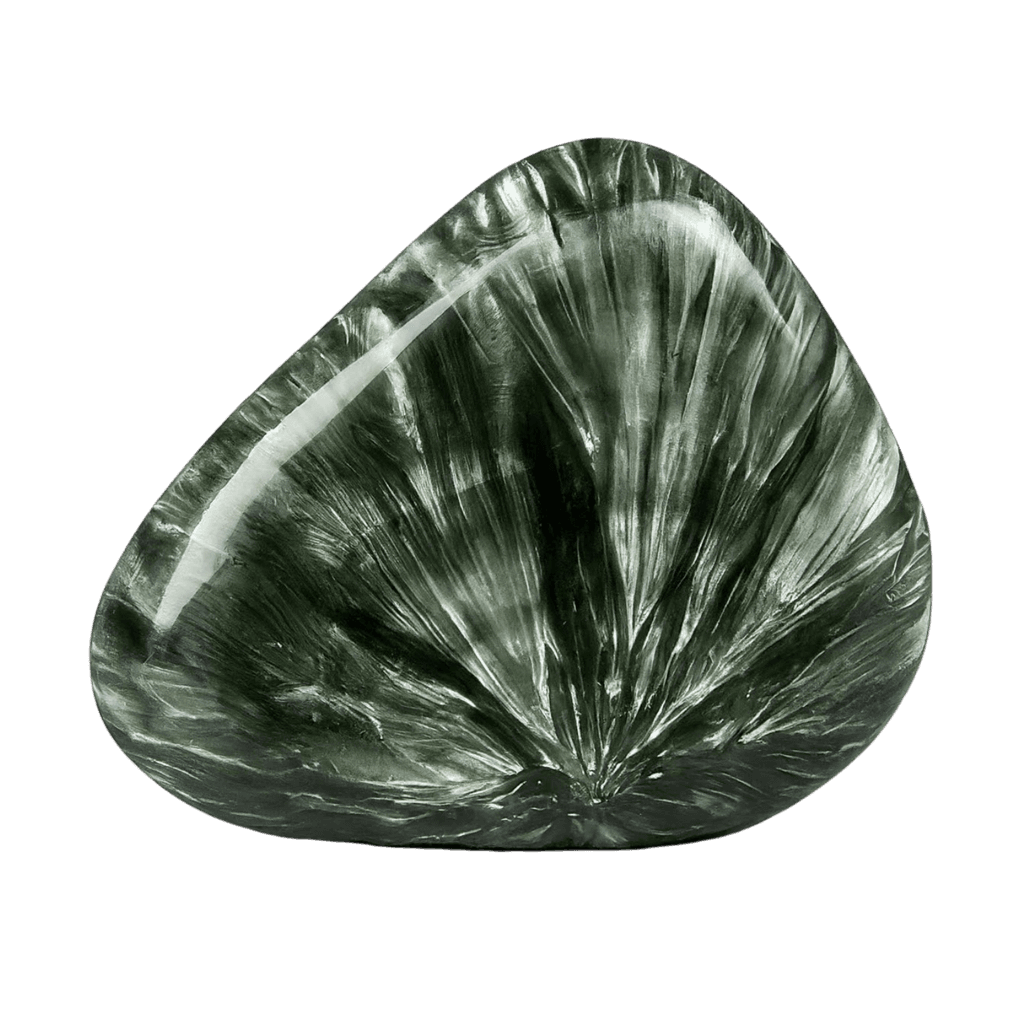
Seraphinite is a dark green crystal used in modern crystal healing for heart healing, calm, and spiritual awakening. It measures 3 on the Mohs hardness scale and typically costs $14 to $50 for a tumbled stone. In the chakra tradition, Seraphinite is associated with the Heart and Crown chakras.
Worth knowing: Virtually all seraphinite on the market comes from a single source, the Korshunovskoye iron deposit in Russia's Irkutsk region near Lake Baikal, where the stone is recovered alongside magnetite ore.
“A Russian clinochlore patterned with feathery silver chatoyance, of angelic heart-renewal.”
- Chakra
- Heart (Anahata), Crown (Sahasrara)
- Zodiac
- Sagittarius ♐, Pisces ♓
- Element
- Earth 🌍, Spirit ✨
- Planet
- Venus ♀
- Hardness
- 3 / 10 (Mohs)
- Colors
- Dark green, Silver chatoyance, Feathery
- Origin
- Russia (Lake Baikal)
- Availability
- Not sold here yet
Care + Safety
Seraphinite at a glance
- Water: avoid, may damage or leach
- Sun: tolerates sunlight charging
- Mohs hardness: 3 (display + meditation only)
What is Seraphinite?
Seraphinite is gem-quality clinochlore, a magnesium-rich member of the chlorite group of sheet silicates. Its wing-like silver shimmer comes from fine fibrous crystals interleaved through darker green chlorite, and at a Mohs hardness of only 2 to 2.5 the stone scratches so easily that cutters reserve it for pendants and display pieces.
Seraphinite measures 3 on the Mohs scale and shows dark green, silver chatoyance, or feathery coloring. It is filed with the heart stones, and the work it is most often asked to do is relational: heart healing, calm, and spiritual awakening.
The stone connects primarily to the Heart (Anahata) and Crown (Sahasrara) chakras, carrying Earth and Spirit energy. Today the material is drawn from Russia (Lake Baikal). Hold pieces from two different sources side by side and the differences in the dark green material, tone, translucency, pattern, become obvious fast.
Seraphinite is a Russian variety of clinochlore patterned with feathery silver chatoyance reminiscent of angel wings, named for the seraphim. Tilt it slowly until the silver chatoyance opens and closes like wings, which is how this stone came by the seraphim in its name. The classical sources describe Seraphinite as a stone of angelic heart-renewal and gentle, patient restoration.
Also catalogued as Silver-Feather Clinochlore and Angel Stone, whether it is your first stone or your fiftieth, Seraphinite tends to find its role quickly, and heart healing is the natural place to begin.
History and Mythology
Seraphinite entered the record through mineralogy rather than mythology: the species was identified and named in the modern era, and its healing use begins with the 20th and 21st century crystal literature rather than any ancient source. That recency is worth stating plainly, because honest provenance is rarer than it should be in this field. The material itself is sourced today from Russia (Lake Baikal).
The correspondence tables used by today's practitioners assign Seraphinite to Sagittarius and Pisces under the rulership of Venus ♀. In that system, work centered on heart healing is said to land best while those signs are in season.
Whatever the age of the name, the geology is patient: every piece of Seraphinite took shape over geological timescales, arriving at its Mohs 3 hardness through slow heat, pressure, and chemistry long before any hand reached for it.
Seraphinite Meaning and Metaphysical Properties
What the Hand Learns First
Pick up Seraphinite and warmth is the first report: at Mohs 3 it is a mid-soft mineral that takes body heat within a minute, and its dark green surface polishes to a satin sheen rather than a hard glitter. Give a heart stone its first minute at the chest rather than reaching for words about it; whatever you find there is yours to name, and nobody can name it ahead of you.
Primary Properties
Seraphinite carries a relational property list: heart healing, calm, spiritual awakening, and healing. Stones in the heart family do their work by softening, never by force, and the earliest evidence is usually the tone you take with yourself. Read the list as invitations to begin, not promises to collect.
How Crystal Energy Works
Seraphinite works through the Heart center in the traditional map, the middle station where the lower and upper energies cross, and heart healing is its assignment there. Let the breath set the tempo, stone resting over the heart, heart healing, calm, and spiritual awakening held softly in mind, with nothing pushed. Judy Hall's The Crystal Bible files the heart stones under relationship work, and her entries for this family keep returning to self-directed compassion as the prerequisite for the partnered kind.
Amplification Through Intention
Seraphinite is classed as an Earth stone, patient, bodily, hard to knock over, which sets the pace of its heart healing work. Prefer routines over ceremonies, the same pocket, the same desk corner, and let consistency do for heart healing, calm, and spiritual awakening what intensity cannot.
Healing Benefits
Emotional Support
Seraphinite does its emotional work at the tender layer, heart healing, calm, and spiritual awakening, where connection lives. Keep it in hand for the conversations that invite armor, and let the stone stand for the choice to stay open instead. Tradition, not treatment: heart healing work with a stone sits beside professional support, never in place of it.
Spiritual Connection
Seraphinite serves the devotional side of connection: tradition brings it into loving-kindness style meditation to keep the Heart center engaged while the practice moves person by person. The heart family treats love as something practiced, not awarded.
Physical Presence
Tradition reads Earth stones like Seraphinite through the soles of the feet: stance, weight, the felt fact of standing somewhere while you work on heart healing. Try standing barefoot with the stone in hand when the day goes abstract; the practice is awareness, not medicine.
Chakra Connection
Seraphinite resonates most strongly with the Heart (Anahata), the energy center traditionally drawn in green / pink and the traditional seat of this stone's heart healing work. When this center runs clear, the classical markers are love, compassion, and emotional openness; heart healing, calm, and spiritual awakening are what Seraphinite is most often asked to bring to it.
Worn over the heart on a longer chain, or held flat to the chest before hard conversations, Seraphinite keeps the heart center company through the day's heart healing work.
Because Seraphinite is also associated with the Crown (Sahasrara), it moves well in multi-stone layouts: one stone, two stations, worked on different days.
Zodiac and Astrological Connection
Seraphinite appears under Sagittarius ♐ (Nov 22 to Dec 21) and Pisces ♓ (Feb 19 to Mar 20) in the standard correspondence tables; if those signs are loud in your chart, expect the introduction to feel familiar.
None of this is exclusionary. If Seraphinite keeps catching your eye, that interest counts for more than whether Sagittarius appears anywhere in your chart.
Venus ♀ rules Seraphinite in this tradition, so practitioners time their longer sessions to that planet's active periods, especially for heart healing.
How to Use Seraphinite
Here are five ways I recommend working with Seraphinite. Start with whichever feels most natural, there's no wrong entry point.
- 1
Meditation Hold
Hold Seraphinite for the length of your sit and notice the moment it stops feeling like an object and starts feeling like part of the hand; for a Mohs 3 stone, that shift comes early.
- 2
Body Placement
Center-chest is the station the chakra charts give Seraphinite: lie back, set it over the heart, and let each breath rock it gently. Keep the attention on the stone rather than on yourself, which is harder than it sounds and is most of the skill. The standing association at this center is heart healing.
- 3
Sleep Companion
Seraphinite can still earn the nightstand even though its brief is heart healing rather than rest: setting the stone down as you set the day down marks the switch from doing to sleeping.
- 4
Carry With You
On the days built around other hearts, the reunion, the amends, the date, keep Seraphinite where your hand can find it. A deliberate touch on either side of the important sentence turns it into a quiet heart healing ritual.
- 5
Crystal Grid Anchor
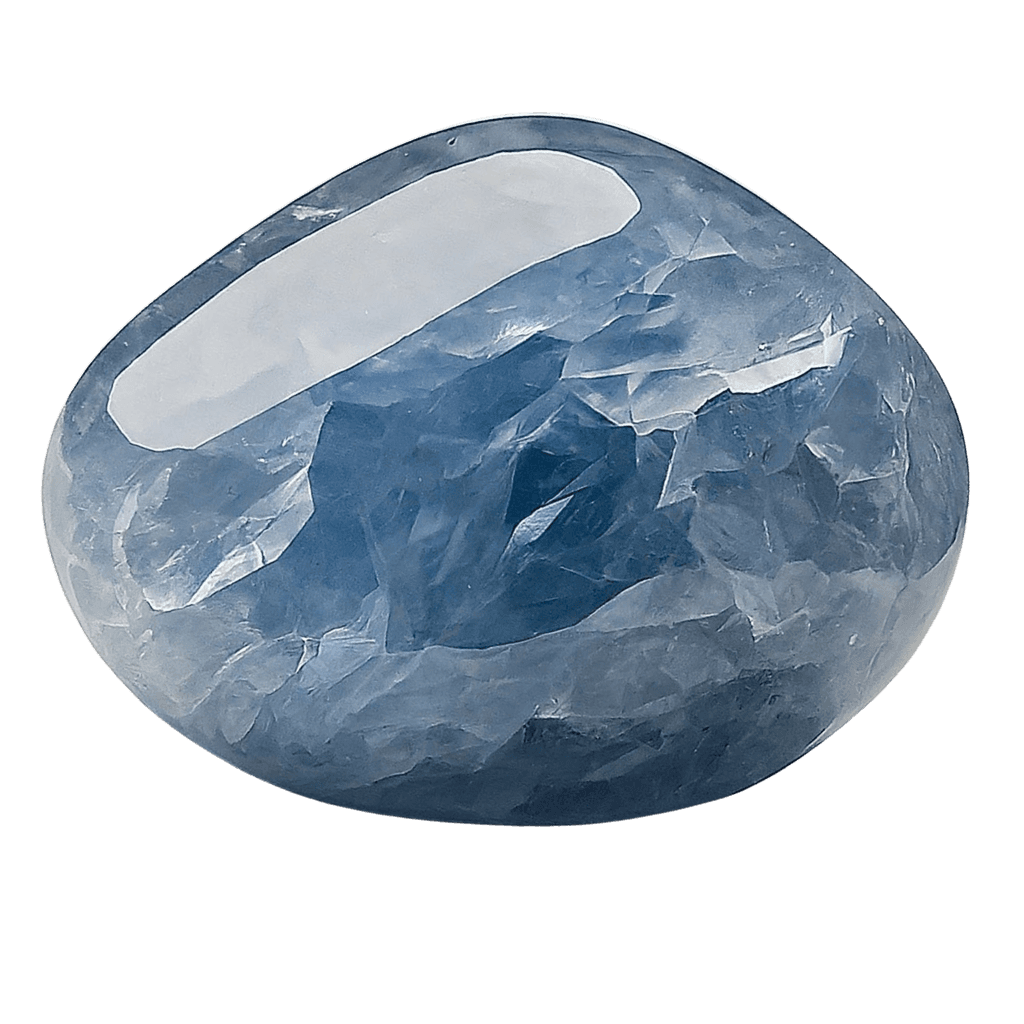
Use Seraphinite as the heart of a small grid for heart healing, with Angelite and Celestite alternating on the spokes. Place the stones slowly and set the last one down with the heart healing intention named out loud.
How to Cleanse and Charge
A worked stone needs clearing, and Seraphinite is no exception; practitioners describe an uncleansed crystal as muffled, present but quieter than it should be. For the full safety profile and the cadence I recommend, see the dedicated Seraphinite care guide.
- 1
Moonlight
Set Seraphinite on a windowsill or ledge under the full moon and collect it in the morning. Moonlight is the gentlest cleanse in the tradition, safe for every stone in the collection and impossible to overdo.
- 2
Selenite
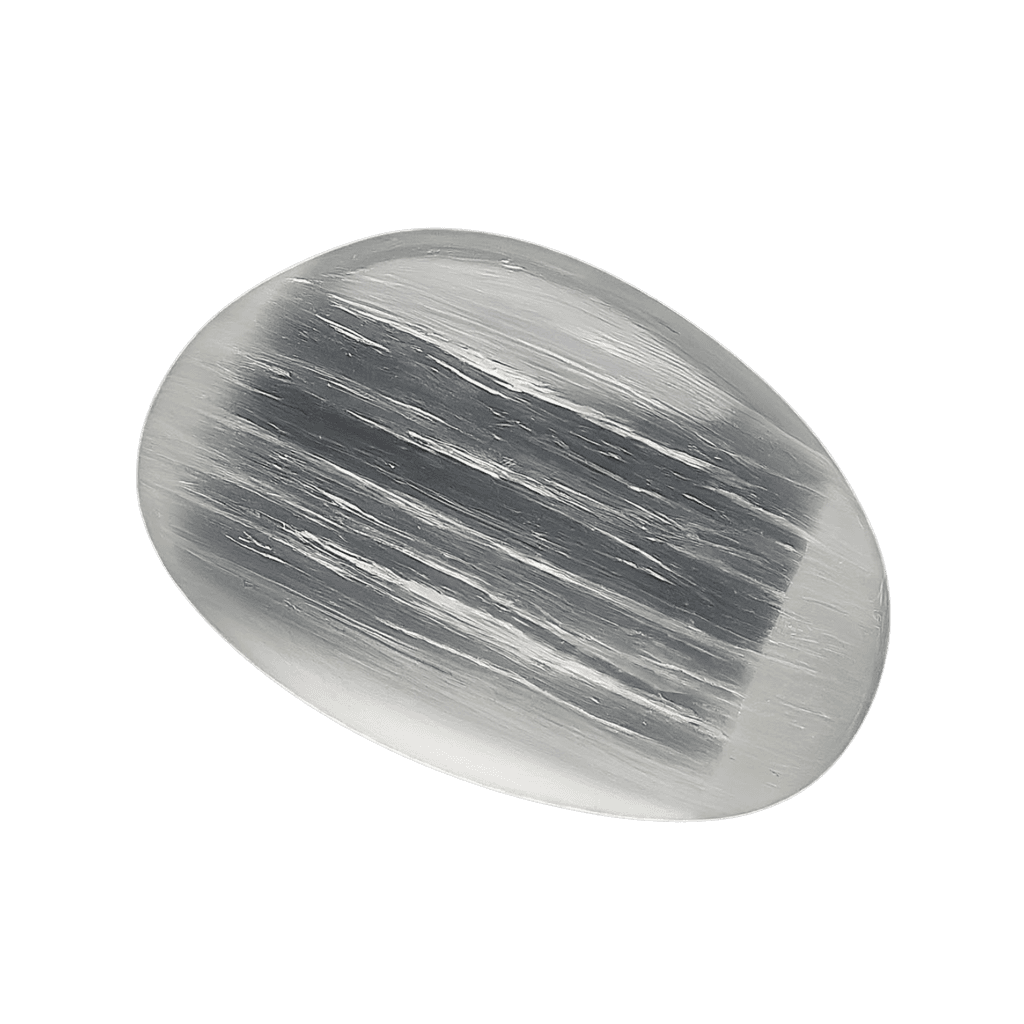
Lay Seraphinite on a selenite plate or alongside a selenite wand overnight; selenite is the tradition's self-cleaning shelf, no effort, no risk to the stone.
- 3
Sage
Pass Seraphinite through the smoke of white sage or rosemary for about thirty seconds, turning it so the smoke wraps every face, while you hold a clear intention of release.
- 4
Sound
Sound-cleanse Seraphinite by striking a bowl or bell, letting each tone fade completely before the next; the vibration does the clearing, and no contact is needed.
How often to cleanse
I recommend cleansing Seraphinite at least once a month, more frequently if you're using it daily or during emotionally intense periods. You'll also learn to feel when a stone needs cleansing; it may feel heavier, duller, or simply “off.”
Charging after cleansing
Once it is cleansed, recharge Seraphinite by placing it in morning sunlight for 30 minutes; cleansing empties the stone, charging refills it.
The Crystal Starter Library
A free guide from Crystal Cassandra: the twelve stones that cover almost everything, a one page care matrix for water, sun and salt, and how to build a first intention practice.
We respect your inbox. Unsubscribe anytime.
Crystal Pairings
Seraphinite pairs by temperament: heart stones want company that softens rather than sharpens. Each traditional partner adds what the stone lacks alone, ground under the tenderness or light over it. Test a pair by holding both a while; the pair you keep reaching back for is the one.

How to Spot Real vs Fake Seraphinite
Before buying Seraphinite, run the piece through these checks; nothing here needs equipment, just your hands, the dark green stone in question, and a healthy skepticism:
Temperature: at Mohs 3, genuine Seraphinite warms in the hand noticeably faster than glass; an imitation in glass stays cold and slick well past the first minute.
Weight and density: resin fakes run light for their size, while genuine Seraphinite at Mohs 3 carries honest mineral density; weigh it in the palm against any real tumbled stone you own.
Color and pattern: natural Seraphinite runs dark green, silver chatoyance, or feathery, with variation from piece to piece; perfectly uniform color across a whole tray is the classic mark of dye or synthetics.
Price: expect $14 to $50 for a decent tumbled or palm piece of Seraphinite; dramatic discounts mean dye, resin, or mislabeling more often than they mean luck.
Trust your source: a seller who knows where a dark green stone like this came from and says so plainly is worth more than every test on this list. Vagueness about origin is itself an answer.
Sourcing
Buying Seraphinite well
The CrystalStones.com crystal store is not open yet, so we do not sell Seraphinite here. What we can give you is the part that matters most: how to tell a genuine piece from a treated or dyed one, and how to care for it once it is yours.
Frequently Asked Questions
What is Seraphinite good for?
Seraphinite is traditionally associated with heart healing, calm, spiritual awakening, and healing. Many people find it supportive for heart healing and for working with the Heart and Crown chakras.
Can Seraphinite go in water?
No, water and Seraphinite do not mix; moisture can compromise the surface or the structure itself. Soft chlorite-group mineral. Dry cleanse only.
Can Seraphinite be in the sun?
Yes. Seraphinite is one of the sun-tolerant stones, so use morning light freely to charge the dark green material; just bring it in rather than leaving it out for whole days at a time.
What chakra is Seraphinite?
Seraphinite is primarily associated with the Heart (Anahata) and Crown (Sahasrara) chakras. Let it ride at the heart center during lying-down practice, moved by the breath; that station is the traditional seat of its heart healing work.
What zodiac sign is Seraphinite for?
Seraphinite is traditionally connected to Sagittarius and Pisces. Astrological correspondence is one tradition among several, and nothing about your chart disqualifies you; people without a Sagittarius placement work with Seraphinite all the time.
How do I cleanse Seraphinite?
Stick to Moonlight, Selenite, and Sage for Seraphinite; those are the methods its care profile recommends. Dry methods make up the entire list on purpose, since this stone's chemistry asks to be kept away from moisture.
Is Seraphinite real or fake, how can I tell?
Genuine Seraphinite warms quickly in the hand at Mohs 3, while glass imitations stay cold longer and feel slick rather than satiny. Natural dark green material varies piece to piece and runs about $14 to $50 tumbled, so perfectly matched stones at a suspicious discount deserve a second look.
What’s Next?
A few thoughtful next steps if Seraphinite is calling to you.
Explore More Tools
Crystal Quiz
Discover which crystal matches your energy right now.
Open →Chakra Test
Find which chakras need attention and the crystals to balance them.
Open →Crystal Cleansing Guide
Learn how to safely cleanse and charge your crystals.
Open →Crystals by Intention
Find the perfect crystal for what you need right now.
Open →