Quick Answer
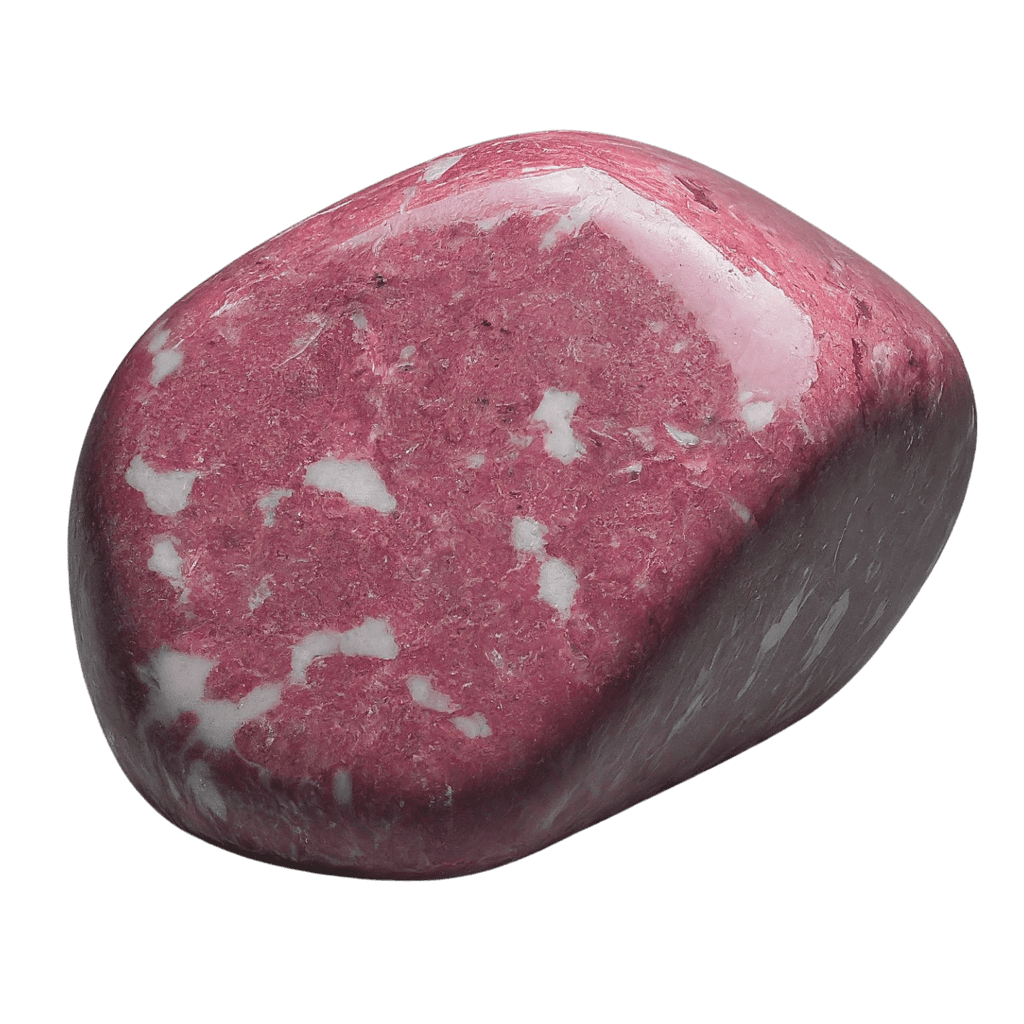
Thulite is a pink crystal used in modern crystal healing for self-love, heart healing, and expression. It measures 6.5 on the Mohs hardness scale and typically costs $8 to $25 for a tumbled stone. In the chakra tradition, Thulite is associated with the Heart and Throat chakras.
Worth knowing: Named in 1820 for Thule, the legendary far-northern land of Greek geography, thulite was first found in Norway and remains so identified with the country that it is often called Norway's national stone.
“A rosy Norwegian zoisite of self-love, heartfelt expression, and joy that takes its time.”
- Chakra
- Heart (Anahata), Throat (Vishuddha)
- Zodiac
- Taurus ♉, Gemini ♊
- Element
- Water 💧, Earth 🌍
- Planet
- Venus ♀
- Hardness
- 6.5 / 10 (Mohs)
- Colors
- Pink, Raspberry, Rose with white veining
- Origin
- Norway, USA, Austria
- Availability
- Not sold here yet
Care + Safety
Thulite at a glance
- Water: brief rinse safe
- Sun: tolerates sunlight charging
- Mohs hardness: 6.5 (occasional wear only)
What is Thulite?
Thulite is the opaque pink to raspberry variety of the silicate zoisite, its color carried by manganese substituting into the crystal structure. First described in 1820 from material found in Telemark, Norway, it was named for Thule, the semi-mythical northern land of classical geography, and typically grows as massive veins flecked with white calcite or quartz.
Thulite measures 6.5 on the Mohs scale and shows pink, raspberry, or rose with white veining coloring. It is filed with the heart stones, and the work it is most often asked to do is relational: self-love, heart healing, and expression.
The stone connects primarily to the Heart (Anahata) and Throat (Vishuddha) chakras, carrying Water and Earth energy. Sources include Norway, USA, and Austria; deposit matters more than beginners expect, and collectors learn to recognize where a piece of Thulite was mined by its color depth and pattern.
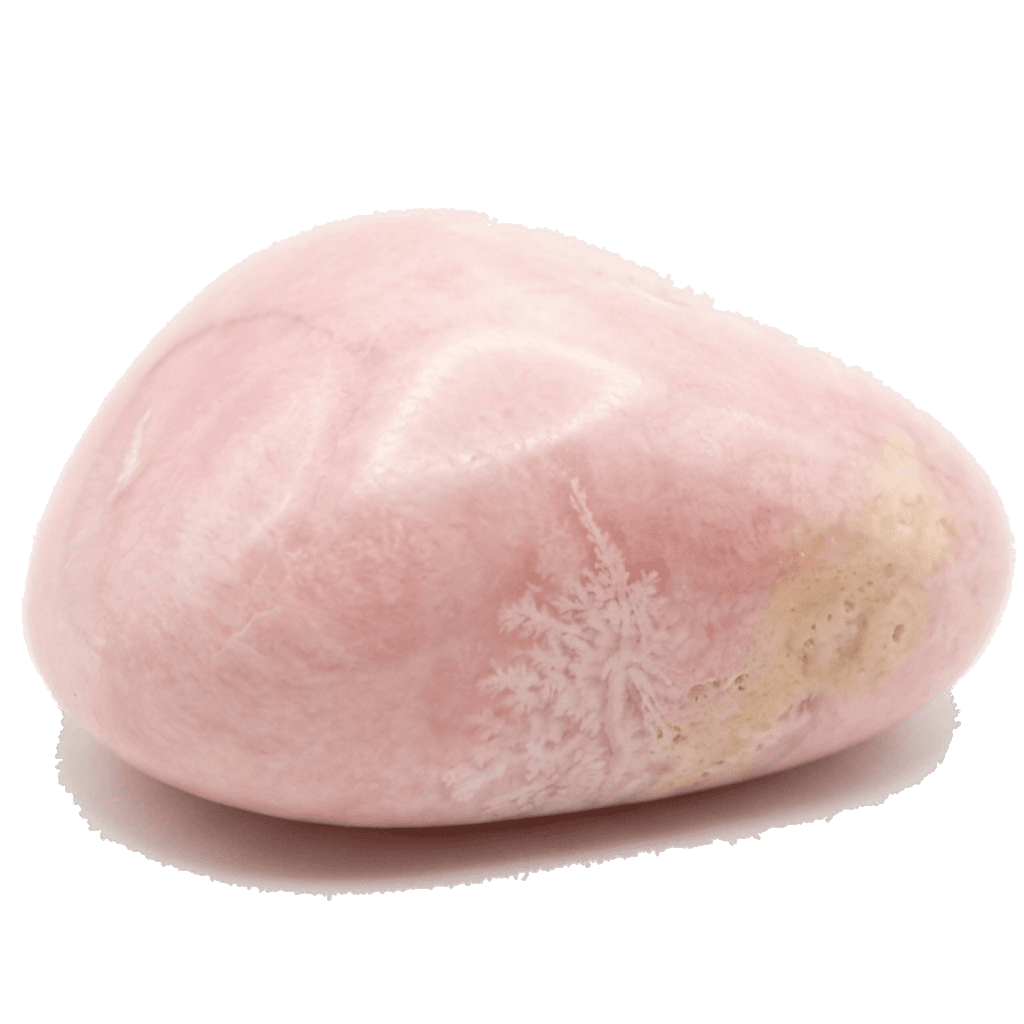
Thulite blushes the way late summer roses do, pink shot through with cream and the occasional whisper of gray host rock. Hold this stone and let its colour ask you something, something close to the moment a kind person says your name out loud. In the crystal-healing tradition thulite is associated with self-acceptance, heartfelt expression, and the courage to be seen, which is why many people keep it close when sharing new work or new feelings.
Also catalogued as Rosaline and Pink Zoisite, Thulite earns its place in a working collection by being usable: start with self-love, the job it is best known for, and let the stone widen its own brief from there.
History and Mythology
There is no credible ancient chapter to tell about Thulite. The species was described by modern science, and its associations with self-love were assigned by contemporary practitioners reading its color, structure, and feel. What the stone lacks in legend it makes up in geology, which asks for no embellishment; deposits worked today lie in Norway, USA, and Austria.
The correspondence tables used by today's practitioners assign Thulite to Taurus and Gemini under the rulership of Venus ♀. In that system, work centered on self-love is said to land best while those signs are in season.
Whatever the age of the name, the geology is patient: every piece of Thulite took shape over geological timescales, arriving at its Mohs 6.5 hardness through slow heat, pressure, and chemistry long before any hand reached for it.
Thulite Meaning and Metaphysical Properties
First Touch
The first touch of Thulite is cooler than you expect, and the pink polish is slick as bottle glass. Mohs 6.5 stones hold their temperature, and that slow warming is part of their character. Give a heart stone its first minute at the chest rather than reaching for words about it; whatever you find there is yours to name, and nobody can name it ahead of you.
Primary Properties
Every entry on the Thulite property sheet points toward connection: self-love, heart healing, expression, and friendship. The heart stones specialize in easing rather than driving, and many people find the first shift shows up in their own self-talk. Hold the list loosely; it is a place to start, not a guarantee.
How Crystal Energy Works
At the center of the chakra map sits the Heart, and that crossroads is where tradition places Thulite for its self-love work. Practice here follows the breath rather than the clock: the stone at the chest, attention settling on self-love, heart healing, and expression, force left at the door. Hall's catalog reads the heart stones through relationship work and keeps circling the same point: kindness toward yourself is the groundwork for the partnered kind.
Amplification Through Intention
Thulite carries Water in the elemental system, feeling, memory, tide, and that current sets the tempo of its self-love work. Use the slow hours, journaling, the evening review, the long unwinding, and let self-love, heart healing, and expression arrive at their own pace.
Healing Benefits
Emotional Support
In emotional work Thulite is turned toward self-love, heart healing, and expression: the tender, relational layer. Hold it when you want to stay soft in a conversation that tempts you to armor up, and let it mark the difference between guarded and present. These are traditional self-love associations rather than medical claims; for anything heavy or persistent, a qualified professional belongs in the picture alongside any stone.
Spiritual Connection
Thulite serves the devotional side of connection: tradition brings it into loving-kindness style meditation to keep the Heart center engaged while the practice moves person by person. The heart family treats love as something practiced, not awarded.
Physical Presence
Physically, Thulite keeps company with the soft systems, rest and recovery, the long exhale after effort toward self-love. Its honest job is reminding you to downshift; anything medical belongs with medical professionals.
Chakra Connection
Thulite resonates most strongly with the Heart (Anahata), the energy center traditionally drawn in green / pink and the traditional seat of this stone's self-love work. When this center runs clear, the classical markers are love, compassion, and emotional openness; self-love, heart healing, and expression are what Thulite is most often asked to bring to it.
Lie down with Thulite at the heart center, letting the breath rock it; a quiet unmeasured stretch of that is the oldest heart-stone session in the book, and self-love is the usual request.
Thulite also keeps a working line to the Throat (Vishuddha), which widens its range in layouts; let the primary placement lead, and add the second position once the first feels familiar.
Zodiac and Astrological Connection
Astrological tradition links Thulite with Taurus ♉ (Apr 20 to May 20) and Gemini ♊ (May 21 to Jun 20), and practitioners often suggest the stone meets Taurus placements with the least friction.
The gate, though, stands open: you do not need a Taurus Sun to work with Thulite, and a genuine pull toward the stone outweighs its paper assignments.
In the planetary layer of the system, Venus ♀ holds the rulership, and that planet's prominent transits are the traditional windows for deeper self-love work with Thulite.
How to Use Thulite
These are the five ways of working with Thulite I suggest most often. Begin wherever your attention goes first; the sequence matters far less than starting.
- 1
Meditation Hold
Take up Thulite and register the first cool touch; a glassy stone at Mohs 6.5 warms slowly, and tracking that gradual change is a meditation in itself.
- 2
Body Placement
Heart-center layouts hand the pacing to the breath: Thulite rides the rise and fall while you lie still. Watch the stone rise and settle, and let the watching be the entire practice. In my own sessions the noticing is what stays with me long after the stone has gone back on the shelf. The request the old charts attach here is self-love.
- 3
Sleep Companion
At night, park Thulite on the nightstand rather than working it; its job is the day's self-love, and ending the day cleanly is how tomorrow's session starts well.
- 4
Carry With You
Carry Thulite when the day belongs to other people's hearts, the hospital visit, the apology owed, the first date. Touching it once before you speak and once after makes it a small self-love checkpoint you can keep in a pocket.
- 5
Crystal Grid Anchor
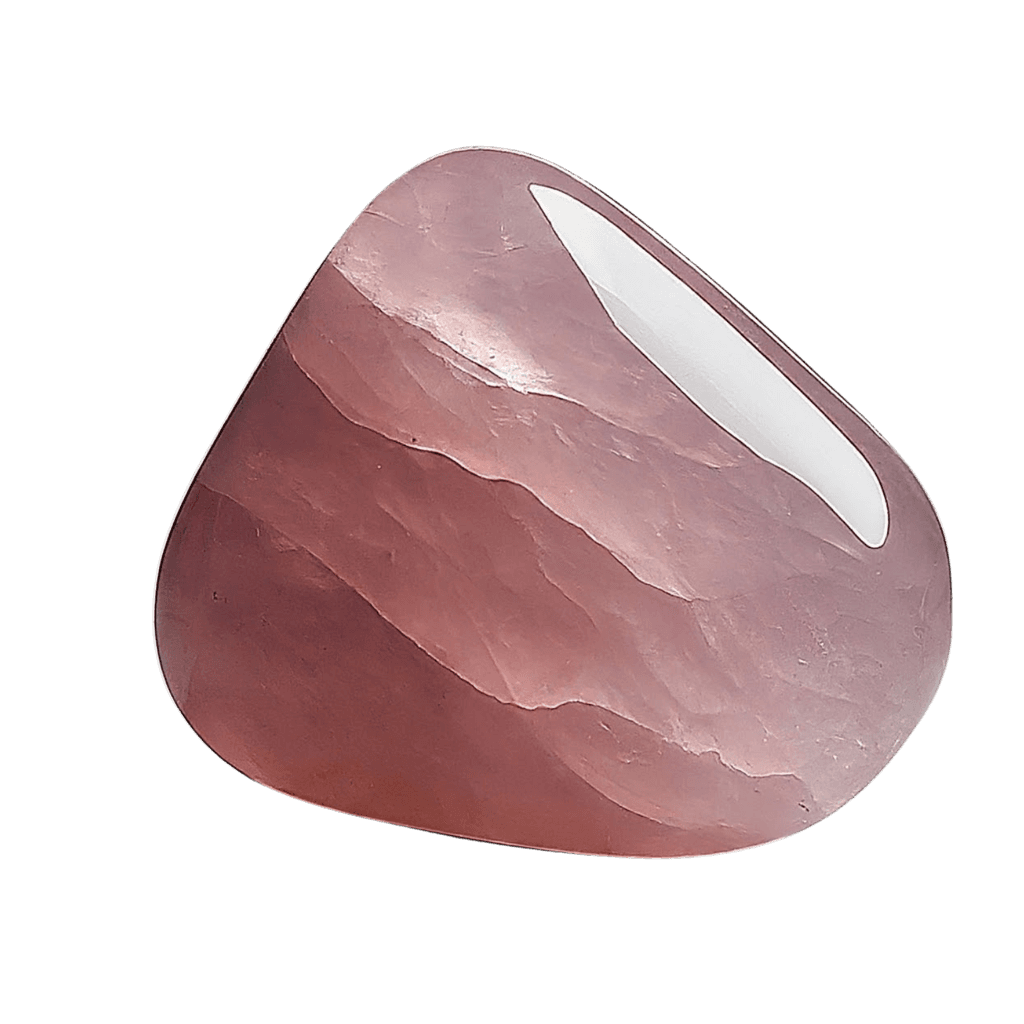
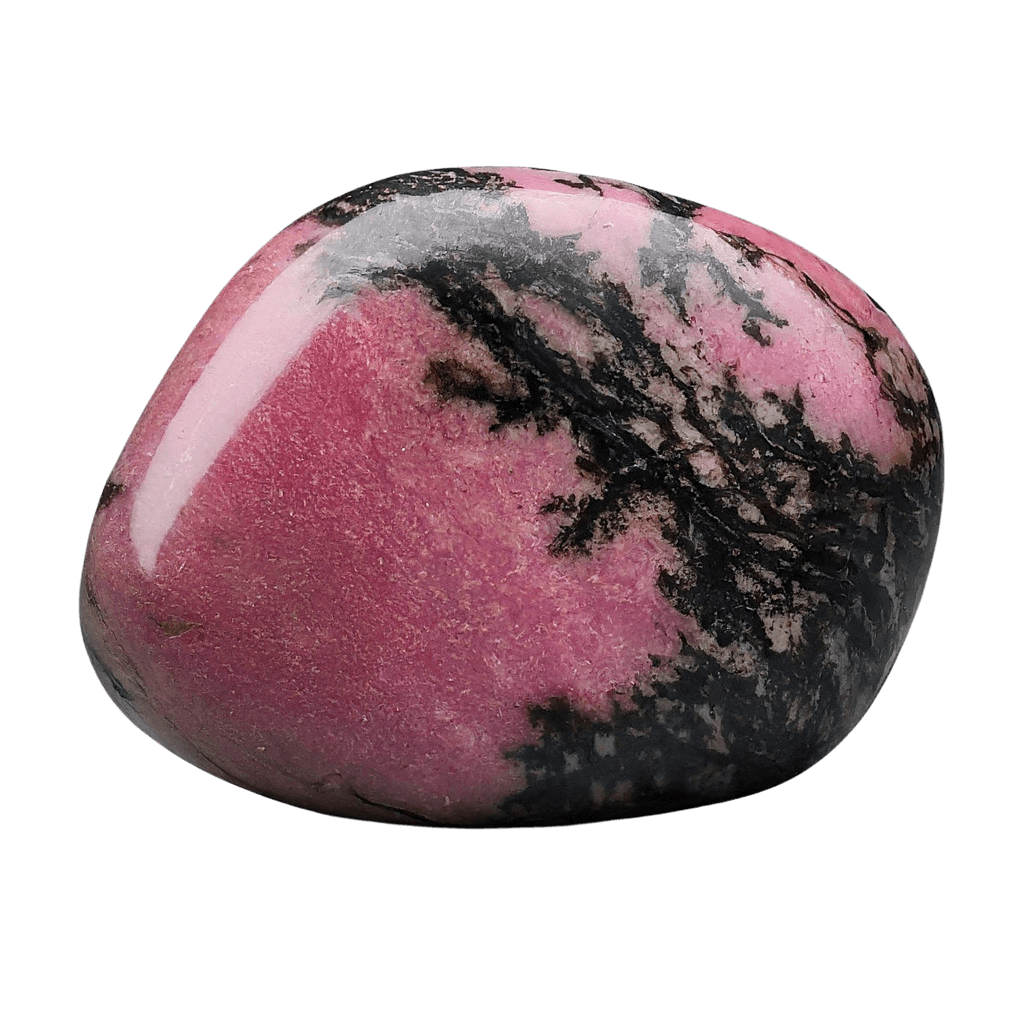
Set Thulite at the center of a grid built for self-love and ring it with Rose Quartz and Rhodonite at the points. Speak the intention once as you place each stone; a grid is a sentence written in minerals, and saying the self-love aloud is the punctuation.
How to Cleanse and Charge
Thulite works best when it is cleansed on a rhythm; tradition pictures a stone absorbing what it meets, and a saturated stone has nothing left to give. The complete water, sun, and salt safety profile, plus the storage instructions I give my clients, lives in the dedicated crystal care guide.
- 1
Moonlight
Set Thulite on a windowsill or ledge under the full moon and collect it in the morning. Moonlight is the gentlest cleanse in the tradition, safe for every stone in the collection and impossible to overdo.
- 2
Selenite
Keep a selenite dish where you empty your pockets and drop Thulite there at day's end; the resting place does the cleansing while you sleep.
- 3
Sound
Sound-cleanse Thulite by striking a bowl or bell, letting each tone fade completely before the next; the vibration does the clearing, and no contact is needed.
- 4
Sage
For a deeper reset, hold Thulite in sage smoke and name out loud what the stone has been carrying; the naming is half the cleanse.
How often to cleanse
Monthly is the floor for Thulite; step the cadence up whenever the stone is in daily rotation or the season is emotionally loud. With practice you will feel the tell yourself, a worked stone reads heavier and flatter in the palm.
Charging after cleansing
Follow every cleansing with a charge: for Thulite that means placing it in morning sunlight for 30 minutes. A cleared stone is neutral, a charged one is ready.
The Crystal Starter Library
A free guide from Crystal Cassandra: the twelve stones that cover almost everything, a one page care matrix for water, sun and salt, and how to build a first intention practice.
We respect your inbox. Unsubscribe anytime.
Crystal Pairings
Thulite pairs by temperament: heart stones want company that softens rather than sharpens. Each traditional partner adds what the stone lacks alone, ground under the tenderness or light over it. Test a pair by holding both a while; the pair you keep reaching back for is the one.
How to Spot Real vs Fake Thulite
The market in Thulite has grown faster than its honesty, and pink pieces are easy to imitate on a screen. Here is how to check one before you pay for it:
Temperature: genuine Thulite feels distinctly cool at first touch and gives that coolness up slowly; resin copies feel warm almost immediately, which is the quickest tell there is.
Weight: real Thulite should feel like stone rather than plastic pretending; if a palm-sized piece feels nearly weightless, walk away from it.
Color and pattern: the real range is pink, raspberry, or rose with white veining; treat neon saturation or flawless uniformity as a question for the seller, because nature rarely manages either.
Price: expect $8 to $25 for a decent tumbled or palm piece of Thulite; dramatic discounts mean dye, resin, or mislabeling more often than they mean luck.
Trust your source: a seller who knows where a pink stone like this came from and says so plainly is worth more than every test on this list. Vagueness about origin is itself an answer.
Sourcing
Buying Thulite well
The CrystalStones.com crystal store is not open yet, so we do not sell Thulite here. What we can give you is the part that matters most: how to tell a genuine piece from a treated or dyed one, and how to care for it once it is yours.
Frequently Asked Questions
What is Thulite good for?
Thulite is traditionally associated with self-love, heart healing, expression, and friendship. Many people find it supportive for self-love and for working with the Heart and Throat chakras.
Can Thulite go in water?
Yes, Thulite tolerates water; at Mohs 6.5, a one to two minute rinse is fine. Towel the stone off afterward and treat soaking as off the menu; brief contact is the whole agreement.
Can Thulite be in the sun?
Sun is fine for Thulite. A half hour of direct morning light both cleanses and charges it, and the pink tones are stable enough to take it.
What chakra is Thulite?
Thulite is primarily associated with the Heart (Anahata) and Throat (Vishuddha) chakras. The heart center is its traditional seat: lie down, let the stone ride the breath, and the self-love work takes care of the rest.
What zodiac sign is Thulite for?
Thulite is traditionally connected to Taurus and Gemini. That said, the zodiac correspondence is an invitation rather than a requirement; any chart can work with Thulite, and attraction to the stone matters more than the calendar.
How do I cleanse Thulite?
The best methods for Thulite are Moonlight, Selenite, and Sound. Thulite often carries white calcite veining that dislikes salt and acids; brief rinse only, dry well, and let moonlight do the deep cleansing.
Is Thulite real or fake, how can I tell?
Genuine Thulite feels cool at first touch and warms slowly; at Mohs 6.5 it also resists the pocket scratches that mark softer fakes. Expect natural variation in its pink coloring and a price near $8 to $25 for tumbled pieces; uniform color at a bargain price is the classic warning sign.
What’s Next?
A few thoughtful next steps if Thulite is calling to you.
Explore More Tools
Crystal Quiz
Discover which crystal matches your energy right now.
Open →Chakra Test
Find which chakras need attention and the crystals to balance them.
Open →Crystal Cleansing Guide
Learn how to safely cleanse and charge your crystals.
Open →Crystals by Intention
Find the perfect crystal for what you need right now.
Open →