

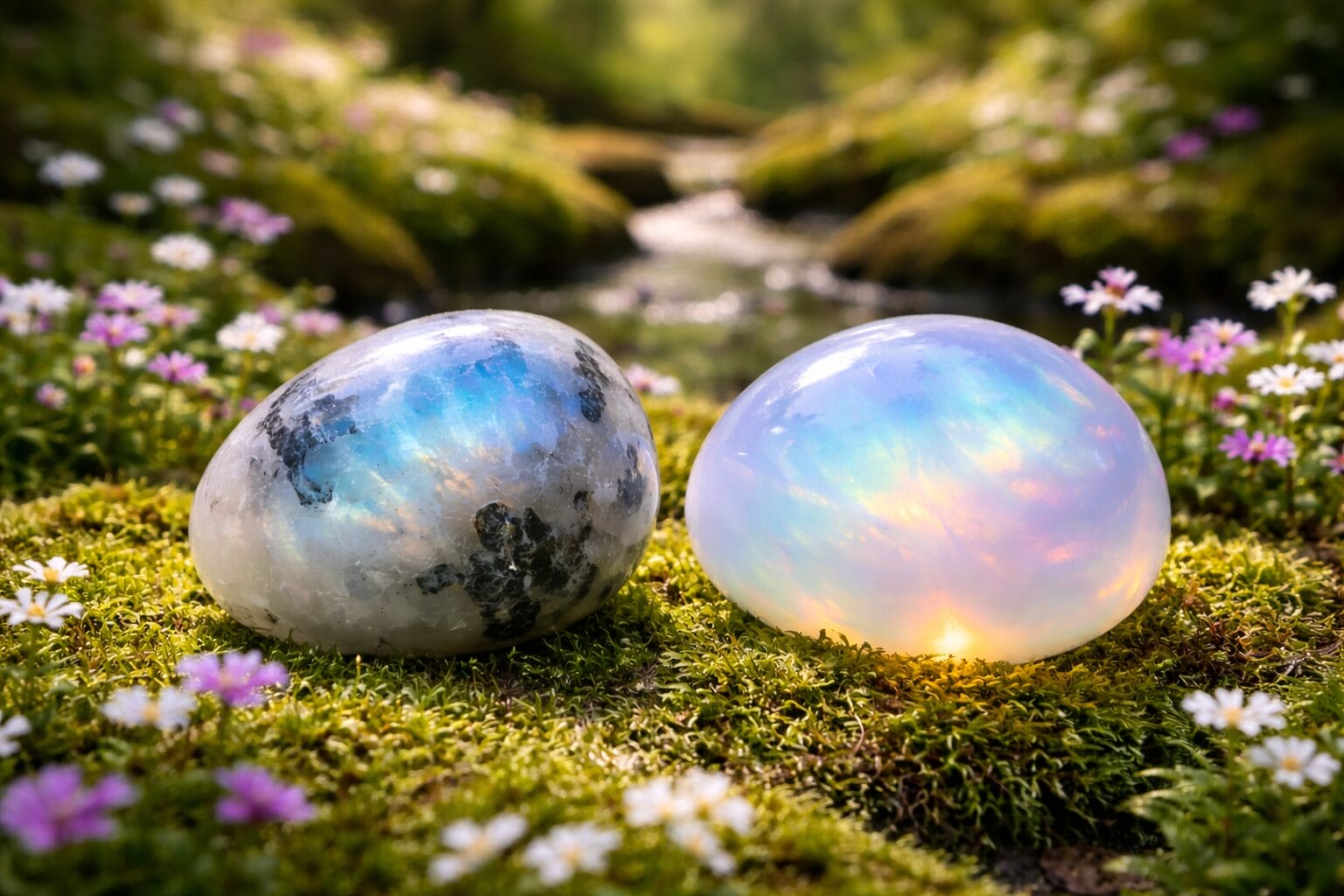

Navigating the world of crystals can be as beautiful as it is complex. With so many stones to choose from, each with its unique energy and appearance, it’s easy to feel a bit lost. Two crystals that often capture attention with their ethereal glow are Moonstone and Opalite. While they may share a similar luminous charm, they are fundamentally different in origin, energy, and purpose.
This guide will illuminate the differences between Moonstone and Opalite. We will explore their distinct meanings, metaphysical properties, and practical uses. By the end, you’ll have the clarity to decide which of these beautiful stones is the right one for your journey.
An Overview of Moonstone and Opalite
Before diving into their deeper properties, let’s get to know these two stones on a physical level. Their creation and composition are the first major points of difference.
What is Moonstone?
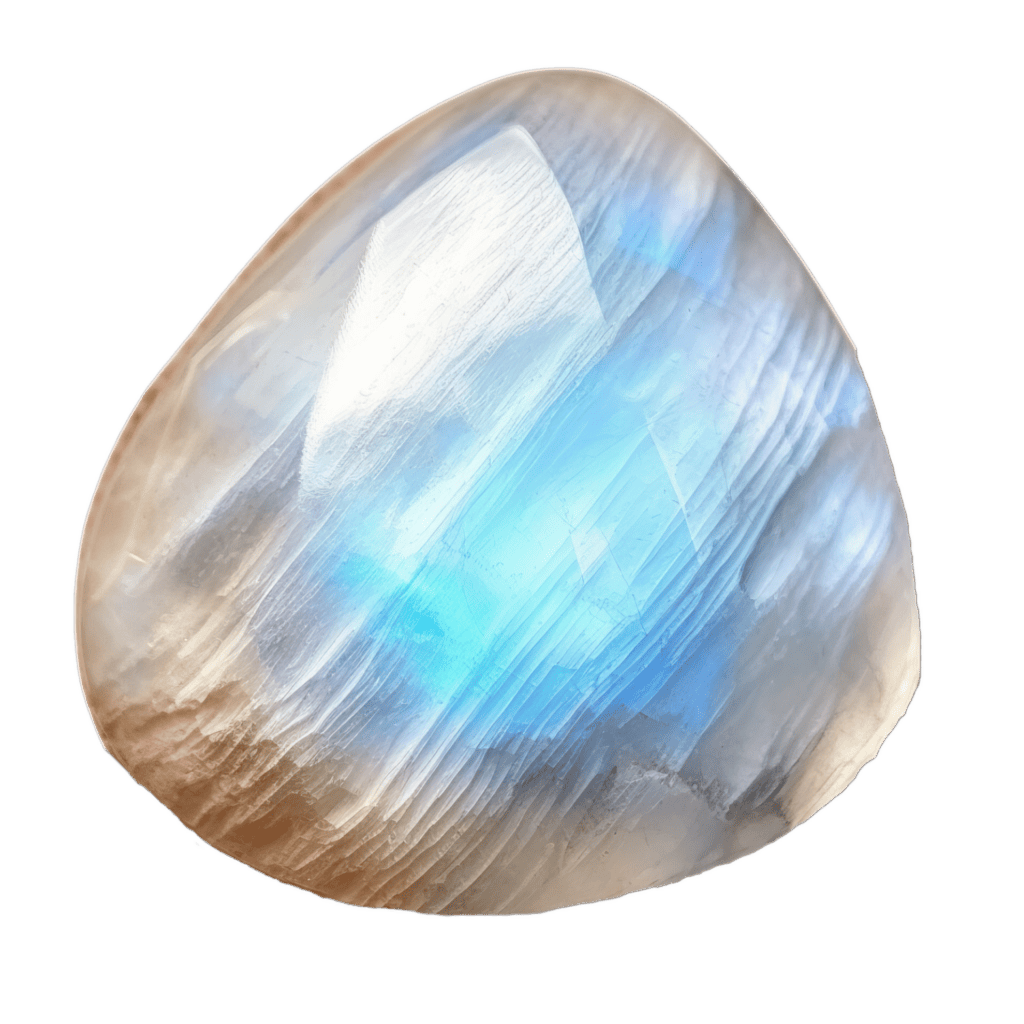
Moonstone is a natural gemstone, a member of the feldspar mineral family. Its name comes from its magical appearance—a soft, watery, and opalescent light that seems to float just beneath its surface.
This phenomenon, known as adularescence, looks like moonlight shimmering on water. Moonstone forms in various places around the world, including India, Sri Lanka, Australia, and the United States, and comes in colors ranging from milky white and gray to peach, green, and even black.

What is Opalite?
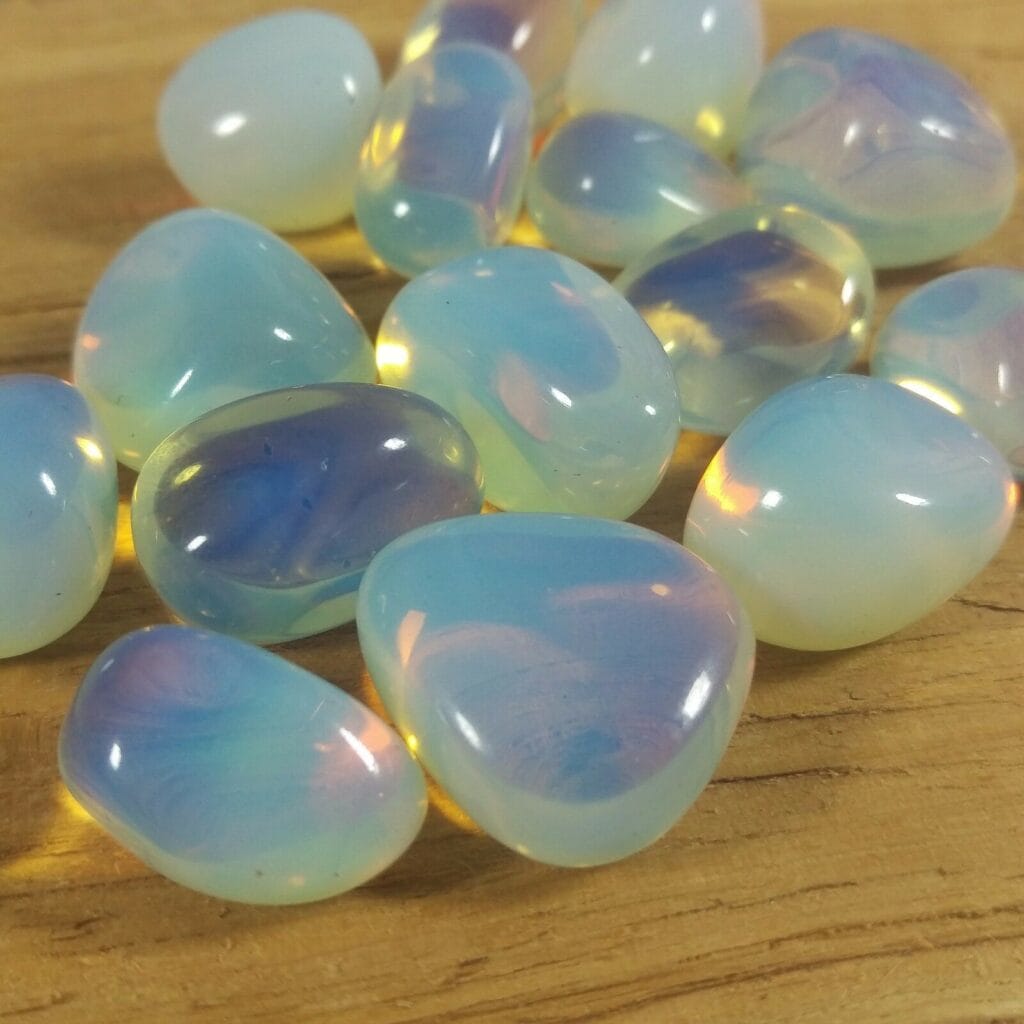
In contrast, Opalite is a man-made glass. It is not a natural gemstone, though it is often marketed alongside them. This iridescent, milky glass is created to mimic the look of natural opals and moonstones.
Its beauty is undeniable, featuring a soft blue glow when placed against a dark background or a warm, peachy light when held up to the sun. Because it is synthetic, Opalite is much more affordable and readily available than its natural counterparts.
Meaning and Symbolism
Beyond their physical form, crystals carry deep symbolic meanings that have been passed down through various cultures and spiritual practices. Here’s what Moonstone and Opalite represent.
Moonstone: The Stone of New Beginnings
As its name suggests, Moonstone is profoundly connected to the moon and its cycles. It is a powerful symbol of the divine feminine, intuition, and inner wisdom.
For centuries, it has been regarded as a stone of new beginnings, encouraging us to embrace the natural rhythms of life. It represents emotional balance, tenderness, and the kind of inner growth that comes from deep self-reflection.
Opalite: The Stone of Communication
Opalite carries a gentle but uplifting energy. Its primary symbolism is linked to clarity, communication, and smooth transitions. It is believed to help clear away mental fog, allowing for more open and honest self-expression.
Opalite is also associated with calming turbulent emotions and enhancing one’s ability to navigate change with a sense of peace and optimism.
Unpacking the Metaphysical Properties
For those who use crystals in their spiritual practice, the metaphysical properties are key. This is where the energy of the stone interacts with our own to support healing, growth, and transformation.

Metaphysical Properties of Moonstone
Moonstone is a potent tool for anyone looking to connect with their inner self and intuitive abilities. Its energy is gentle, yet profoundly effective.
- Enhances Intuition: Moonstone is famous for its ability to open the third eye and crown chakras, strengthening intuition and psychic perception.
- Promotes Emotional Healing: It soothes emotional instability and stress, replacing them with a sense of calm. It helps in processing old emotional patterns and promotes deep healing.
- Supports Hormonal Balance: Tied to feminine energy, Moonstone is often used to support the reproductive system, balance hormones, and ease menstrual-related symptoms.
Metaphysical Properties of Opalite
While man-made, many believe Opalite still possesses its own unique energetic signature, influenced by its color and composition.
- Boosts Confidence: Opalite is said to increase self-esteem and improve a sense of self-worth. Its energy helps you recognize and express your inner power.
- Aids in Transitions: This stone is excellent for providing support during times of change, whether it’s a new job, a move, or a shift in a relationship.
- Encourages Calm: Opalite is often used in meditation to create a serene atmosphere. It helps to calm the mind and stabilize mood swings, fostering a sense of tranquility.
Key Differences: Moonstone vs. Opalite
Let’s summarize the essential distinctions that set these two stones apart.
- Origin: The most significant difference is that Moonstone is a natural, earth-mined gemstone, while Opalite is a synthetic glass.
- Appearance: While both have a glow, Moonstone’s adularescence is a natural play of light within its layered structure, often with a more directional, watery shimmer. Opalite’s glow is more uniform and diffused throughout the stone.
- Energy: Moonstone carries the ancient energy of the earth and moon, making it ideal for deep spiritual and emotional work. Opalite offers a lighter, more subtle energy that is helpful for improving communication and stabilizing mood.
How to Choose the Right Crystal for You?
So, which stone should you choose? The answer depends entirely on your personal needs, intentions, and preferences.
Consider Your Intentions
First, ask yourself what you hope to achieve.
- Choose Moonstone if: You want to deepen your spiritual practice, enhance your intuition, work through deep-seated emotions, or connect with your feminine energy.
- Choose Opalite if: You are seeking to improve your communication skills, need support during a period of change, want to boost your self-confidence, or simply desire a beautiful and calming object for your space.
Budget and Aesthetic Preferences
Your budget is another practical consideration. Natural Moonstone, especially high-quality pieces with a strong blue flash, can be significantly more expensive than Opalite. If you are drawn to the dreamy, opalescent look but are on a tight budget, Opalite is an excellent and beautiful alternative.
Trust your intuition. Sometimes, a stone simply calls to you. If possible, visit a crystal shop and hold each stone in your hand. Pay attention to how each one feels. One might feel warm, another might tingle, or one might simply feel “right.” Your personal connection is often the best guide.
Caring for Your Crystals
Once you’ve chosen your stone, it’s important to care for it properly to maintain its beauty and energetic purity.
- Moonstone Care: Moonstone is a relatively soft stone, so it can be scratched. Store it in a soft cloth away from harder gems. To cleanse its energy, place it under the light of the full moon overnight or rinse it briefly with cool water.
- Opalite Care: As a type of glass, Opalite is more durable but can still chip or break if dropped. It can be cleansed in various ways, including with running water, sunlight, moonlight, or by smudging with sage.
Which Crystal Resonates With You?
Both Moonstone and Opalite offer their own unique beauty and supportive energies. Moonstone connects us to the ancient, intuitive power of the moon and our inner selves, making it a profound tool for spiritual growth. Opalite, with its gentle and uplifting vibration, helps us communicate clearly and move through life’s changes with grace.
There is no “better” stone—only the one that is better for you at this moment. Trust your inner guidance to lead you to the crystal that will best support your path.
Which crystal are you drawn to? Share your thoughts and experiences in the comments below.