Amethyst
Best overall sleep stone, traditionally for a mind that will not settle
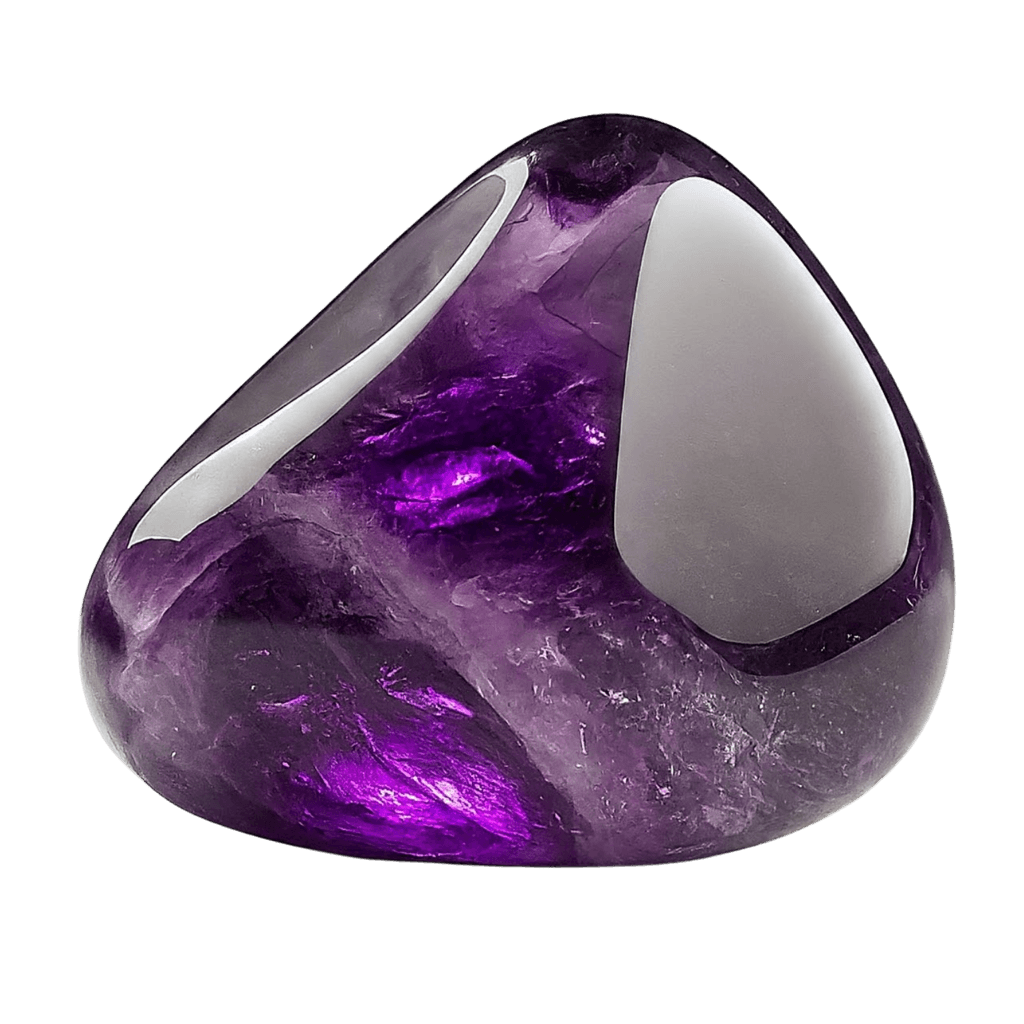
Amethyst is the most traditional sleep stone in the crystal canon, and there is good reason its purple cluster has been the bedside-table standard for centuries. When you cup it in your palm at the end of a hard day, the cool, hard violet meets you with a quieting authority. Crystal Bible author Judy Hall describes Amethyst as a stone for 'an overactive mind,' which describes most of the people who come to me about their nights. According to metaphysical tradition, Amethyst works on the third-eye and crown chakras, which is where bedtime worry-loops gather. The way this stone meets you in the dark is gentle, a dimmer switch on the mental noise rather than an off switch. Author Melody (Love Is in the Earth) calls Amethyst 'the stone of meditation,' and bedtime is essentially the most-attempted form of meditation in modern life. Many people find that placing a fist-sized Amethyst cluster on the nightstand creates a kind of ambient calming presence, you do not have to actively hold it for the effect to land. Affordable, widely available, and beautiful as bedroom decor.
Why this stone for sleep
Traditionally associated with calming the overactive mind. The third-eye chakra (Amethyst's domain) is where bedtime worry gathers.
How to use it
Place a cluster on your nightstand. On restless nights, hold a tumbled stone in your palm and breathe slowly until it warms.
Pros
- ✓Most accessible and affordable ($8-$25 for clusters)
- ✓Widely available everywhere
- ✓Beautiful bedside decor
- ✓Traditional for a mind that keeps working at night
Cons
- ✗Fades in prolonged sunlight (keep away from windows)
- ✗Traditionally chosen for mental restlessness rather than bodily restlessness
- ✗Some sensitive sleepers find quartz energy too 'bright' for the bedroom