By Crystal Cassandra · Updated October 1, 2026
Crystal Healing Expert
Carnelian vs Citrine: which should you choose?
Carnelian and Citrine are both motivation stones in the crystal-healing tradition. Choose Carnelian when a project you used to love now feels like a chore; reach for Citrine when salary negotiation or raising your prices.
Hold Carnelian in one hand and Citrine in the other, and give each a slow minute of undivided attention. Traditional crystal healing reads Carnelian as heat that wants to move and Citrine as light that wants to organize. Both are quartz cousins in warm colors, which is why they share shelf space in every beginner kit, but they suit different seasons of work: Carnelian belongs to the season of starting, appetite, and embodied play, while Citrine belongs to the season of believing your own plans and pricing your own worth.
Quick Comparison
| Property | Carnelian | Citrine |
|---|---|---|
| Chakra | Sacral, Root | Solar Plexus, Sacral |
| Element | Fire | Fire |
| Primary Color | orange, red-orange | yellow, golden |
| Hardness (Mohs) | 7 | 7 |
| Key Intentions | confidence, courage, vitality | abundance, confidence, creativity |
About Carnelian
Carnelian is translucent chalcedony, and translucence is the first thing to check: hold it to a window and a good piece glows like embers behind cloth. That glow has been cultivated for a very long time, Indus Valley workshops were heat-deepening pale stones to this exact orange-red 4,500 years ago, which makes Carnelian one of the oldest intentionally crafted gems on earth. Judy Hall's The Crystal Bible notes that Carnelian anchors you into the present even while it energizes, and that combination is its signature.
In my practice, Carnelian is the stone I suggest when wanting itself has gone quiet, when the project, the workout, or the romance has stopped sounding like fun. It works below the navel, at the sacral center where appetite lives. It is also one of the few warm stones that loves a sunny windowsill; light feeds it rather than fading it.
For a deeper profile of this stone, see the full Carnelian page.
About Citrine
Citrine is macrocrystalline quartz wearing the colors of late afternoon, and most of it carries an open secret: the saturated orange points sold cheaply began life as amethyst and were brought to gold in a kiln. The trade has done this for generations, and the stone still reads as solar. Judy Hall writes that Citrine carries the power of the sun, which is why shopkeepers have tucked it into cash drawers for so long that 'merchant's stone' stuck as a nickname.
In my practice, Citrine belongs to the solar plexus, the center of self-trust, and I reach for it when someone can imagine the goal but keeps discounting themselves out of it: underpricing their work, shrinking in negotiations, apologizing for ambition. Many people find its effect less like a spark and more like posture, a quiet straightening of the spine. Keep it off the sunniest sill; the natural gold fades.
For a deeper profile of this stone, see the full Citrine page. If you're shopping, my Citrine authenticity guide covers the fakes most often encountered and the tests that catch them.
Key Differences
- 1Carnelian works at the sacral center (appetite, play, creative hunger); Citrine works at the solar plexus (self-trust, will, follow-through).
- 2Carnelian is translucent chalcedony, microcrystalline and cloudy-glowing; Citrine is crystalline quartz, often sold as points and clusters.
- 3Carnelian is sun-safe and even charges in sunlight; Citrine fades with long sun exposure, so it belongs away from windows.
- 4Both carry heat stories: carnelian has been heat-deepened since the Indus Valley, while most affordable citrine is kiln-heated amethyst, so ask about natural material if origin matters to you.
When to Use Them Together
Carnelian and Citrine layer beautifully because they ignite neighboring centers rather than competing for one. Try Carnelian in a pants pocket and Citrine at the desk where decisions get made, appetite below, confidence above. Many people run them in sequence across a project: Carnelian for the messy, playful drafting weeks, Citrine for the pricing, pitching, and publishing weeks. If you only have mornings, hold Carnelian during movement and Citrine while you plan the day.
Many people working with these stones also explore the Solar Plexus Chakra page, which gathers traditional pairings and balancing practices in one place.
Which One Is Right for You?
In my practice, the right stone is almost always the one that matches your current need. Many people find that one of these scenarios maps closely to where they are right now:
A project you used to love now feels like a chore
Carnelian rekindles appetite and play, which is what actually went missing.
Salary negotiation or raising your prices
Citrine steadies the solar plexus, where self-worth and asking live.
A sunny windowsill manifestation altar
Carnelian holds its color in full sun; Citrine slowly fades there.
Launching a small business from scratch
Carnelian fuels the making, Citrine the selling, and a launch needs both.
Add These Stones to Your Practice
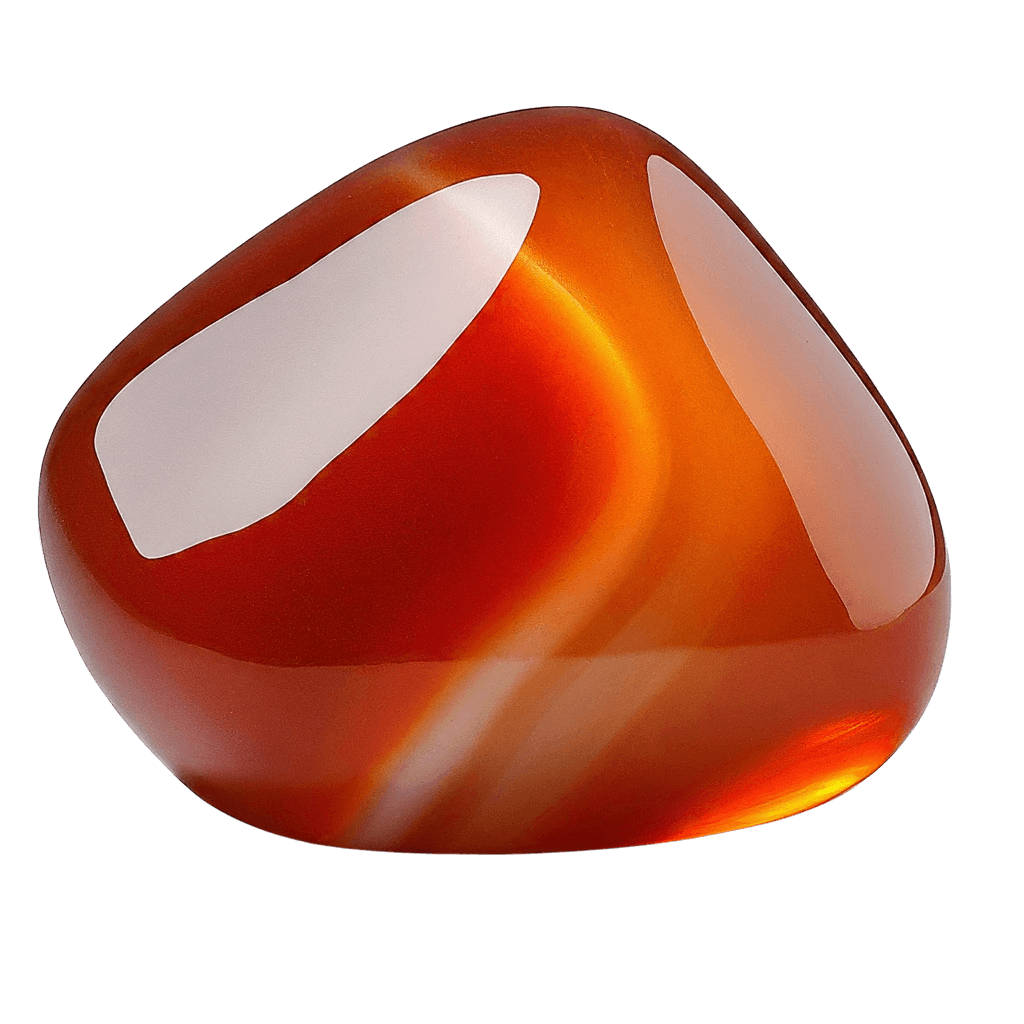
Carnelian
A fiery stone of courage, vitality, and creative motivation.
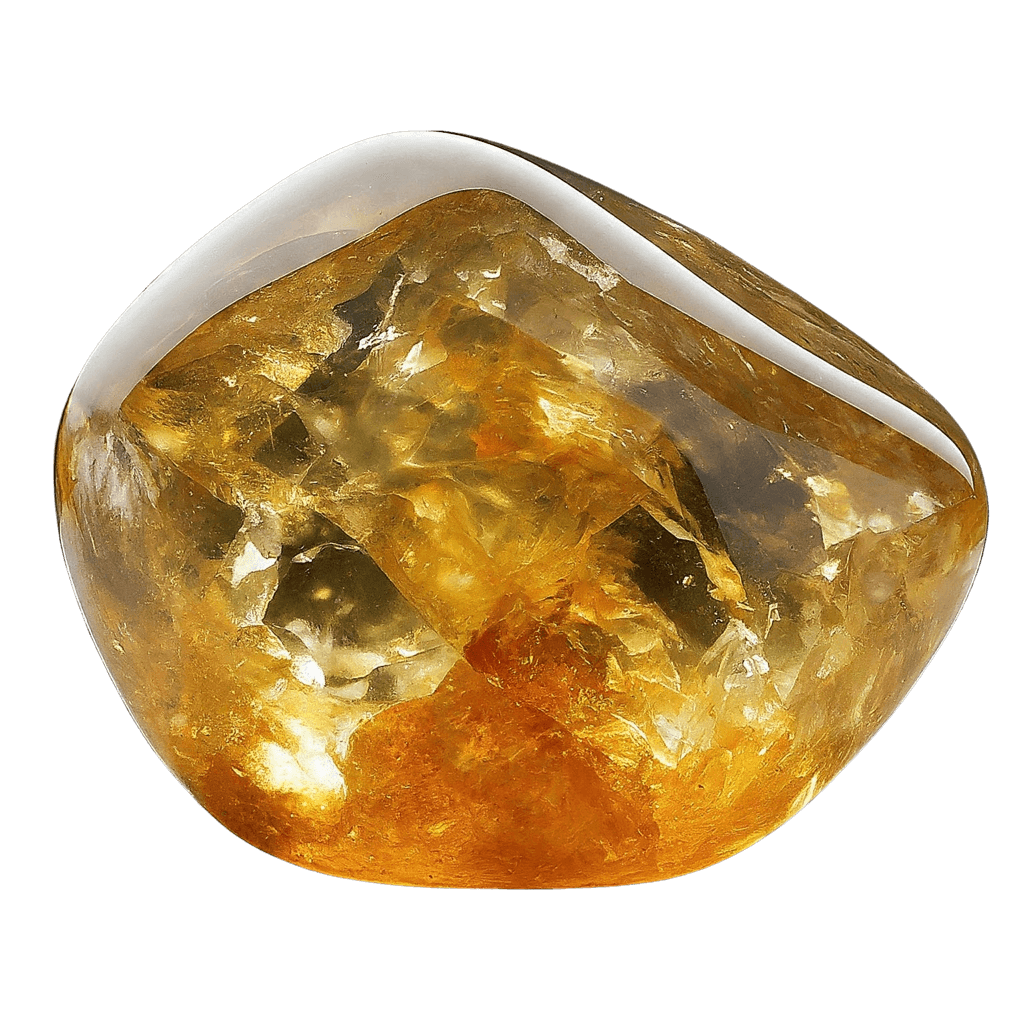
Citrine
A radiant stone of abundance, confidence, and creative energy.
Still not sure which is right for you? Try the free Crystal Quiz for a personalized recommendation, or explore the crystal healing guide for foundational practice.
Frequently Asked Questions
Is Carnelian or Citrine better for creativity?
Carnelian is the stronger creativity stone in traditional use, because it works at the sacral chakra where creative appetite lives. Citrine helps more with finishing and confidently sharing the work once it exists.
Are Carnelian and Citrine the same kind of stone?
Carnelian and Citrine are both quartz, but different forms: Carnelian is microcrystalline chalcedony with a cloudy glow, while Citrine is crystalline quartz that grows visible points. They are cousins, not twins.
Can Citrine go in the sun like Carnelian?
No, Citrine should stay out of prolonged sunlight, because its golden color can fade. Carnelian is the opposite case, one of the few stones traditionally charged in the sun without worry.
Which is cheaper, Carnelian or Citrine?
Carnelian and heat-treated Citrine cost about the same, roughly $8 to $15 and $10 to $25 for tumbled stones. Natural, unheated Citrine is the outlier and commands a real premium.
Can I carry Carnelian and Citrine together?
Yes, Carnelian and Citrine are a classic warm-stone pairing with no traditional conflict. Many people pocket both during ambitious seasons, letting Carnelian feed the desire and Citrine the discipline.
More Crystal Comparisons
Share Your Result
Vertical 9:16 format, perfect for Instagram Stories or TikTok. Opens in a new tab; long-press or right-click to save.
The Crystal Starter Library, free
Crystal Cassandra on choosing your first stones, keeping them safe, and building a practice around one intention rather than a shelf of good intentions.
We respect your inbox. Unsubscribe anytime.
Explore More Tools
Crystal Quiz
Find the perfect crystal for your current needs and intentions.
Open →Crystal Encyclopedia
Browse our complete library of 50+ healing crystals.
Open →Chakra Test
Discover which of your chakras are open, balanced, or blocked.
Open →Crystals by Intention
Find crystals matched to specific intentions and goals.
Open →Crystal Cleansing Guide
Learn how to cleanse and recharge your healing crystals.
Open →