By Crystal Cassandra · Updated October 1, 2026
Crystal Healing Expert
Moonstone vs Opalite: which should you choose?
Moonstone and Opalite are both mineral identity stones in the crystal-healing tradition. Choose Moonstone when working with actual lunar cycles and full moon rituals; reach for Opalite when a calming bedside piece on a tight budget.
Hold Moonstone and Opalite under the same lamp and tilt them slowly: the Moonstone's glow gathers, rolls, narrows, and dies as the angle changes, while the Opalite shines the same milky blue from every direction, because it has no internal architecture to answer the light. That difference is the entire comparison. Moonstone is a natural feldspar with centuries of lunar tradition; Opalite is opalescent glass poured in a furnace, lovely and inexpensive and routinely mislabeled. There is a place for both, but only if you know which one you are holding.
Quick Comparison
| Property | Moonstone | Opalite |
|---|---|---|
| Chakra | Sacral, Third Eye | Crown, Third Eye |
| Element | Water | Water, Spirit |
| Primary Color | white, cream | milky white, opalescent |
| Hardness (Mohs) | 6 | 5.5 |
| Key Intentions | intuition, calm, self love | calm, stress relief, transformation |
About Moonstone
Moonstone is orthoclase feldspar built in alternating microscopic layers, and where those layers approach the wavelength of light, scattering sends a blue-white billow rolling under the surface, the effect mineralogy calls adularescence. Sri Lanka's gem gravels supply the finest blue-sheen material, Art Nouveau master Rene Lalique set it into museum pieces, and the modern handbooks, Judy Hall's Crystal Bible among them, keep it filed where the old lapidaries did: new beginnings, intuition, the tides of feeling.
In my practice, Moonstone belongs to anyone tracking a cycle: a new month, a new habit, recovery milestones, the moon itself. Hold it through one full lunar month and notice which nights you reach for it. At Mohs 6 with easy cleavage it prefers pendants and pouches to daily rings, and at $12 to $28 for honest tumbled stones, it costs real but reasonable money.
For a deeper profile of this stone, see the full Moonstone page.
About Opalite
Opalite, as sold today, is man-made opalescent glass, and I say that in the first sentence on purpose, because it is so often labeled sea opal, opal moonstone, or simply moonstone. Ultrafine particles dispersed through the melt scatter blue light back to the eye while letting amber pass through, the same physics that blues the daytime sky, which is why Opalite glows cool from one side and warm from the other. Under a loupe, round gas bubbles betray the furnace; no natural opal or moonstone shows them. No nineteenth-century lapidary ever wrote about it, because it did not exist; whatever meanings Opalite carries are modern, made by the people who use it.
And yet I keep Opalite in my own collection, labeled honestly. Many people find its soft, even glow genuinely soothing, a night-light of a stone for transitions and gentle calm, and at $6 to $22 it asks little. The offense was never the glass; it is the lie on the label.
For a deeper profile of this stone, see the full Opalite page.
Key Differences
- 1Moonstone is a natural orthoclase feldspar; Opalite is furnace-made opalescent glass, no matter what the market stall says.
- 2Moonstone's glow rolls, narrows, and dies as you tilt it; Opalite glows identically from every angle, the fastest tell there is.
- 3Under magnification Opalite shows round gas bubbles, the fingerprint of melted glass; Moonstone never does.
- 4Moonstone carries centuries of lunar tradition and prices to match ($12 to $28 tumbled); Opalite is a modern material with a young, informal folklore and a smaller price.
When to Use Them Together
These two can share a moon altar without contradiction, provided the labels are honest. Use Moonstone as the working stone, the one you charge under the full moon and carry through the month's beginnings, and let Opalite serve as the ambient piece, a soft glow by the bedside for winding down. Some practitioners deliberately keep an Opalite next to their Moonstone as a teaching pair for friends learning to tell natural stones from imitations; five minutes of tilting both under a lamp is the best gemology lesson a beginner can get.
Many people working with these stones also explore the Third Eye Chakra page, which gathers traditional pairings and balancing practices in one place.
Which One Is Right for You?
In my practice, the right stone is almost always the one that matches your current need. Many people find that one of these scenarios maps closely to where they are right now:
Working with actual lunar cycles and full moon rituals
Moonstone is the stone with the lunar tradition; this is its home ground.
A calming bedside piece on a tight budget
Opalite's soft, even glow suits wind-down routines and costs very little, honestly labeled.
The listing says moonstone but it glows evenly from every angle
That is Opalite being mis-sold; buy it only at glass prices, or walk away.
A meaningful gift for a June birthday
Moonstone is the June birthstone alongside pearl, a natural gem with history to tell.
Add These Stones to Your Practice
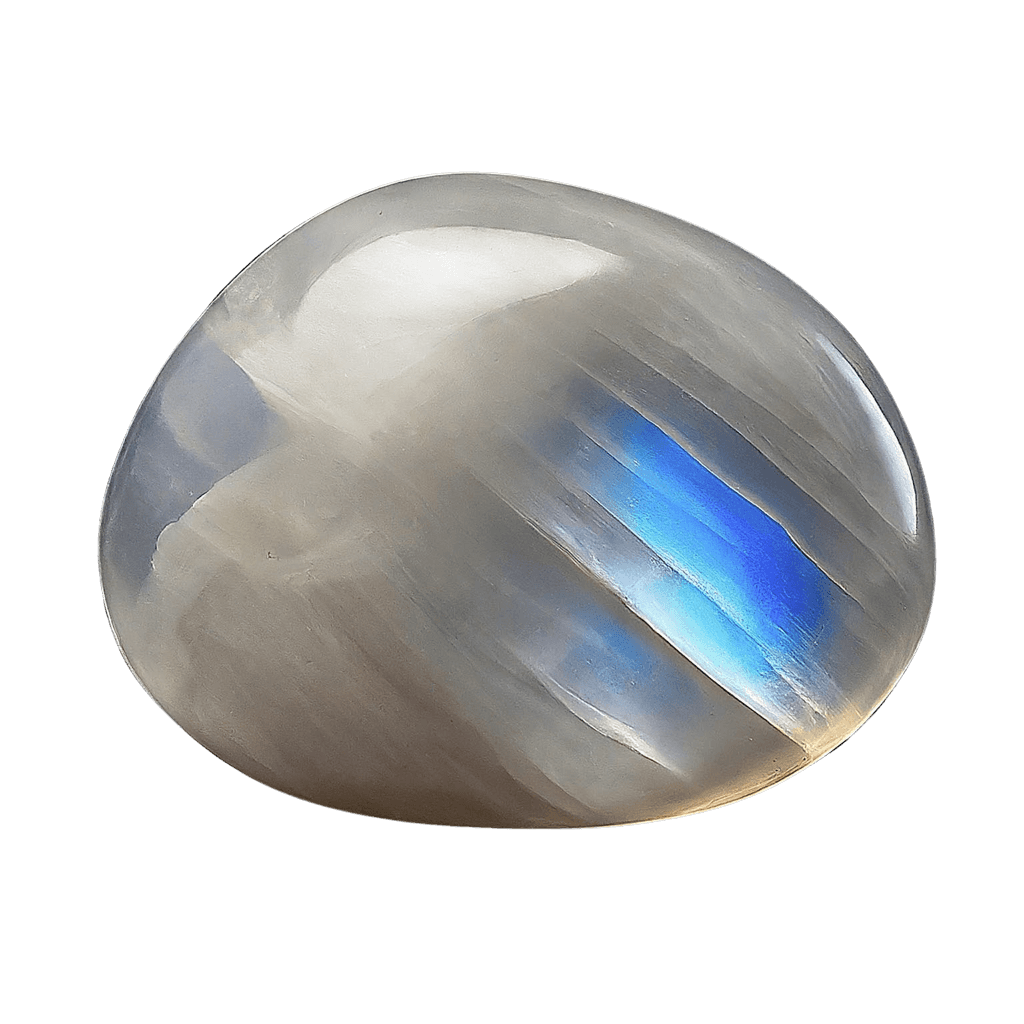
Moonstone
A luminous stone of intuition, emotional balance, and divine feminine energy.
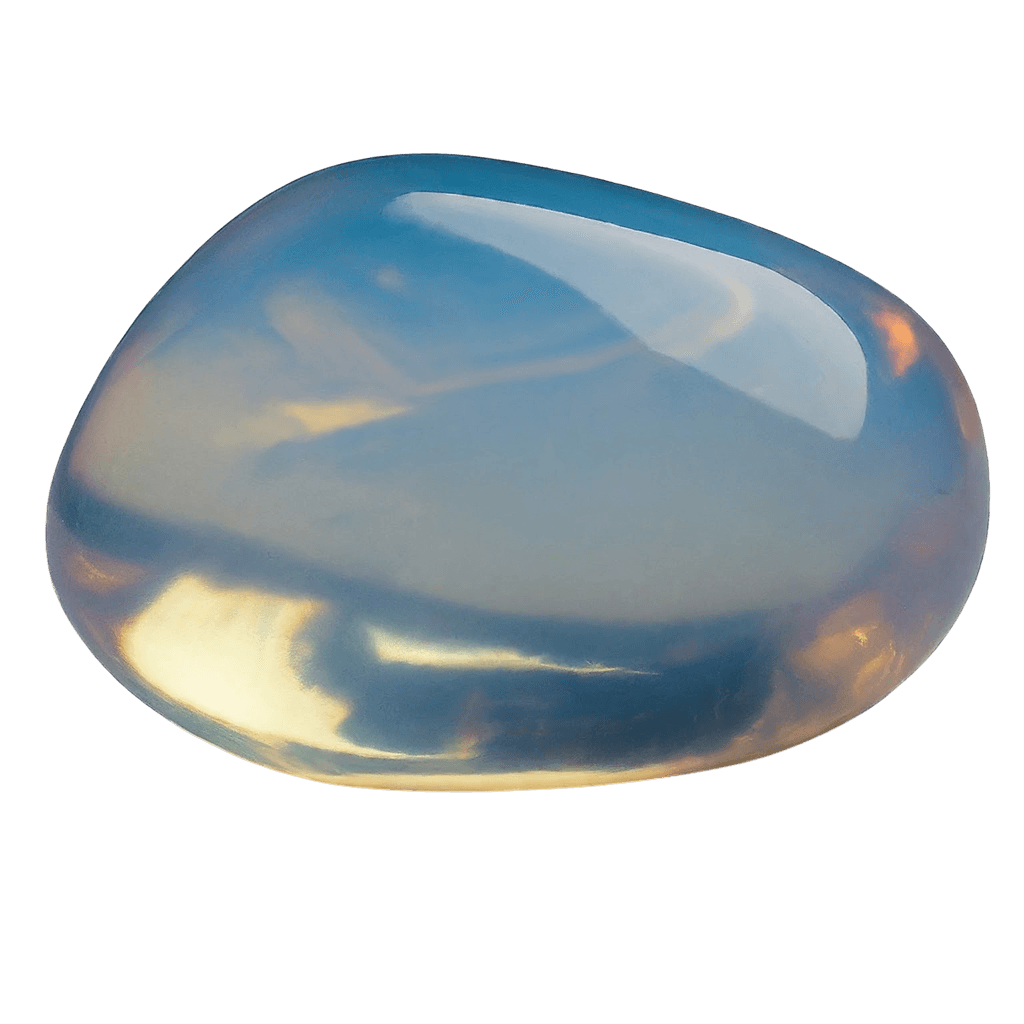
Opalite
A milky, opalescent man-made glass used for gentle calm and easy emotional transitions.
Still not sure which is right for you? Try the free Crystal Quiz for a personalized recommendation, or explore the crystal healing guide for foundational practice.
Frequently Asked Questions
Is Opalite a real crystal?
No, Opalite is not a natural crystal: it is man-made opalescent glass, manufactured by dispersing fine particles through a melt. It can still be used in practice, but it has no geological identity.
How do I tell Moonstone from Opalite?
Tilt the stone under a lamp: Moonstone's glow rolls, narrows, and disappears with the angle, while Opalite glows the same from every direction. A loupe settles it, because Opalite shows round gas bubbles.
Is Opalite ever sold as Moonstone?
Yes, Opalite is one of the most common moonstone imitations, appearing under names like sea opal, opal moonstone, and simply moonstone. Honest sellers always disclose that it is man-made glass.
Does Opalite have healing properties?
Opalite has a modern, informal tradition: many people find its soft glow calming and use it for transitions and bedtime wind-downs. It carries no classical lineage, so treat its meanings as contemporary practice, not ancient record.
Why is Moonstone more expensive than Opalite?
Moonstone costs more because it is a natural gem feldspar graded on the quality of its blue sheen, with fine Sri Lankan material at a premium. Opalite is manufactured glass with effectively unlimited supply.
More Crystal Comparisons
Share Your Result
Vertical 9:16 format, perfect for Instagram Stories or TikTok. Opens in a new tab; long-press or right-click to save.
The Crystal Starter Library, free
Crystal Cassandra on choosing your first stones, keeping them safe, and building a practice around one intention rather than a shelf of good intentions.
We respect your inbox. Unsubscribe anytime.
Explore More Tools
Crystal Quiz
Find the perfect crystal for your current needs and intentions.
Open →Crystal Encyclopedia
Browse our complete library of 50+ healing crystals.
Open →Chakra Test
Discover which of your chakras are open, balanced, or blocked.
Open →Crystals by Intention
Find crystals matched to specific intentions and goals.
Open →Crystal Cleansing Guide
Learn how to cleanse and recharge your healing crystals.
Open →