Quick Answer
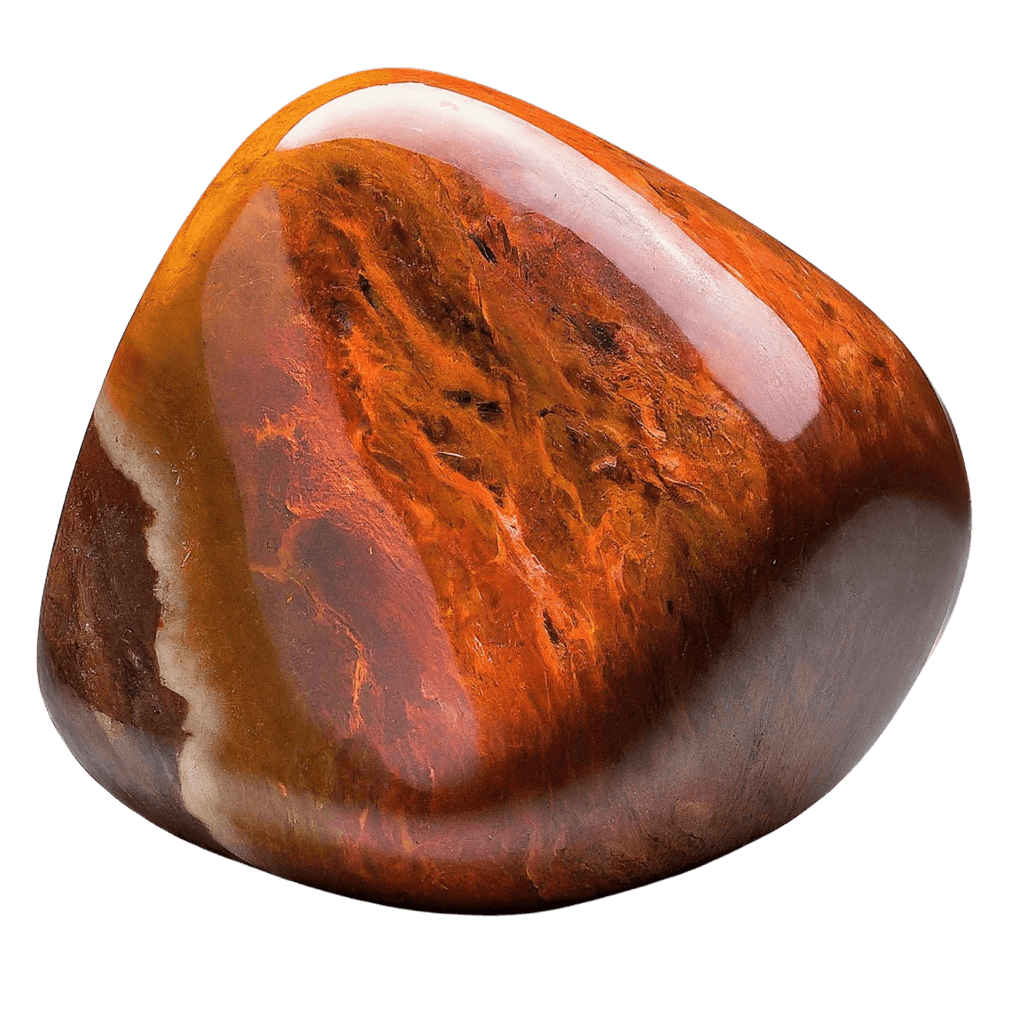
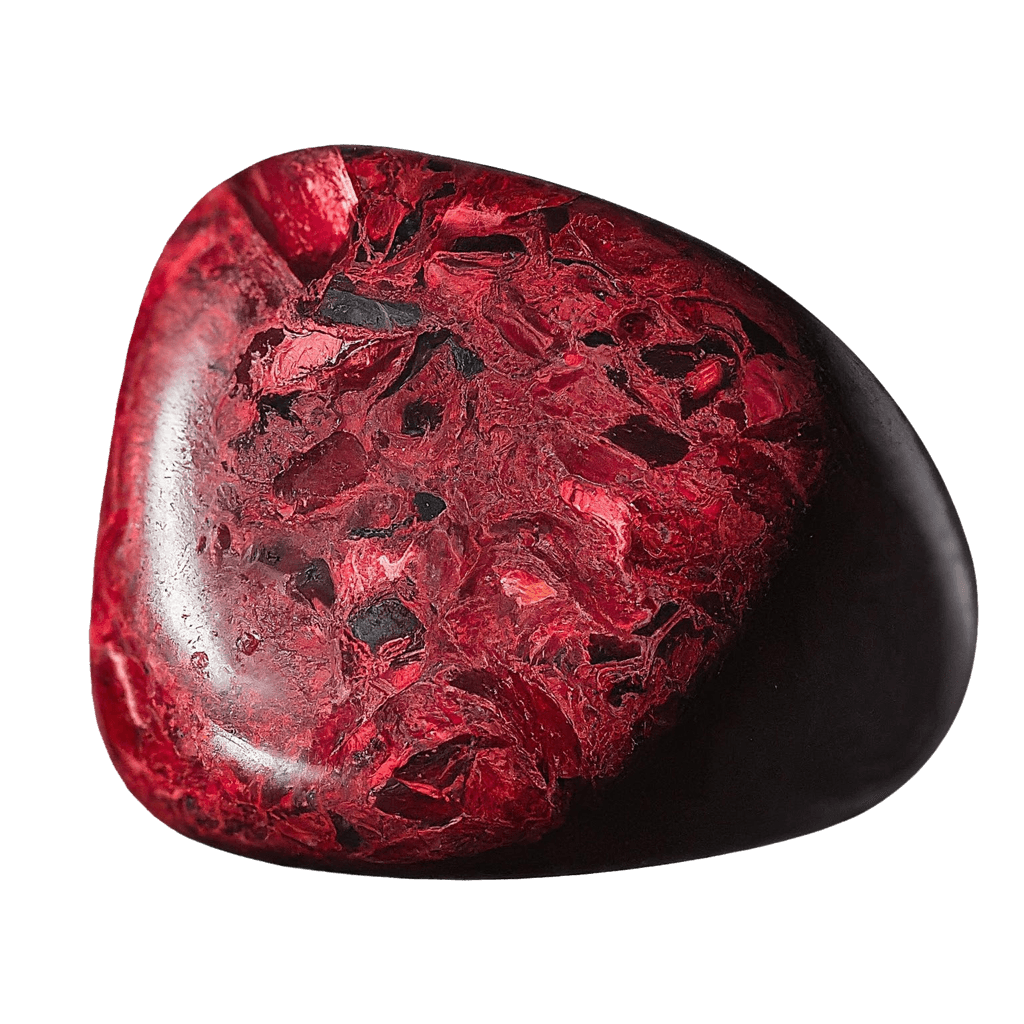
Crocoite is a red-orange crystal used in modern crystal healing for transformation, creativity, and courage. It measures 2.75 on the Mohs hardness scale and typically costs $40 to $200 for a tumbled stone. In the chakra tradition, Crocoite is associated with the Sacral and Root chakras.
Worth knowing: In 1797 the French chemist Louis Nicolas Vauquelin isolated a brand-new element, chromium, from crocoite, and in 2000 Tasmania, home of the famous Adelaide Mine crystal sprays, proclaimed crocoite its official mineral emblem.
“A vivid red-orange lead chromate of passion and transformation; strictly display only. TOXIC.”
- Chakra
- Sacral (Svadhisthana), Root (Muladhara)
- Zodiac
- Scorpio ♏, Aries ♈
- Element
- Fire 🔥
- Planet
- Pluto ♇
- Hardness
- 2.75 / 10 (Mohs)
- Colors
- Red-orange, Scarlet
- Origin
- Tasmania, Russia, Brazil
- Availability
- Not sold here yet
Care + Safety
Crocoite at a glance
- Water: avoid, may damage or leach
- Sun: fades in prolonged direct sun
- Mohs hardness: 2.75 (display + meditation only)
What is Crocoite?
Crocoite is lead chromate, named from the Greek krokos, saffron, for its vivid orange-red color. First described in the eighteenth century from the Berezovsk gold mines in Russia's Ural Mountains as Siberian red lead, it forms where lead-bearing veins are altered by chromium leached from surrounding ultramafic rock.
Crocoite measures 2.75 on the Mohs scale and shows red-orange or scarlet coloring. Change is its department: a threshold stone by family, kept close for transformation, creativity, and courage and for the crossings they imply.
The stone connects primarily to the Sacral (Svadhisthana) and Root (Muladhara) chakras, carrying Fire energy. Sources include Tasmania, Russia, and Brazil; deposit matters more than beginners expect, and collectors learn to recognize where a piece of Crocoite was mined by its color depth and pattern.
Crocoite is a brilliant red-orange lead chromate, most famously from Tasmania, forming long bladed crystals of striking color. Treat this stone visually rather than in the hand. The classical sources describe Crocoite as a stone of passion and transmutation, but because it contains both lead and chromium, it is firmly a sealed display specimen only.
Also catalogued as Red Lead Ore and Lead Chromate, Crocoite earns its place in a working collection by being usable: start with transformation, the job it is best known for, and let the stone widen its own brief from there.
History and Mythology
Crocoite is a modern entry in the crystal canon. Its mineral identity was established in the scientific era, the healing vocabulary around it dates to recent decades, and any claim of ancient ritual use should be met with a raised eyebrow. The stone itself, formed in deposits now mined in Tasmania, Russia, and Brazil, is of course older than every book ever written about it.
In modern astrological correspondence Crocoite is linked with Scorpio and Aries, with Pluto ♇ named as its planetary ruler. Practitioners who keep these tables often work the stone hardest during those sun-sign seasons, especially for transformation.
However young or old the human story, the stone outruns it: Crocoite formed over deep time, and the Mohs 2.75 piece on your shelf is the newest chapter of a very old book.
Crocoite Meaning and Metaphysical Properties
How It Feels in the Hand
The first physical fact of Crocoite is gentleness: a Mohs 2.75 stone with a red-orange face that takes your warmth almost instantly and asks to be held loosely rather than gripped. Mind what surfaces unbidden in the first quiet minute; threshold stones have a way of bringing up exactly what is half-finished, and the visit means something.
Primary Properties
Crocoite is counted among the threshold stones: transformation, creativity, courage, and vitality. This family attends endings and beginnings, the habit being set down, the season being stepped into. The stone marks the process; the crossing is yours to make.
How Crystal Energy Works
The low belly is where tradition stations Crocoite: the Sacral center, home of appetite and creative current, with transformation as its natural brief. Keep the work warm and informal, hip pockets and low-belly placements, naming transformation, creativity, and courage without making a production of it. Release is the verb Melody keeps returning to in her entries for the transformation family, the carrying out of what is finished so that something new has room to arrive.
Amplification Through Intention
The Fire designation on Crocoite is a usage note: this is a stone for doing transformation work, not soaking in it. Pair it with spoken intention, name the transformation, creativity, and courage you are after out loud while holding it, because Fire stones are traditionally worked actively rather than passively.
Healing Benefits
Emotional Support
Emotionally, Crocoite walks the harder passages: transformation, creativity, and courage. Its traditional role is witness rather than fixer, a presence for grief, for endings, for the clear-eyed accounting, the kind of company that does not leave early. Tradition, not treatment: transformation work with a stone sits beside professional support, never in place of it.
Spiritual Connection
Crocoite keeps company with the threshold rituals: the written-and-released page, the season-end inventory, the deliberate goodbye. In spiritual work it marks that something is being completed with attention rather than abandonment.
Physical Presence
On the physical level, tradition reads Fire stones like Crocoite through warmth and appetite: morning energy, circulation of effort, the body's readiness to move toward transformation. Carry it on active days and let it cue the stretch, the walk, the standing up from the desk; the awareness is the genuine benefit, and it is never a substitute for medical care.
Chakra Connection
Crocoite resonates most strongly with the Sacral (Svadhisthana), the energy center traditionally drawn in orange and the traditional seat of this stone's transformation work. When this center runs clear, the classical markers are ease with pleasure, free-moving feeling, and a lively creative appetite; transformation, creativity, and courage are what Crocoite is most often asked to bring to it.
Carry it at hip level, a front pocket works fine, and give Crocoite a deliberate touch whenever transformation is the task at hand; sacral stones respond to rhythm more than ceremony.
Because Crocoite is also associated with the Root (Muladhara), it moves well in multi-stone layouts: one stone, two stations, worked on different days.
Zodiac and Astrological Connection
Astrological tradition links Crocoite with Scorpio ♏ (Oct 23 to Nov 21) and Aries ♈ (Mar 21 to Apr 19), and practitioners often suggest the stone meets Scorpio placements with the least friction.
The gate, though, stands open: you do not need a Scorpio Sun to work with Crocoite, and a genuine pull toward the stone outweighs its paper assignments.
Pluto ♇ rules Crocoite in this tradition, so practitioners time their longer sessions to that planet's active periods, especially for transformation.
How to Use Crocoite
These are the five ways of working with Crocoite I suggest most often. Begin wherever your attention goes first; the sequence matters far less than starting.
- 1
Meditation Hold
Hold Crocoite with a light grip while you sit. At Mohs 2.75 it reaches body temperature almost instantly, so let the boundary between hand and stone blur and keep your attention on the breath.
- 2
Body Placement
Lying comfortably, taking as long as it takes: that is the whole of the Sacral practice the tradition describes for Crocoite. There is nothing to audit yourself for. Watch the stone instead, its weight, its temperature, the way light sits on it, and let transformation stay the name of the practice rather than its guaranteed cargo.
- 3
Sleep Companion
Crocoite can still earn the nightstand even though its brief is transformation rather than rest: setting the stone down as you set the day down marks the switch from doing to sleeping.
- 4
Carry With You
Through a season that is closing, Crocoite makes a good pocket companion: each time the old pattern knocks and you touch the stone instead, another small entry gets added to the transformation ledger.
- 5
Crystal Grid Anchor
Use Crocoite as the heart of a small grid for transformation, with Vanadinite and Carnelian alternating on the spokes. Place the stones slowly and set the last one down with the transformation intention named out loud.
How to Cleanse and Charge
Crocoite works best when it is cleansed on a rhythm; tradition pictures a stone absorbing what it meets, and a saturated stone has nothing left to give. The complete water, sun, and salt safety profile, plus the storage instructions I give my clients, lives in the dedicated Crocoite care guide.
- 1
Sound
A minute inside strong, sustained tone, bowl, chime, even a steady hum, resets Crocoite without physical risk, which makes sound the safest deep cleanse for fragile stones.
- 2
Moonlight
Once a month, let Crocoite sit overnight in moonlight, on the full moon if you can manage it. Nothing in the cabinet is harmed by this method, which is why it anchors most cleansing routines.
How often to cleanse
I recommend cleansing Crocoite at least once a month, more frequently if you're using it daily or during emotionally intense periods. You'll also learn to feel when a stone needs cleansing; it may feel heavier, duller, or simply “off.”
Charging after cleansing
Once it is cleansed, recharge Crocoite by setting it on a selenite plate overnight or bathing it in full moonlight; cleansing empties the stone, charging refills it.
The Crystal Starter Library
A free guide from Crystal Cassandra: the twelve stones that cover almost everything, a one page care matrix for water, sun and salt, and how to build a first intention practice.
We respect your inbox. Unsubscribe anytime.
Crystal Pairings
Crocoite pairs with stones that hold steady while it moves things; threshold work wants an anchor. Its traditional partners supply ground, heart, or light to the transformation process. Change the pairing as the season changes; that is part of the practice.
How to Spot Real vs Fake Crocoite
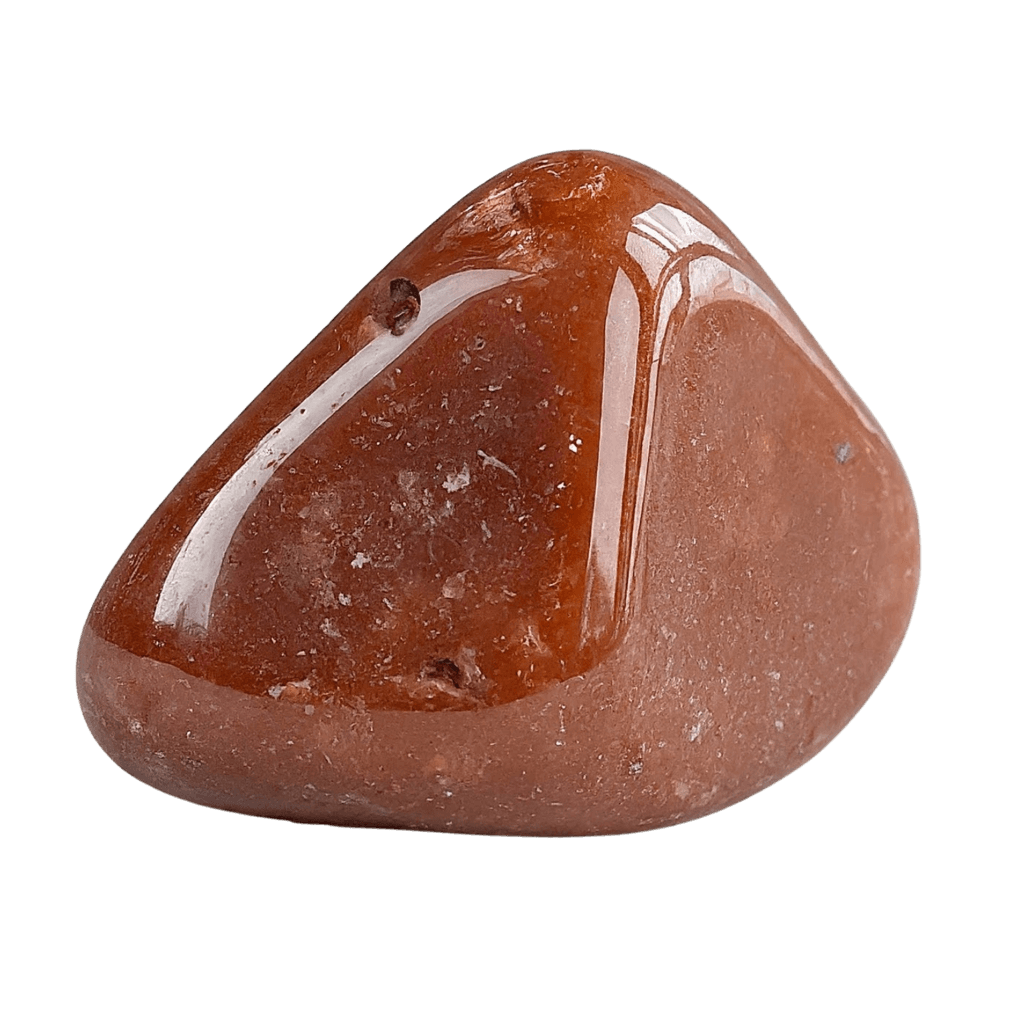
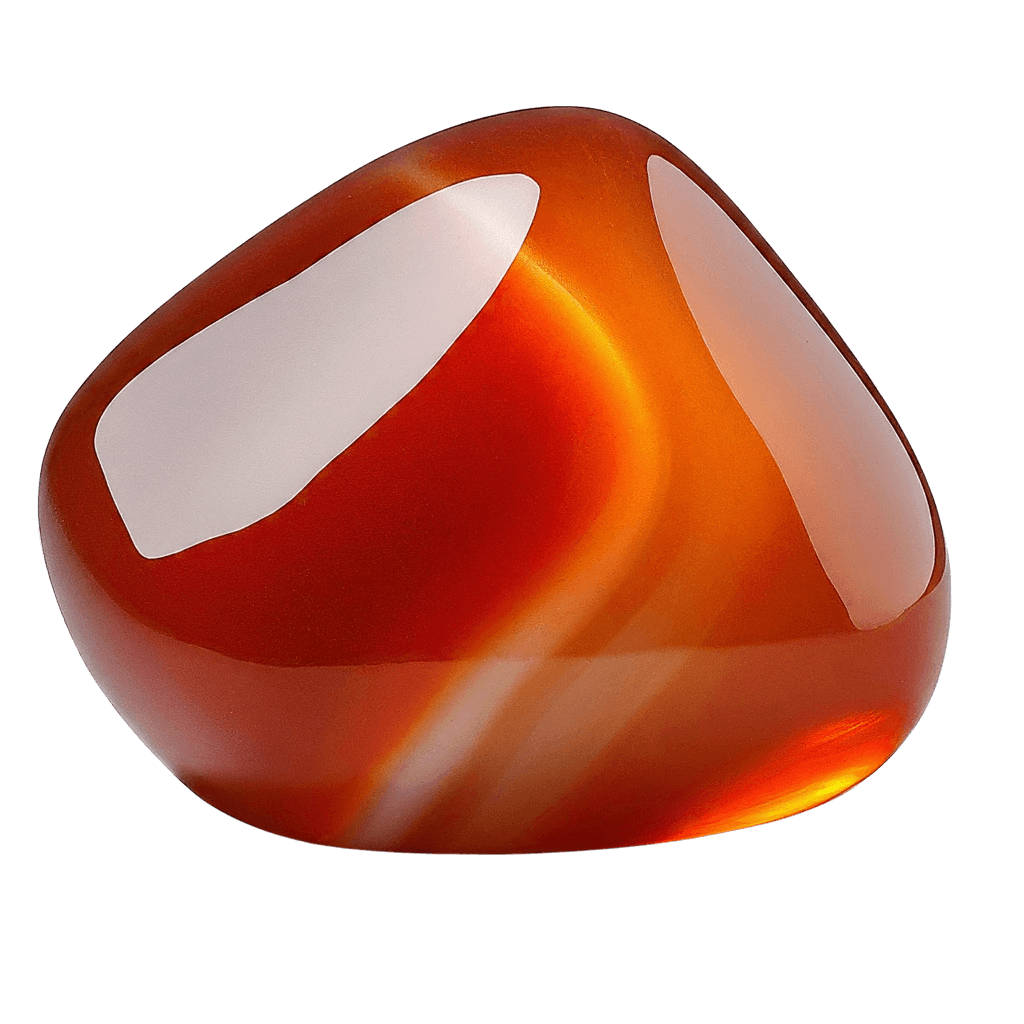
Before buying Crocoite, run the piece through these checks; nothing here needs equipment, just your hands, the red-orange stone in question, and a healthy skepticism:
Touch and surface: real Crocoite is genuinely soft, Mohs 2.75, so tumbled pieces show gentle rounding and tiny natural imperfections, while molded resin looks suspiciously flawless and feels faintly plastic under a fingernail.
Weight and density: resin fakes run light for their size, while genuine Crocoite at Mohs 2.75 carries honest mineral density; weigh it in the palm against any real tumbled stone you own.
Color: expect red-orange or scarlet with honest variation, banding, zoning, the odd inclusion; a batch where every stone matches exactly came out of a factory, not the ground.
Price reality: the fair range for Crocoite sits near $40 to $200 at palm size; below that, assume treatment or imitation until the seller proves otherwise.
Trust your source: provenance beats any hands-on check; ask where the Crocoite was mined and whether the red-orange material is treated, and expect straight answers rather than adjectives.
Sourcing
Buying Crocoite well
The CrystalStones.com crystal store is not open yet, so we do not sell Crocoite here. What we can give you is the part that matters most: how to tell a genuine piece from a treated or dyed one, and how to care for it once it is yours.
Frequently Asked Questions
What is Crocoite good for?
Crocoite is traditionally associated with transformation, creativity, courage, and vitality. Many people find it supportive for transformation and for working with the Sacral and Root chakras.
Can Crocoite go in water?
No. Crocoite should stay dry; cleanse it with Sound and Moonlight instead, and keep every wet method off the table.
Can Crocoite be in the sun?
Treat sun as a risk for Crocoite: short incidental light does no harm, but hours of direct exposure will cost the red-orange tones their depth. Default to moonlight.
What chakra is Crocoite?
Crocoite is primarily associated with the Sacral (Svadhisthana) and Root (Muladhara) chakras. Keep it low, at the sacral station in placement sessions or riding at hip height through the day; tradition points its transformation work there.
What zodiac sign is Crocoite for?
Crocoite is traditionally connected to Scorpio and Aries. If your signs differ, work with Crocoite anyway; resonance in the hand outranks resonance on paper in every practical tradition.
How do I cleanse Crocoite?
Stick to Sound and Moonlight for Crocoite; those are the methods its care profile recommends. Notice that the whole list runs dry; for this stone's chemistry, that is a feature rather than a limitation.
Is Crocoite real or fake, how can I tell?
Genuine Crocoite is genuinely soft at Mohs 2.75, so real pieces show gentle wear and tiny imperfections while molded resin looks suspiciously perfect. Expect natural variation in its red-orange coloring and a price near $40 to $200 for tumbled pieces; uniform color at a bargain price is the classic warning sign.
What’s Next?
A few thoughtful next steps if Crocoite is calling to you.
Explore More Tools
Crystal Quiz
Discover which crystal matches your energy right now.
Open →Chakra Test
Find which chakras need attention and the crystals to balance them.
Open →Crystal Cleansing Guide
Learn how to safely cleanse and charge your crystals.
Open →Crystals by Intention
Find the perfect crystal for what you need right now.
Open →