Quick Answer
Larimar is a light blue crystal used in modern crystal healing for calm, communication, and healing. It measures 5 on the Mohs hardness scale and typically costs $30 to $65 for a tumbled stone. In the chakra tradition, Larimar is associated with the Throat and Heart chakras.
Worth knowing: Larimar is named for Larissa, the daughter of the Dominican who rediscovered the blue stone on a Barahona beach in 1974, fused with mar, the Spanish word for sea.
“A rare Caribbean blue stone of tranquility and clear communication.”
- Chakra
- Throat (Vishuddha), Heart (Anahata)
- Zodiac
- Pisces ♓
- Element
- Water 💧
- Planet
- Neptune ♆
- Hardness
- 5 / 10 (Mohs)
- Colors
- Light blue, Blue with white patterns, Volcanic blue
- Origin
- Dominican Republic
- Availability
- Not sold here yet
Care + Safety
Larimar at a glance
- Water: brief rinse safe
- Sun: fades in prolonged direct sun
- Mohs hardness: 5 (occasional wear only)
Worried it's fake?
How to spot real Larimar
Larimar is one of the most-counterfeited stones on the consumer market. In my practice, the combination of two or three hands-on tests is usually enough to separate authentic from substitute.
See Cassandra's Larimar authenticity guide →What is Larimar?
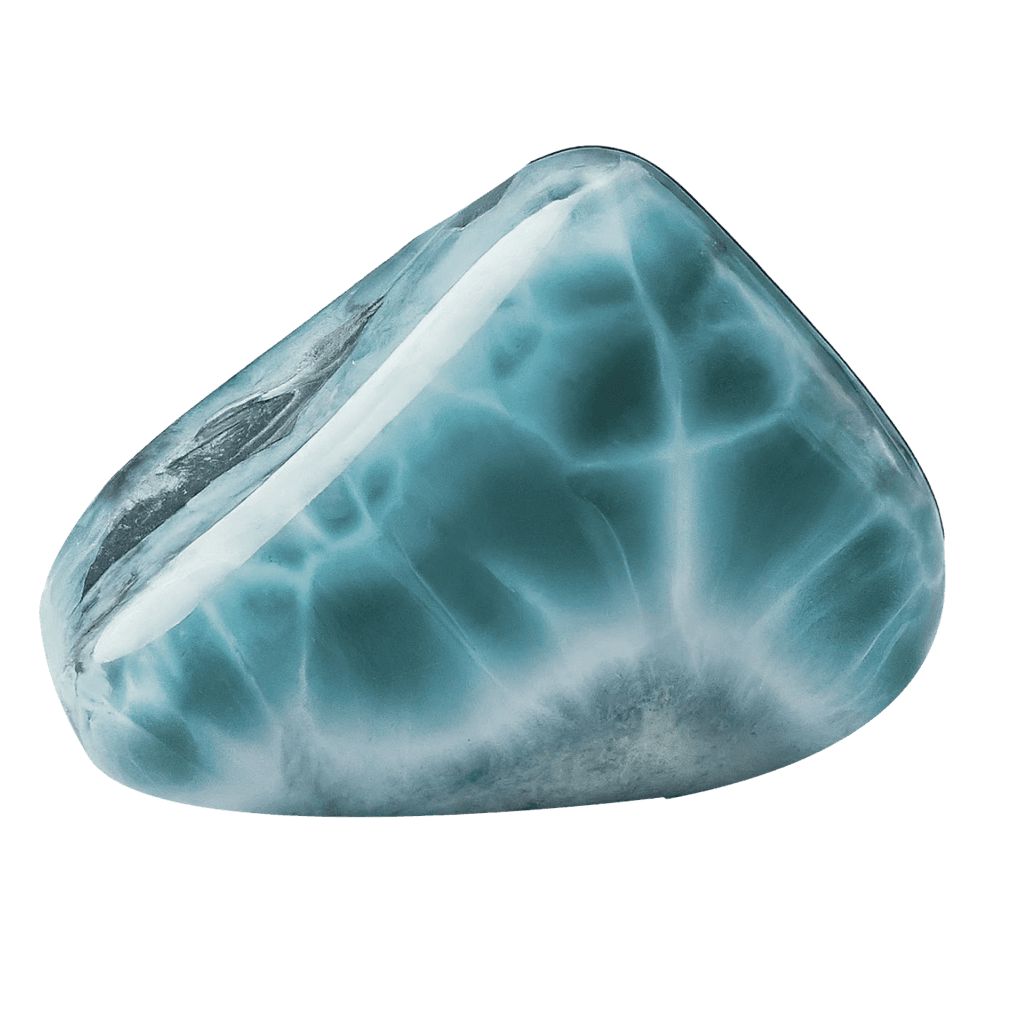
Larimar is the trade name for blue pectolite, a sodium calcium silicate found in commercial quantity in exactly one place on Earth: the Bahoruco range of Barahona province, Dominican Republic. The Caribbean blue, traced in recent studies chiefly to vanadium, fills cavities left in Miocene volcanic rock.
Larimar measures 5 on the Mohs scale and shows light blue, blue with white patterns, or volcanic blue coloring. It belongs to the quieting shelf of the catalog, the stones reached for around calm, communication, and healing.
The stone connects primarily to the Throat (Vishuddha) and Heart (Anahata) chakras, carrying Water energy. Commercial material comes from Dominican Republic, and provenance shows: pieces from different deposits vary in saturation, veining, and clarity, which is why no two specimens of Larimar read quite alike.
Larimar exists nowhere else on Earth but the Dominican Republic, a geological rarity that carries the energy of Caribbean waters. Its white-streaked blue looks like sunlight through tropical shallows. This stone cools heated feeling and helps you communicate from a place of calm.
Also catalogued as Dolphin Stone and Atlantis Stone, whether it is your first stone or your fiftieth, Larimar tends to find its role quickly, and calm is the natural place to begin.
History and Mythology
Larimar was discovered twice, and the first time it was refused. In November 1916, Father Miguel Domingo Fuertes Loren of the Barahona parish petitioned to mine a blue stone he had found on the Dominican coast; the ministry, knowing of no such rock, rejected the request, and the stone slept for another 58 years. In 1974, Miguel Mendez and Peace Corps volunteer Norman Rilling picked up sea-tumbled blue pebbles on a beach at the foot of the Bahoruco range, traced them up the river to outcrops in the mountains, and opened what became the Los Chupaderos mine. Mendez fused his daughter's name, Larissa, with mar, the Spanish sea, and larimar entered the gem vocabulary. The science kept evolving: the stone is pectolite, a mineral ordinarily white to grey, and recent spectroscopy attributes the Caribbean blue chiefly to vanadium. The Dominican Republic remains the world's only commercial source, and the color is photosensitive, paling slowly in strong sun. Lay a polished piece under good light: white wave patterns drifting over blue, the sea that named it drawn in mineral.
Larimar Meaning and Metaphysical Properties
What the Hand Learns First
Pick up Larimar and warmth is the first report: at Mohs 5 it is a mid-soft mineral that takes body heat within a minute, and its light blue surface polishes to a satin sheen rather than a hard glitter. Give the first half minute to your breathing and to nothing else. Whatever the exhale is doing, let it do that; the noticing is the whole of the practice.
Primary Properties
The core associations of Larimar are quieting ones: calm, communication, healing, and spiritual awakening. This family does downshift work, the hour before bed, the pause between tasks, the long exhale after a hard conversation. Expect subtlety; the calming stones whisper rather than announce.
How Crystal Energy Works
Tradition stations Larimar at the Throat, the narrow bridge where what you know becomes what you say, and calm is the load assigned to it. The classic session is small: hold the stone, speak one true thing about calm, communication, and healing, and stop there. Placement over promises is how Judy Hall handles the calming family; her entries point to the nightstand, the meditation corner, the hard-day pocket, and stop short of guarantees.
Amplification Through Intention
Water stones such as Larimar are traditionally read as tide-workers: they suit cyclical practice, the same small ritual repeated weekly, and they pair calm with patience rather than push.
Healing Benefits
Emotional Support
Larimar speaks quietly on the emotional level: calm, communication, and healing are its register. It suits the frayed hours best, the late-afternoon overload, the mind that will not stop at midnight, when a steady weight in the hand gives the spinning somewhere to set down. As with all crystal healing, calm support from a stone is reflective practice rather than medicine; significant emotional concerns deserve qualified human help.
Spiritual Connection
Rest is the spiritual discipline this family keeps, and Larimar attends it: the evening review, the slow body scan, the loosening that lets the quieter knowing through. The stillness is the practice; the stone just holds the page open.
Physical Presence
Tradition pairs Water stones like Larimar with the body's tides: rest, hydration, the wind-down hour that makes room for calm. Let it sit on the night table as a cue for the evening glass of water and the earlier lights-out; gentle cues, never medicine.
Chakra Connection
Larimar resonates most strongly with the Throat (Vishuddha), the energy center traditionally drawn in blue and the traditional seat of this stone's calm work. When this center runs clear, the classical markers are words that match what you mean and a voice you recognize as your own; calm, communication, and healing are what Larimar is most often asked to bring to it.
Worn short at the throat, or touched once before you speak, Larimar works the bridge between knowing and saying; small repeated contact serves calm better than one long session.
Because Larimar is also associated with the Heart (Anahata), it moves well in multi-stone layouts: one stone, two stations, worked on different days.
Zodiac and Astrological Connection
Astrological tradition links Larimar with Pisces ♓ (Feb 19 to Mar 20), and practitioners often suggest the stone meets Pisces placements with the least friction.
None of this is exclusionary. If Larimar keeps catching your eye, that interest counts for more than whether Pisces appears anywhere in your chart.
In the planetary layer of the system, Neptune ♆ holds the rulership, and that planet's prominent transits are the traditional windows for deeper calm work with Larimar.
How to Use Larimar
These are the five ways of working with Larimar I suggest most often. Begin wherever your attention goes first; the sequence matters far less than starting.
- 1
Meditation Hold
Hold Larimar for the length of your sit and notice the moment it stops feeling like an object and starts feeling like part of the hand; for a Mohs 5 stone, that shift comes early.
- 2
Body Placement
The throat station is where Larimar rests in placement work: lie down, soften the jaw, and give the session no count at all. Practitioners describe it as small and quiet by design. In the tradition's own terms it serves calm.
- 3
Sleep Companion
Larimar can still earn the nightstand even though its brief is calm rather than rest: setting the stone down as you set the day down marks the switch from doing to sleeping.
- 4
Carry With You
Keep Larimar within reach on overloaded days, coat pocket, desk edge, bag corner, and let one slow touch stand in for the break you cannot take; small contact, repeated, is how calm gets carried.
- 5
Crystal Grid Anchor
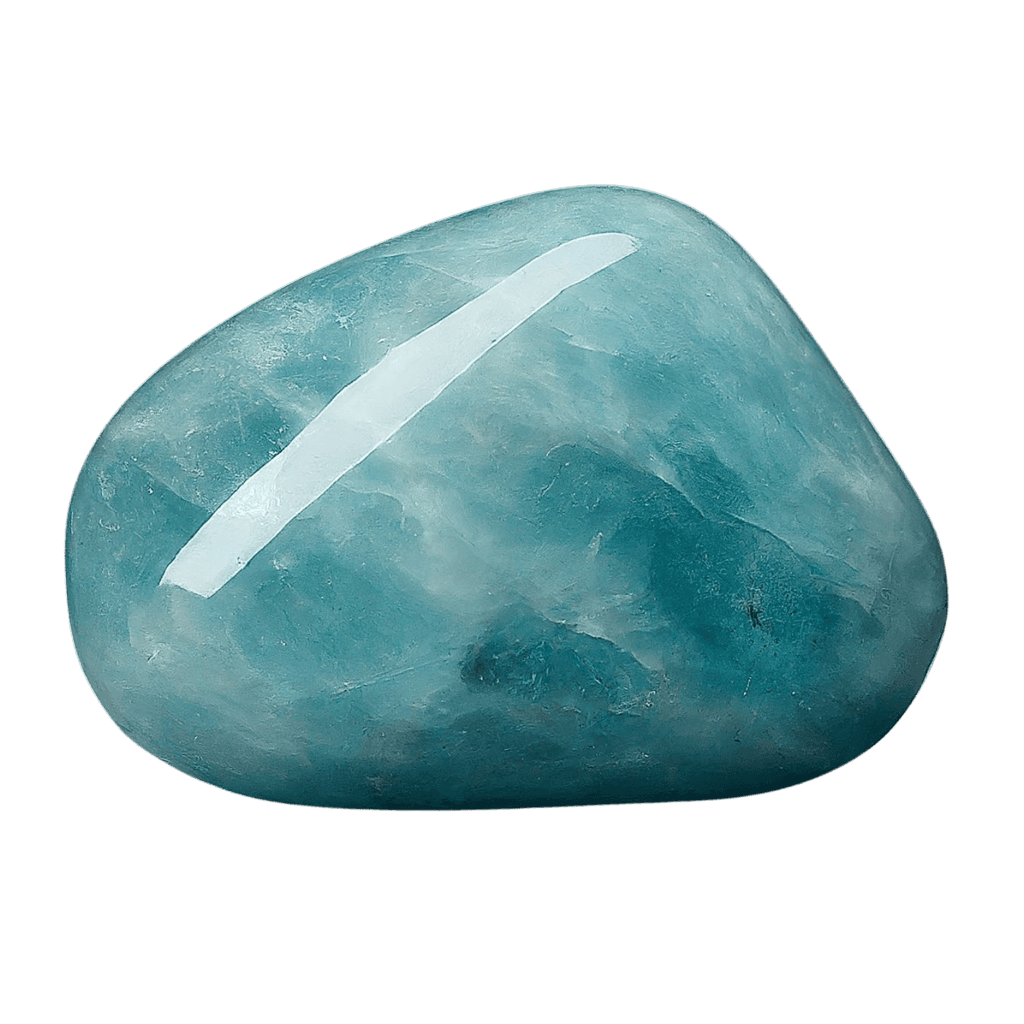
Set Larimar at the center of a grid built for calm and ring it with Aquamarine and Amazonite at the points. Speak the intention once as you place each stone; a grid is a sentence written in minerals, and saying the calm aloud is the punctuation.
How to Cleanse and Charge
A worked stone needs clearing, and Larimar is no exception; practitioners describe an uncleansed crystal as muffled, present but quieter than it should be. For the full safety profile and the cadence I recommend, see the dedicated Larimar care guide.
- 1
Moonlight
Set Larimar on a windowsill or ledge under the full moon and collect it in the morning. Moonlight is the gentlest cleanse in the tradition, safe for every stone in the collection and impossible to overdo.
- 2
Selenite
Overnight on selenite is the lowest-maintenance cleanse Larimar can get: set it down at bedtime, pick it up cleared in the morning.
- 3
Sage
For a deeper reset, hold Larimar in sage smoke and name out loud what the stone has been carrying; the naming is half the cleanse.
- 4
Sound
Sound-cleanse Larimar by striking a bowl or bell, letting each tone fade completely before the next; the vibration does the clearing, and no contact is needed.
How often to cleanse
Monthly is the floor for Larimar; step the cadence up whenever the stone is in daily rotation or the season is emotionally loud. With practice you will feel the tell yourself, a worked stone reads heavier and flatter in the palm.
Charging after cleansing
Once it is cleansed, recharge Larimar by setting it on a selenite plate overnight or bathing it in full moonlight; cleansing empties the stone, charging refills it.
The Crystal Starter Library
A free guide from Crystal Cassandra: the twelve stones that cover almost everything, a one page care matrix for water, sun and salt, and how to build a first intention practice.
We respect your inbox. Unsubscribe anytime.
Crystal Pairings
Larimar pairs best with stones that respect its quiet; loud amplifiers defeat the point. The traditional combinations keep the register low and slow, which is where this stone does its calm work. If a pairing feels busy rather than restful, trust that and separate them.

Buying Larimar: Price, Quality, and Jewelry
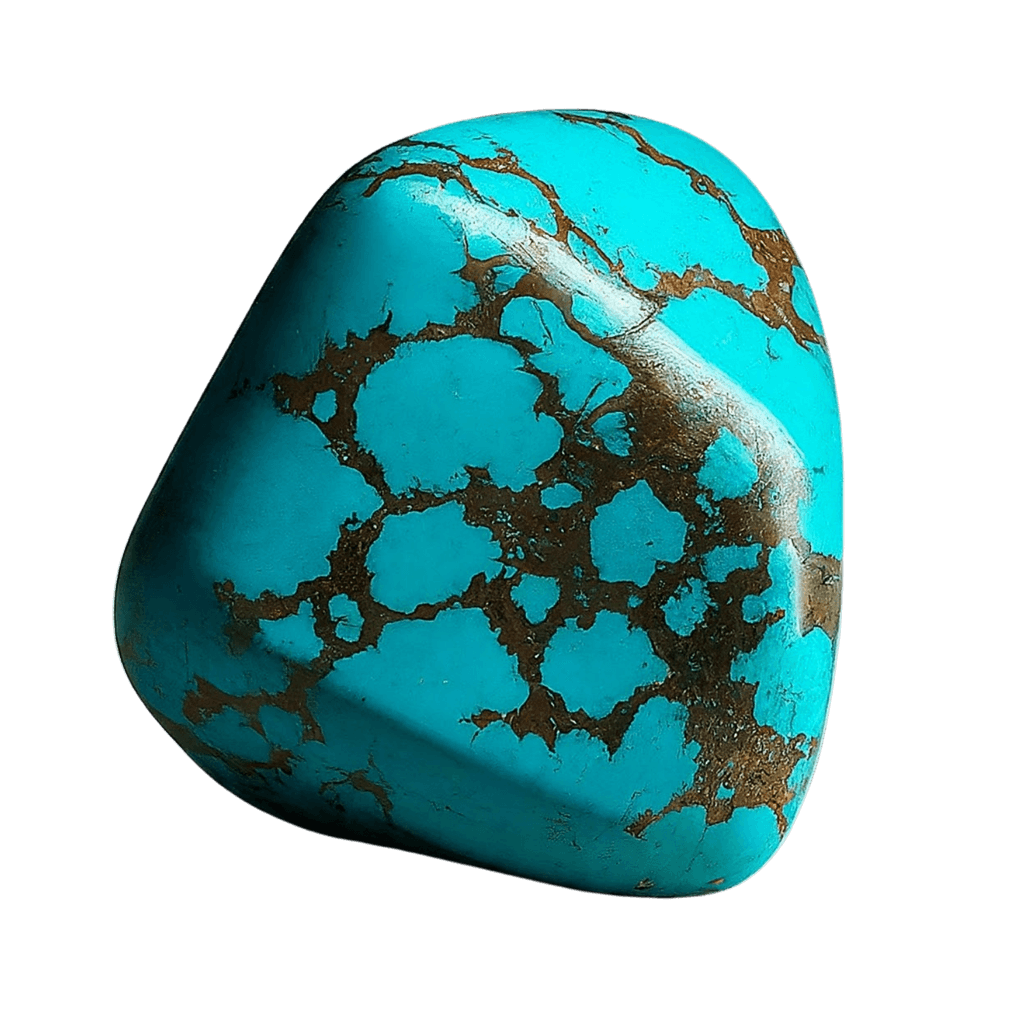
One island supplies the planet, so grade and provenance set the price: expect $20 to $60 for small cabochons and tumbled pieces, while top volcanic blue with crisp white wave patterning multiplies that several times over. The larimar meaning of sea-calm communication tracks the color itself, and the blue is the asset to protect, since larimar is photosensitive and pales with long sunbathing; store it dark and it keeps. Honesty notes: the market includes dyed howlite and magnesite sold as larimar, betrayed by uniform color and dye pooled in cracks, plus reconstituted larimar pressed from powder and resin, suspiciously even and warm to the touch. Real stone shows organic wave drift between white and blue and feels stone-cool against the lip. At Mohs 4.5 to 5 it suits pendants and earrings over daily rings, and it dislikes perfume, acids, and hot cars. Buy from sellers who name the Dominican mines; there is nowhere else it can honestly come from.
How to Spot Real vs Fake Larimar
Before buying Larimar, run the piece through these checks; nothing here needs equipment, just your hands, the light blue stone in question, and a healthy skepticism:
Temperature: at Mohs 5, genuine Larimar warms in the hand noticeably faster than glass; an imitation in glass stays cold and slick well past the first minute.
Weight and density: resin fakes run light for their size, while genuine Larimar at Mohs 5 carries honest mineral density; weigh it in the palm against any real tumbled stone you own.
Color and pattern: natural Larimar runs light blue, blue with white patterns, or volcanic blue, with variation from piece to piece; perfectly uniform color across a whole tray is the classic mark of dye or synthetics.
Price reality: quality Larimar runs roughly $30 to $65 for palm-sized pieces from reputable sellers; a price far below that range is usually answering a question you should have asked.
Trust your source: a seller who knows where a light blue stone like this came from and says so plainly is worth more than every test on this list. Vagueness about origin is itself an answer.
Sourcing
Buying Larimar well
The CrystalStones.com crystal store is not open yet, so we do not sell Larimar here. What we can give you is the part that matters most: how to tell a genuine piece from a treated or dyed one, and how to care for it once it is yours.
Frequently Asked Questions
What is Larimar good for?
Larimar is traditionally associated with calm, communication, healing, and spiritual awakening. Many people find it supportive for calm and for working with the Throat and Heart chakras.
Can Larimar go in water?
Yes. Larimar is water-safe at Mohs 5, so a brief rinse under cool running water is a perfectly good cleanse. Towel the stone off afterward and treat soaking as off the menu; brief contact is the whole agreement.
Can Larimar be in the sun?
Treat sun as a risk for Larimar: short incidental light does no harm, but hours of direct exposure will cost the light blue tones their depth. Default to moonlight.
What chakra is Larimar?
Larimar is primarily associated with the Throat (Vishuddha) and Heart (Anahata) chakras. Either of two stations works: the throat in placement practice, or a short chain that keeps it there all day, each serving its calm role.
What zodiac sign is Larimar for?
Larimar is traditionally connected to Pisces. If your signs differ, work with Larimar anyway; resonance in the hand outranks resonance on paper in every practical tradition.
How do I cleanse Larimar?
Stick to Moonlight, Selenite, and Sage for Larimar; those are the methods its care profile recommends. Because the stone is water-tolerant at Mohs 5, an occasional rinse can supplement the list, with the named methods doing the steady monthly work.
Is Larimar real or fake, how can I tell?
Genuine Larimar warms quickly in the hand at Mohs 5, while glass imitations stay cold longer and feel slick rather than satiny. Expect natural variation in its light blue coloring and a price near $30 to $65 for tumbled pieces; uniform color at a bargain price is the classic warning sign.
What’s Next?
A few thoughtful next steps if Larimar is calling to you.
Explore More Tools
Crystal Quiz
Discover which crystal matches your energy right now.
Open →Chakra Test
Find which chakras need attention and the crystals to balance them.
Open →Crystal Cleansing Guide
Learn how to safely cleanse and charge your crystals.
Open →Crystals by Intention
Find the perfect crystal for what you need right now.
Open →