Quick Answer
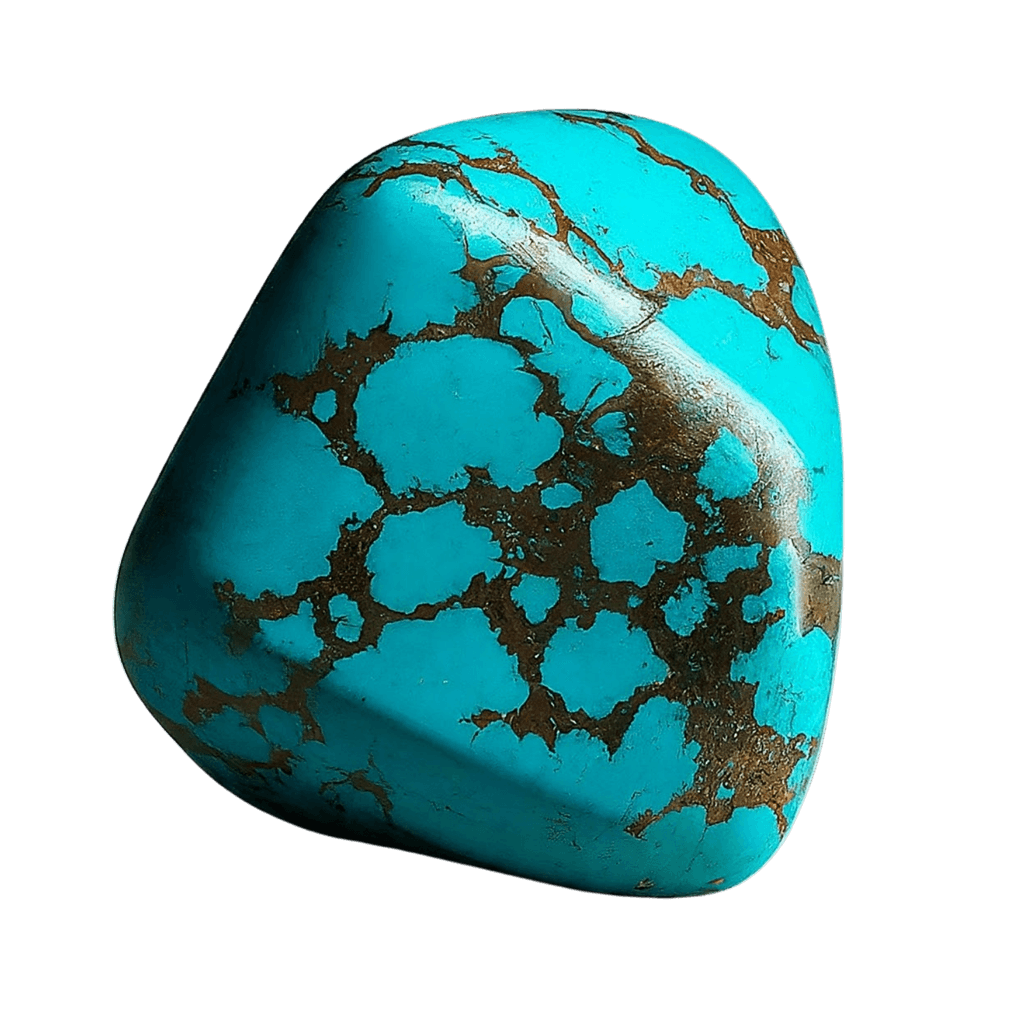
Turquoise is a blue crystal used in modern crystal healing for protection, communication, and healing. It measures 6 on the Mohs hardness scale and typically costs $20 to $50 for a tumbled stone. In the chakra tradition, Turquoise is associated with the Throat chakra.
Worth knowing: Turquoise mining is older than the pyramids: Egyptian expeditions were cutting the gem in the Sinai by about 3200 BC, at mines whose temple honored Hathor as Lady of Turquoise.
“An ancient stone of protection, healing, and honest communication.”
- Chakra
- Throat (Vishuddha)
- Zodiac
- Sagittarius ♐, Scorpio ♏
- Element
- Earth 🌍
- Planet
- Jupiter ♃
- Hardness
- 6 / 10 (Mohs)
- Colors
- Blue, Blue-green, Green-blue with matrix
- Origin
- Iran, USA (Arizona), China
- Availability
- Not sold here yet
Care + Safety
Turquoise at a glance
- Water: avoid, may damage or leach
- Sun: fades in prolonged direct sun
- Mohs hardness: 6 (occasional wear only)
Worried it's fake?
How to spot real Turquoise
Turquoise is one of the most-counterfeited stones on the consumer market. In my practice, the combination of two or three hands-on tests is usually enough to separate authentic from substitute.
See Cassandra's Turquoise authenticity guide →What is Turquoise?
Turquoise is a hydrated copper aluminum phosphate, one of the few gems that forms near the desert surface where copper-rich water seeps into aluminum-bearing rock. The name is medieval French for 'Turkish stone', after the trade route that delivered it to Europe. It is December's birthstone and among the oldest gems ever mined.
Turquoise measures 6 on the Mohs scale and shows blue, blue-green, or green-blue with matrix coloring. Practitioners shelve it with the keeper stones at the protective end of the catalog, where protection, communication, and healing are the standing requests.
The stone connects primarily to the Throat (Vishuddha) chakra, carrying Earth energy. Today the material is drawn from Iran, USA (Arizona), and China. Hold pieces from two different sources side by side and the differences in the blue material, tone, translucency, pattern, become obvious fast.
Turquoise has been revered for thousands of years across many distinct cultures. The Egyptians inlaid it in Tutankhamun's burial mask. The Persians (modern Iran) called it pīrūzeh, 'victory.' In what is now the American Southwest, Diné (Navajo), Pueblo, and Zuni silversmiths developed a living tradition of turquoise jewelry that continues today, when buying turquoise jewelry from Indigenous artisans, look for the Indian Arts and Crafts Act certification rather than imitations. Its blue-green color bridges sky and earth, and wearing it is traditionally believed to protect the spirit while strengthening the voice. Notice how it warms quickly in your hand.
Also catalogued as Sky Stone and Master Healer Stone, Turquoise earns its place in a working collection by being usable: start with protection, the job it is best known for, and let the stone widen its own brief from there.
History and Mythology
Turquoise may be the oldest mined gem on Earth. Egyptian expeditions were cutting it from the Sinai Peninsula by about 3200 BC, and the temple standing at the Serabit el-Khadim mines was raised to Hathor, whom the inscriptions there honor as Lady of Turquoise; the quarrying predates the pyramids. The color standard was set in Persia: the mines near Nishapur, worked for well over a millennium, produced the even, matrix-free robin's-egg blue that gemology still measures every other turquoise against. Europe named the stone for its delivery route, pierre turquoise, 'Turkish stone', because Persian material reached the West through Turkish bazaars. The youngest great tradition belongs to the American Southwest: Diné smiths learned silverwork from Mexican plateros in the mid-1800s, and by about 1880 turquoise met silver, founding the inlay and cluster styles that Diné (Navajo), Zuni, and Hopi artists carry forward today. Press a finished stone to your cheek on a hot afternoon; the desert's gem stays strangely cool, a piece of sky that keeps its temperature.
Turquoise Meaning and Metaphysical Properties
First Touch
Turquoise meets the hand cool and composed: at Mohs 6 it takes a glass-bright polish, and that first chill lingers a while before your warmth wins. Notice your weight while you hold it, feet on the floor, seat in the chair; with grounding stones the tradition points attention toward ballast rather than toward tingle.
Primary Properties
The working properties of Turquoise cluster at the protective end: protection, communication, healing, and grounding. This family teaches containment, a settled spine, a slower breath, a clear sense of where you end and the room begins. The list is traditional shorthand; the stone meets whatever version of steadiness you actually need.
How Crystal Energy Works
Tradition stations Turquoise at the Throat, the narrow bridge where what you know becomes what you say, and protection is the load assigned to it. The classic session is small: hold the stone, speak one true thing about protection, communication, and healing, and stop there. Melody's Love Is in the Earth describes the grounding stones through the root connection, the energetic cord she pictures running from the base of the spine into the earth itself.
Amplification Through Intention
The Earth designation means Turquoise favors repetition: daily handling, a fixed home on the shelf, the protection intention restated in plain words. That steadiness is the whole method.
Healing Benefits
Emotional Support
Emotionally, Turquoise is traditionally associated with protection, communication, and healing, the felt sense of being defended and rooted. Many people keep it close on the days when other people's weather gets in too easily. Tradition, not treatment: protection work with a stone sits beside professional support, never in place of it.
Spiritual Connection
Turquoise holds the doorkeeper post in spiritual practice: tradition gives it the opening breath before inner work and the deliberate landing afterward. For this family, a well-kept boundary is itself a form of devotion.
Physical Presence
Physically, Turquoise belongs to the slow systems: steady meals, regular sleep, the unglamorous maintenance that protection actually rests on. Keep it where the routines happen as a quiet vote for keeping them; anything clinical belongs with clinicians.
Chakra Connection
Turquoise resonates most strongly with the Throat (Vishuddha), the energy center traditionally drawn in blue and the traditional seat of this stone's protection work. When this center runs clear, the classical markers are words that match what you mean and a voice you recognize as your own; protection, communication, and healing are what Turquoise is most often asked to bring to it.
Lying down, settle Turquoise at the throat with the jaw soft, counting nothing; that is the traditional throat station, and the session is aimed at protection.
Zodiac and Astrological Connection
Turquoise appears under Sagittarius ♐ (Nov 22 to Dec 21) and Scorpio ♏ (Oct 23 to Nov 21) in the standard correspondence tables; if those signs are loud in your chart, expect the introduction to feel familiar.
None of this is exclusionary. If Turquoise keeps catching your eye, that interest counts for more than whether Sagittarius appears anywhere in your chart.
Jupiter ♃ rules Turquoise in this tradition, so practitioners time their longer sessions to that planet's active periods, especially for protection.
How to Use Turquoise
These are the five ways of working with Turquoise I suggest most often. Begin wherever your attention goes first; the sequence matters far less than starting.
- 1
Meditation Hold
Take up Turquoise and register the first cool touch; a glassy stone at Mohs 6 warms slowly, and tracking that gradual change is a meditation in itself.
- 2
Body Placement
Set Turquoise at the throat's lowest point while you lie back, and let the jaw go slack. Stay as long as staying is easy, and stop when it stops being easy, which is the only measure the old guidance offers. That low seat is the throat's traditional station, and the work assigned to it is protection.
- 3
Sleep Companion
At night, park Turquoise on the nightstand rather than working it; its job is the day's protection, and ending the day cleanly is how tomorrow's session starts well.
- 4
Carry With You
Carry Turquoise on the days you expect crowds, noise, or difficult rooms. The touch-check becomes a boundary ritual, a two-second reminder that protection is something you bring with you.
- 5
Crystal Grid Anchor
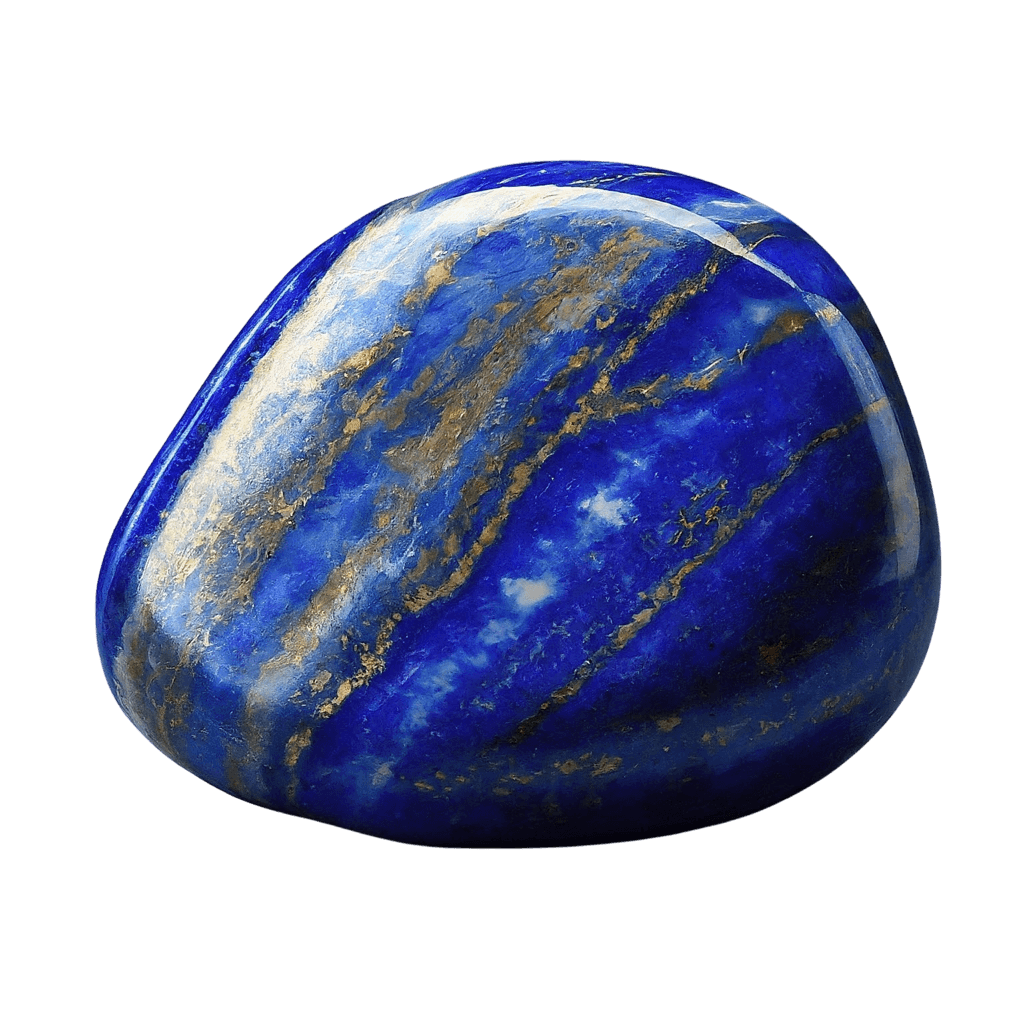
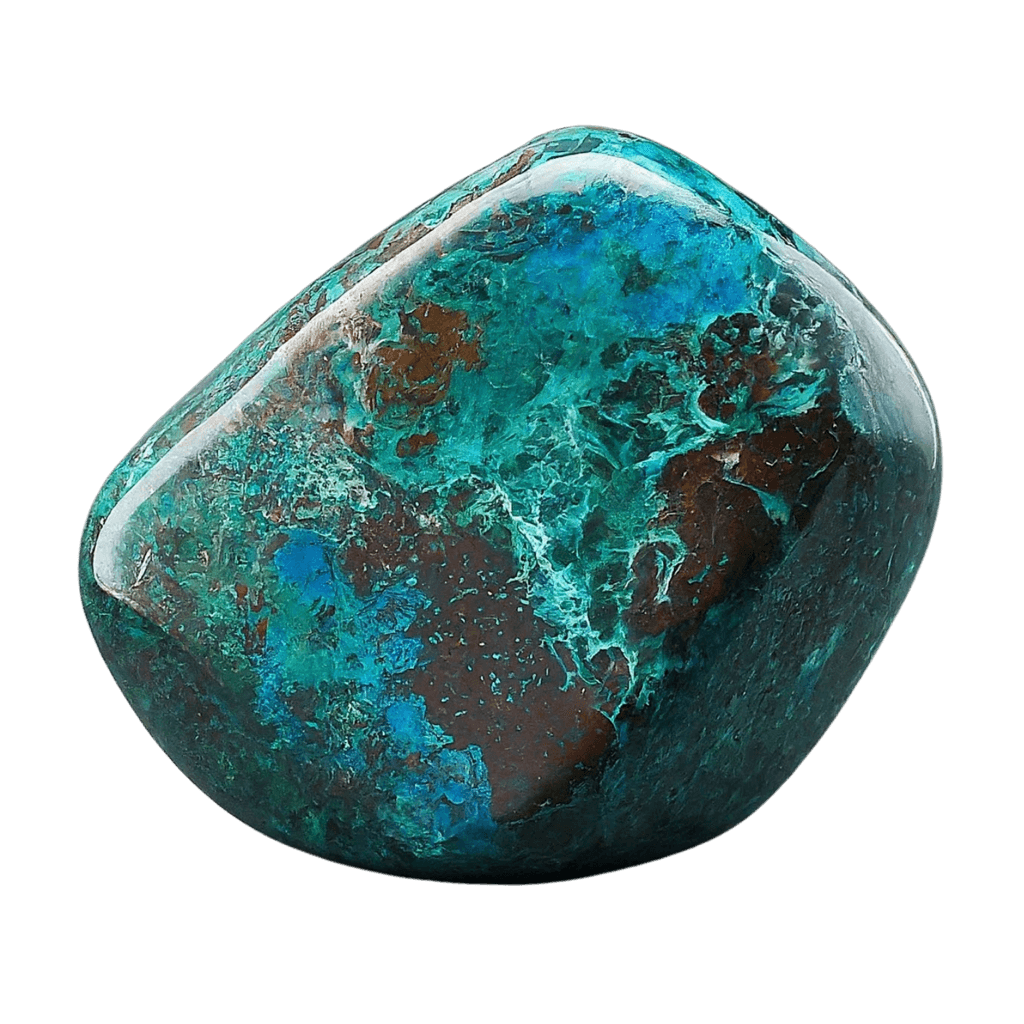
Use Turquoise as the heart of a small grid for protection, with Lapis Lazuli and Chrysocolla alternating on the spokes. Place the stones slowly and set the last one down with the protection intention named out loud.
How to Cleanse and Charge
A worked stone needs clearing, and Turquoise is no exception; practitioners describe an uncleansed crystal as muffled, present but quieter than it should be. For the full safety profile and the cadence I recommend, see the dedicated Turquoise care guide.
- 1
Sage
Smoke-cleanse Turquoise: light the sage, let it settle to a smolder, and move the stone through the rising smoke until your sense of it lightens, usually under a minute.
- 2
Moonlight
Give Turquoise a night outdoors or at the glass under a bright moon; the tradition holds moonlight to be the universal reset, slow, cool, and risk-free.
- 3
Selenite
Lay Turquoise on a selenite plate or alongside a selenite wand overnight; selenite is the tradition's self-cleaning shelf, no effort, no risk to the stone.
- 4
Sound
Sound-cleanse Turquoise by striking a bowl or bell, letting each tone fade completely before the next; the vibration does the clearing, and no contact is needed.
How often to cleanse
Monthly is the floor for Turquoise; step the cadence up whenever the stone is in daily rotation or the season is emotionally loud. With practice you will feel the tell yourself, a worked stone reads heavier and flatter in the palm.
Charging after cleansing
Once it is cleansed, recharge Turquoise by setting it on a selenite plate overnight or bathing it in full moonlight; cleansing empties the stone, charging refills it.
The Crystal Starter Library
A free guide from Crystal Cassandra: the twelve stones that cover almost everything, a one page care matrix for water, sun and salt, and how to build a first intention practice.
We respect your inbox. Unsubscribe anytime.
Crystal Pairings
Think of pairing Turquoise as staffing a gate: something heavy to hold the line, something quick to keep watch. The traditional companions split exactly that work, boundary on one side, vigilance on the other. Before settling on a pair, hold both for a moment; comfort in the hand is the yes.

Buying Turquoise: Price, Quality, and Jewelry
Honesty is most of the turquoise meaning in the marketplace, because this soft, porous gem is among the most imitated stones in the trade. Three words do the sorting. Natural means untreated and rare, with even robin's-egg blue from named mines commanding collector prices. Stabilized means genuine turquoise strengthened with resin: the honest workhorse of the market, color-stable, and what most $20 to $50 stones and most real jewelry contain. Reconstituted or 'block' means powdered stone or outright imitation, and dyed howlite wearing turquoise color is the classic fake; a damp acetone swab on a hidden spot lifts dye but leaves genuine turquoise unchanged. Matrix is taste, not flaw: golden-brown spiderwebbing can raise the price of American stones. Keep any grade away from water, perfume, and long sun, and it will hold its piece of sky for decades.
How to Spot Real vs Fake Turquoise
Imitations of Turquoise exist because demand does. A few hands-on checks separate genuine blue material from glass, resin, and dye:
Temperature: genuine Turquoise feels distinctly cool at first touch and gives that coolness up slowly; resin copies feel warm almost immediately, which is the quickest tell there is.
Weight: real Turquoise should feel like stone rather than plastic pretending; if a palm-sized piece feels nearly weightless, walk away from it.
Color: expect blue, blue-green, or green-blue with matrix with honest variation, banding, zoning, the odd inclusion; a batch where every stone matches exactly came out of a factory, not the ground.
Price reality: quality Turquoise runs roughly $20 to $50 for palm-sized pieces from reputable sellers; a price far below that range is usually answering a question you should have asked.
Trust your source: buy Turquoise from sellers who can name the mine or region behind their blue stock and who disclose treatments without being chased. A seller who volunteers that information before you ask is the one worth returning to.
Sourcing
Buying Turquoise well
The CrystalStones.com crystal store is not open yet, so we do not sell Turquoise here. What we can give you is the part that matters most: how to tell a genuine piece from a treated or dyed one, and how to care for it once it is yours.
Frequently Asked Questions
What is Turquoise good for?
Turquoise is traditionally associated with protection, communication, healing, and grounding. Many people find it supportive for protection and for working with the Throat chakra.
Can Turquoise go in water?
No. Turquoise should stay dry; cleanse it with Sage, Moonlight, and Selenite instead, and keep every wet method off the table.
Can Turquoise be in the sun?
Keep it brief. Prolonged direct sun can fade the blue coloring of Turquoise, so a few morning minutes are fine but moonlight is the safer charging method.
What chakra is Turquoise?
Turquoise is primarily associated with the Throat (Vishuddha) chakra. Either of two stations works: the throat in placement practice, or a short chain that keeps it there all day, each serving its protection role.
What zodiac sign is Turquoise for?
Turquoise is traditionally connected to Sagittarius and Scorpio. That said, the zodiac correspondence is an invitation rather than a requirement; any chart can work with Turquoise, and attraction to the stone matters more than the calendar.
How do I cleanse Turquoise?
The best methods for Turquoise are Sage, Moonlight, and Selenite. Porous, avoid water, salt, chemicals, and prolonged sunlight. Very sensitive stone.
Is Turquoise real or fake, how can I tell?
Genuine Turquoise feels cool at first touch and warms slowly; at Mohs 6 it also resists the pocket scratches that mark softer fakes. Natural blue material varies piece to piece and runs about $20 to $50 tumbled, so perfectly matched stones at a suspicious discount deserve a second look.
What’s Next?
A few thoughtful next steps if Turquoise is calling to you.
Explore More Tools
Crystal Quiz
Discover which crystal matches your energy right now.
Open →Chakra Test
Find which chakras need attention and the crystals to balance them.
Open →Crystal Cleansing Guide
Learn how to safely cleanse and charge your crystals.
Open →Crystals by Intention
Find the perfect crystal for what you need right now.
Open →