
Quick Answer
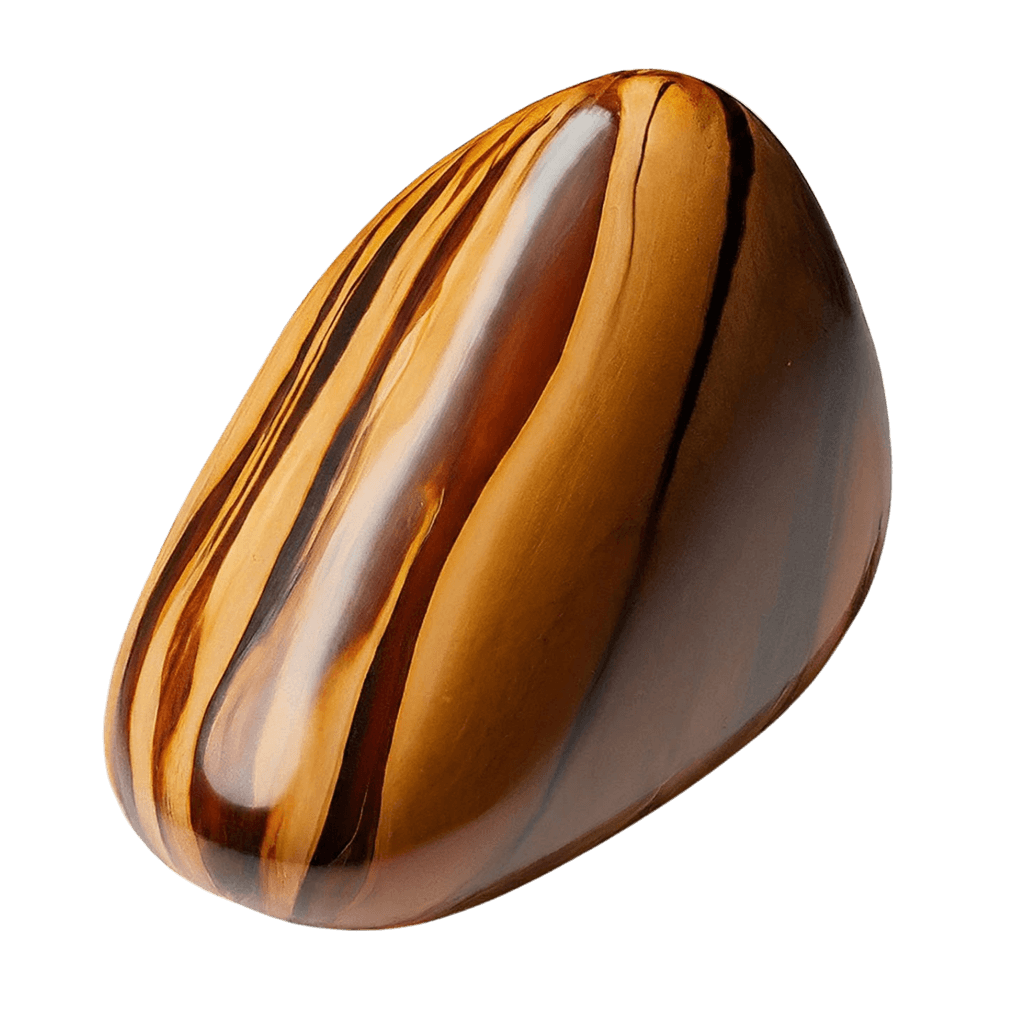
Peanut Wood is a brown crystal used in modern crystal healing for grounding, calm, and stress relief. It measures 7 on the Mohs hardness scale and typically costs $10 to $30 for a tumbled stone. In the chakra tradition, Peanut Wood is associated with the Root and Sacral chakras.
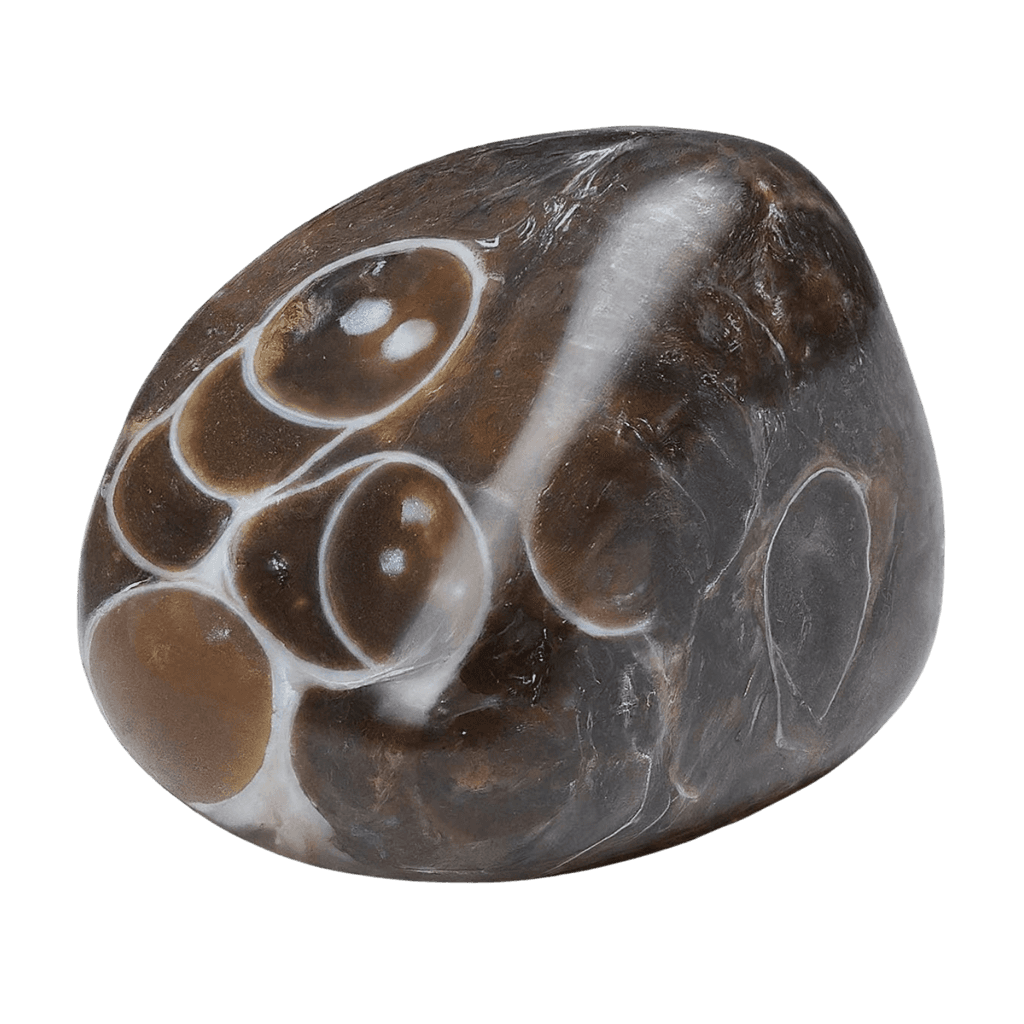
Worth knowing: The white peanut shapes are casts of tunnels cut by shipworm-like bivalves, and the filling is radiolarite, rock made of the silica skeletons of plankton, collected today in the Kennedy Range of Western Australia.
“A petrified driftwood marked with white peanut-shaped marine clam borings, of ancestral patience.”
- Chakra
- Root (Muladhara), Sacral (Svadhisthana)
- Zodiac
- Taurus ♉, Virgo ♍
- Element
- Earth 🌍, Water 💧
- Planet
- Saturn ♄
- Hardness
- 7 / 10 (Mohs)
- Colors
- Brown, Tan, White spots
- Origin
- Australia
- Availability
- Not sold here yet
Care + Safety
Peanut Wood at a glance
- Water: brief rinse safe
- Sun: tolerates sunlight charging
- Mohs hardness: 7 (durable for daily-wear jewelry)
What is Peanut Wood?
Peanut wood began as conifer driftwood floating in the Cretaceous sea that covered part of Western Australia roughly 120 million years ago. Wood-boring marine clams riddled the logs, white radiolarian ooze filled the holes after the wood sank, and silica later petrified the whole assembly, borings and all.
Peanut Wood measures 7 on the Mohs scale and shows brown, tan, or white spots coloring. It is one of the keeper stones, the protective end of the catalog, most often asked for grounding, calm, and stress relief.
The stone connects primarily to the Root (Muladhara) and Sacral (Svadhisthana) chakras, carrying Earth and Water energy. Commercial material comes from Australia, and provenance shows: pieces from different deposits vary in saturation, veining, and clarity, which is why no two specimens of Peanut Wood read quite alike.
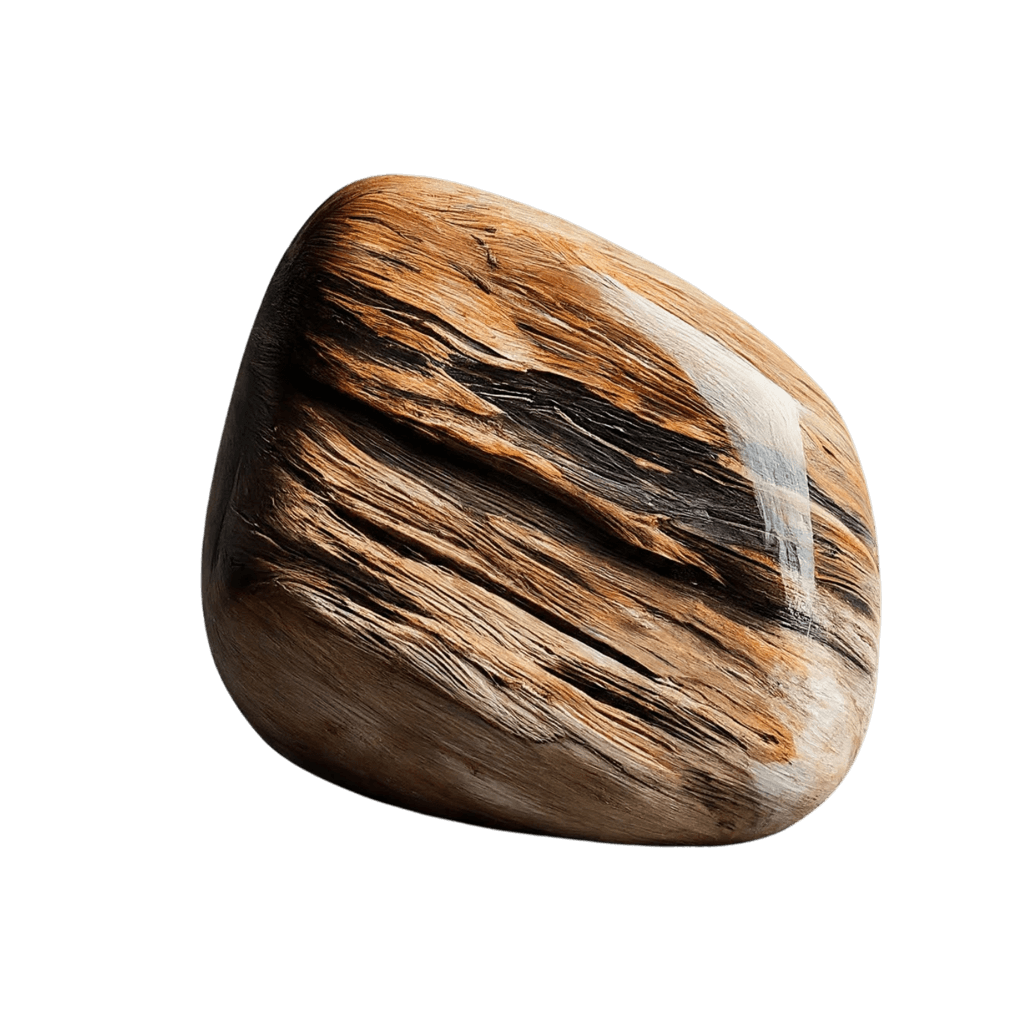
Peanut Wood is petrified driftwood from Australia, marked with distinctive white peanut-shaped holes left by ancient marine clam borings. Hold this stone and notice a slow, almost geologic patience. The classical sources describe Peanut Wood as a stone of ancestral patience and grounded creative endurance.
Also catalogued as Peanut Petrified Wood and Australian Petrified Wood, this is a stone that rewards regular handling more than display. Give Peanut Wood a week of grounding duty in the pocket before deciding what it is for.
History and Mythology
There is no credible ancient chapter to tell about Peanut Wood. The species was described by modern science, and its associations with grounding were assigned by contemporary practitioners reading its color, structure, and feel. What the stone lacks in legend it makes up in geology, which asks for no embellishment; deposits worked today lie in Australia.
The correspondence tables used by today's practitioners assign Peanut Wood to Taurus and Virgo under the rulership of Saturn ♄. In that system, work centered on grounding is said to land best while those signs are in season.
Hold the two timescales side by side, centuries of human use at most against epochs of formation behind every Mohs 7 specimen of Peanut Wood; the deep time is the one part no marketing can inflate.
Peanut Wood Meaning and Metaphysical Properties
First Touch
Peanut Wood announces itself through temperature: a cool, brown, glass-polished weight at Mohs 7 that warms deliberately, not instantly, inside a closed palm. Notice your weight while you hold it, feet on the floor, seat in the chair; with grounding stones the tradition points attention toward ballast rather than toward tingle.
Primary Properties
Peanut Wood keeps a guard-duty property list: grounding, calm, stress relief, and focus. What the protective family teaches is edges, where you stop, where the room starts, and the settled breath that comes from knowing the difference. Take the list as shorthand from tradition and let your own steadiness define the assignment.
How Crystal Energy Works
Peanut Wood belongs to the Root center in the traditional reading, the body's anchor point, where grounding is the standing request. Sessions at this center stay low and slow-paced, seated comfortably, and grounding, calm, and stress relief name the long assignment. The image Melody uses for the grounding family in Love Is in the Earth is a rooted one, an energy cord running from the base of the spine into the earth itself.
Amplification Through Intention
Peanut Wood is classed as an Earth stone, patient, bodily, hard to knock over, which sets the pace of its grounding work. Prefer routines over ceremonies, the same pocket, the same desk corner, and let consistency do for grounding, calm, and stress relief what intensity cannot.
Healing Benefits
Emotional Support
Peanut Wood works the defended-and-rooted layer of feeling: grounding, calm, and stress relief are its traditional emotional assignments. Keep it near on the porous days, the ones where every mood in the room seems to walk straight in. Tradition, not treatment: grounding work with a stone sits beside professional support, never in place of it.
Spiritual Connection
Peanut Wood holds the doorkeeper post in spiritual practice: tradition gives it the opening breath before inner work and the deliberate landing afterward. For this family, a well-kept boundary is itself a form of devotion.
Physical Presence
Physically, Peanut Wood belongs to the slow systems: steady meals, regular sleep, the unglamorous maintenance that grounding actually rests on. Keep it where the routines happen as a quiet vote for keeping them; anything clinical belongs with clinicians.
Chakra Connection
Peanut Wood resonates most strongly with the Root (Muladhara), the energy center traditionally drawn in red and the traditional seat of this stone's grounding work. When this center runs clear, the classical markers are safety, stability, and groundedness; grounding, calm, and stress relief are what Peanut Wood is most often asked to bring to it.
For placement, go low: lie down with Peanut Wood resting at the hip points, or sit on the floor and set it between your feet. Attention on weight and ground, for as long as that stays comfortable, is the classic root session the tradition records for grounding.
Peanut Wood also keeps a working line to the Sacral (Svadhisthana), which widens its range in layouts; let the primary placement lead, and add the second position once the first feels familiar.
Zodiac and Astrological Connection
In the modern correspondence tables Peanut Wood is assigned to Taurus ♉ (Apr 20 to May 20) and Virgo ♍ (Aug 23 to Sep 22); a Sun, Moon, or rising placement there is read as a head start with this stone, nothing more.
None of this is exclusionary. If Peanut Wood keeps catching your eye, that interest counts for more than whether Taurus appears anywhere in your chart.
Saturn ♄ rules Peanut Wood in this tradition, so practitioners time their longer sessions to that planet's active periods, especially for grounding.
How to Use Peanut Wood
These are the five ways of working with Peanut Wood I suggest most often. Begin wherever your attention goes first; the sequence matters far less than starting.
- 1
Meditation Hold
Take up Peanut Wood and register the first cool touch; a glassy stone at Mohs 7 warms slowly, and tracking that gradual change is a meditation in itself.
- 2
Body Placement
Hip level when reclining, floor level when seated, that is where the chakra charts kept a Root stone like Peanut Wood. Nothing here is meant to be strenuous. Set the stone down, stay a while, and see where your attention keeps going back to. The grounding heading belongs to the tradition, and it stays a tradition rather than a promise.
- 3
Sleep Companion
At night, park Peanut Wood on the nightstand rather than working it; its job is the day's grounding, and ending the day cleanly is how tomorrow's session starts well.
- 4
Carry With You
Carry Peanut Wood on the days you expect crowds, noise, or difficult rooms. The touch-check becomes a boundary ritual, a two-second reminder that grounding is something you bring with you.
- 5
Crystal Grid Anchor
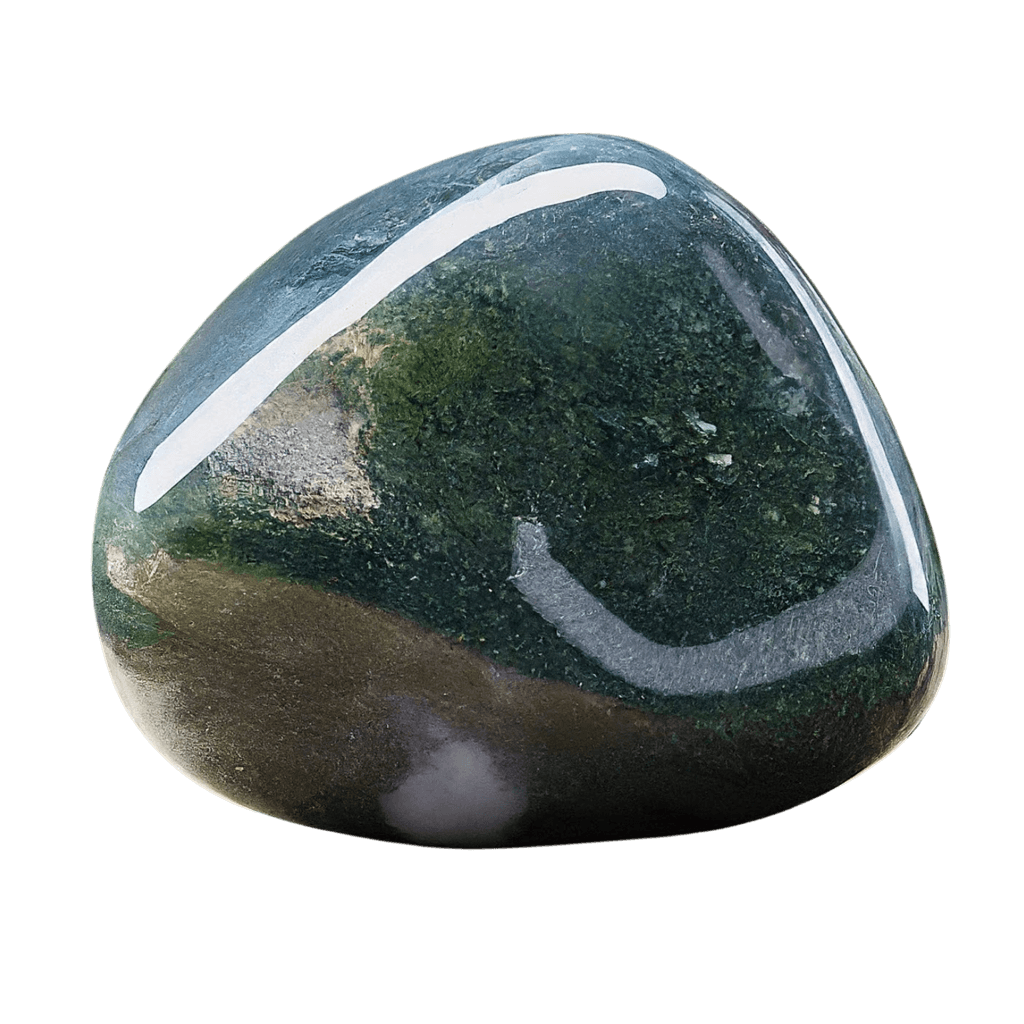
Use Peanut Wood as the heart of a small grid for grounding, with Petrified Wood and Agate Moss alternating on the spokes. Place the stones slowly and set the last one down with the grounding intention named out loud.
How to Cleanse and Charge
Peanut Wood works best when it is cleansed on a rhythm; tradition pictures a stone absorbing what it meets, and a saturated stone has nothing left to give. The complete water, sun, and salt safety profile, plus the storage instructions I give my clients, lives in the dedicated Peanut Wood care guide.
- 1
Water
A short rinse cleanses Peanut Wood: cool water, gentle rotation, sixty seconds, towel dry. Keep it brief; even water-safe stones prefer not to soak.
- 2
Moonlight
Give Peanut Wood a night outdoors or at the glass under a bright moon; the tradition holds moonlight to be the universal reset, slow, cool, and risk-free.
- 3
Sage
Smoke-cleanse Peanut Wood: light the sage, let it settle to a smolder, and move the stone through the rising smoke until your sense of it lightens, usually under a minute.
- 4
Sound
Sound-cleanse Peanut Wood by striking a bowl or bell, letting each tone fade completely before the next; the vibration does the clearing, and no contact is needed.
- 5
Earth
Give Peanut Wood twenty-four hours in the ground, with the spot marked so you can find it again; earth burial is the slow, thorough cleanse for stones that feel truly saturated.
How often to cleanse
I recommend cleansing Peanut Wood at least once a month, more frequently if you're using it daily or during emotionally intense periods. You'll also learn to feel when a stone needs cleansing; it may feel heavier, duller, or simply “off.”
Charging after cleansing
Follow every cleansing with a charge: for Peanut Wood that means placing it in morning sunlight for 30 minutes. A cleared stone is neutral, a charged one is ready.
The Crystal Starter Library
A free guide from Crystal Cassandra: the twelve stones that cover almost everything, a one page care matrix for water, sun and salt, and how to build a first intention practice.
We respect your inbox. Unsubscribe anytime.
Crystal Pairings
Pair Peanut Wood the way you would build a wall: one stone for mass, one for watch. Its traditional partners divide that labor, boundary-holding on one side, alertness on the other. Hold any two together briefly before committing; ease in the hand is the green light.
How to Spot Real vs Fake Peanut Wood
Before buying Peanut Wood, run the piece through these checks; nothing here needs equipment, just your hands, the brown stone in question, and a healthy skepticism:
Temperature: genuine Peanut Wood feels distinctly cool at first touch and gives that coolness up slowly; resin copies feel warm almost immediately, which is the quickest tell there is.
Weight: real Peanut Wood should feel like stone rather than plastic pretending; if a palm-sized piece feels nearly weightless, walk away from it.
Color: expect brown, tan, or white spots with honest variation, banding, zoning, the odd inclusion; a batch where every stone matches exactly came out of a factory, not the ground.
Price reality: quality Peanut Wood runs roughly $10 to $30 for palm-sized pieces from reputable sellers; a price far below that range is usually answering a question you should have asked.
Trust your source: provenance beats any hands-on check; ask where the Peanut Wood was mined and whether the brown material is treated, and expect straight answers rather than adjectives.
Sourcing
Buying Peanut Wood well
The CrystalStones.com crystal store is not open yet, so we do not sell Peanut Wood here. What we can give you is the part that matters most: how to tell a genuine piece from a treated or dyed one, and how to care for it once it is yours.
Frequently Asked Questions
What is Peanut Wood good for?
Peanut Wood is traditionally associated with grounding, calm, stress relief, and focus. Many people find it supportive for grounding and for working with the Root and Sacral chakras.
Can Peanut Wood go in water?
Yes, Peanut Wood tolerates water; at Mohs 7, a one to two minute rinse is fine. Towel the stone off afterward and treat soaking as off the menu; brief contact is the whole agreement.
Can Peanut Wood be in the sun?
Sun is fine for Peanut Wood. A half hour of direct morning light both cleanses and charges it, and the brown tones are stable enough to take it.
What chakra is Peanut Wood?
Peanut Wood is primarily associated with the Root (Muladhara) and Sacral (Svadhisthana) chakras. Low placements serve it best, the hips or the floor between seated feet, since that is where root-center grounding work traditionally happens.
What zodiac sign is Peanut Wood for?
Peanut Wood is traditionally connected to Taurus and Virgo. That said, the zodiac correspondence is an invitation rather than a requirement; any chart can work with Peanut Wood, and attraction to the stone matters more than the calendar.
How do I cleanse Peanut Wood?
The best methods for Peanut Wood are Water, Moonlight, and Sage. Now silicified and durable. All common cleansing methods are safe.
Is Peanut Wood real or fake, how can I tell?
Genuine Peanut Wood feels cool at first touch and warms slowly; at Mohs 7 it also resists the pocket scratches that mark softer fakes. A fair tumbled piece sits near $10 to $30 and shows honest variation across the brown range; flawless uniformity at a bargain price is the tell worth trusting.
What’s Next?
A few thoughtful next steps if Peanut Wood is calling to you.
Explore More Tools
Crystal Quiz
Discover which crystal matches your energy right now.
Open →Chakra Test
Find which chakras need attention and the crystals to balance them.
Open →Crystal Cleansing Guide
Learn how to safely cleanse and charge your crystals.
Open →Crystals by Intention
Find the perfect crystal for what you need right now.
Open →