Quick Answer
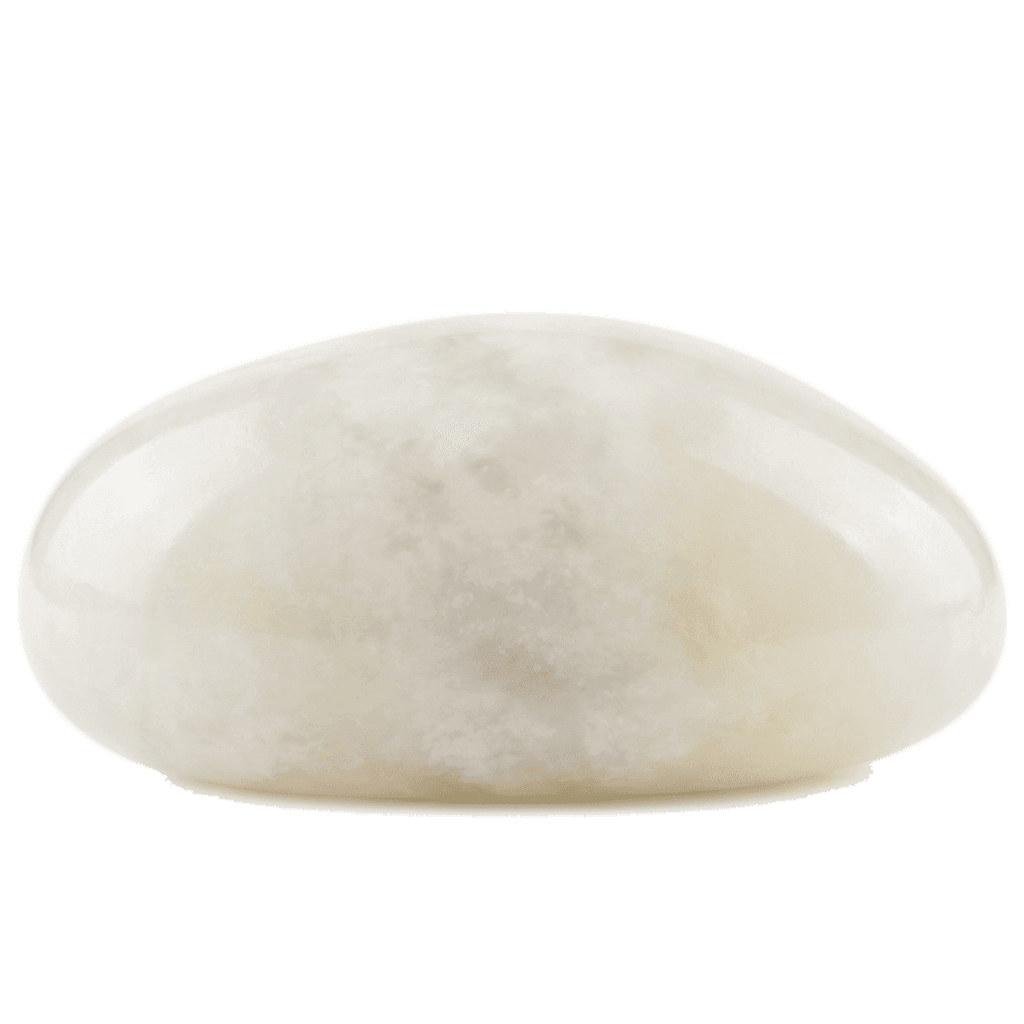
White Jade is a white crystal used in modern crystal healing for calm, decision making, and clarity. It measures 6 on the Mohs hardness scale and typically costs $10 to $45 for a tumbled stone. In the chakra tradition, White Jade is associated with the Crown and Heart chakras.
Worth knowing: The most coveted white nephrite has been gathered for centuries as river boulders from the Yurungkash, literally the White Jade River, which descends from the Kunlun Mountains at Hotan in Xinjiang, China.
“A serene white jade of peace, clear decisions, and quiet good fortune.”
- Chakra
- Crown (Sahasrara), Heart (Anahata)
- Zodiac
- Libra ♎, Taurus ♉
- Element
- Earth 🌍
- Planet
- Venus ♀
- Hardness
- 6 / 10 (Mohs)
- Colors
- White, Cream, Pale grey, Ivory
- Origin
- China, Myanmar, Russia, Canada
- Availability
- Not sold here yet
Care + Safety
White Jade at a glance
- Water: brief rinse safe
- Sun: tolerates sunlight charging
- Mohs hardness: 6 (occasional wear only)
What is White Jade?
White jade is nephrite, an amphibole rock of tremolite fibers felted so tightly that the stone is famously tough, harder to break than to scratch, which let early cultures shape it into blades and ritual objects before metal tools existed. It is one of only two minerals entitled to the name jade, beside jadeite.
White Jade measures 6 on the Mohs scale and shows white, cream, or pale grey coloring. It belongs to the quieting shelf of the catalog, the stones reached for around calm, decision making, and clarity.
The stone connects primarily to the Crown (Sahasrara) and Heart (Anahata) chakras, carrying Earth energy. Commercial material comes from China, Myanmar, Russia, and Canada, and provenance shows: pieces from different deposits vary in saturation, veining, and clarity, which is why no two specimens of White Jade read quite alike.
White Jade is the pale, creamy variety of true jade, most often nephrite, prized in Chinese tradition where the finest is poetically called mutton fat jade. Hold this stone and notice a calm, smoothing serenity, the mind growing quiet enough to choose well. In the crystal-healing tradition White Jade is used for peace, clear decision-making, and filtering distractions so you can focus on what matters. Like all jade it is tough and durable, safe with a brief rinse, kept out of long soaks and salt.
Also catalogued as White Nephrite and Mutton Fat Jade, this is a stone that rewards regular handling more than display. Give White Jade a week of calm duty in the pocket before deciding what it is for.
The Jade family page covers where it sits among all 7.
History and Mythology
Until 1863 there was only one jade. That year the French mineralogist Alexis Damour analysed the bright green material arriving from Burma and demonstrated that it was chemically a different mineral from the stone Chinese carvers had worked for four thousand years, and he gave it the name jadeite to distinguish it from nephrite. What makes the episode worth telling is that the market had already worked it out. Chinese connoisseurs had handled the Burmese import since the eighteenth century, judged it different by weight, ring and feel, and given it its own name, feicui, after the kingfisher whose plumage it recalled. The laboratory confirmed a distinction that trained hands had been making for a century, which is a useful reminder that expertise in stone is not only analytical.
White Jade Meaning and Metaphysical Properties
First Touch
White Jade announces itself through temperature: a cool, white, glass-polished weight at Mohs 6 that warms deliberately, not instantly, inside a closed palm. Give the first half minute to your breathing and to nothing else. Whatever the exhale is doing, let it do that; the noticing is the whole of the practice.
Primary Properties
White Jade carries a soft-spoken property list: calm, decision making, clarity, and abundance. Downshift is the family trade, the wind-down hour, the gap between obligations, the recovery breath after something hard. Listen closely, because the quieting stones murmur where other families shout.
How Crystal Energy Works
White Jade sits at the Crown in the traditional map, the threshold between your own field and the wider one, where calm is the standing petition. Handle Crown work lightly, short sits and soft attention, treating calm, decision making, and clarity as a long arc instead of a daily quota. Judy Hall's entries for the calming stones lean on placement rather than promises, the nightstand, the meditation corner, the pocket on a hard day, and that modesty is worth keeping.
Amplification Through Intention
Earth stones such as White Jade are traditionally treated as keel rather than sail; they hold a calm course. Give the assignment once, clearly, and then let routine carry it.
Healing Benefits
Emotional Support
White Jade speaks quietly on the emotional level: calm, decision making, and clarity are its register. It suits the frayed hours best, the late-afternoon overload, the mind that will not stop at midnight, when a steady weight in the hand gives the spinning somewhere to set down. These are traditional calm associations rather than medical claims; for anything heavy or persistent, a qualified professional belongs in the picture alongside any stone.
Spiritual Connection
Spiritually, White Jade belongs to the practices of winding down, the before-sleep review, the head-to-toe scan, the gradual unclenching that makes room for subtler knowing. In this family the quiet itself is the devotion, and the stone is simply its anchor on the nightstand.
Physical Presence
Tradition reads Earth stones like White Jade through the soles of the feet: stance, weight, the felt fact of standing somewhere while you work on calm. Try standing barefoot with the stone in hand when the day goes abstract; the practice is awareness, not medicine.
Chakra Connection
White Jade resonates most strongly with the Crown (Sahasrara), the energy center traditionally drawn in violet / white and the traditional seat of this stone's calm work. When this center runs clear, the classical markers are a felt connection to something larger, quiet wisdom, and the sense of belonging to a whole; calm, decision making, and clarity are what White Jade is most often asked to bring to it.
Use White Jade at the bookends of practice: a moment of contact before you begin and another after you end. Crown stones mark the opening and closing of sacred time, which is most of what calm needs.
Because White Jade is also associated with the Heart (Anahata), it moves well in multi-stone layouts: one stone, two stations, worked on different days.
Zodiac and Astrological Connection
In the modern correspondence tables White Jade is assigned to Libra ♎ (Sep 23 to Oct 22) and Taurus ♉ (Apr 20 to May 20); a Sun, Moon, or rising placement there is read as a head start with this stone, nothing more.
None of this is exclusionary. If White Jade keeps catching your eye, that interest counts for more than whether Libra appears anywhere in your chart.
The assigned ruler is Venus ♀; in practice that means White Jade comes out when that planet is prominent in the sky or in your chart, and calm is the work it is handed.
How to Use White Jade
These are the five ways of working with White Jade I suggest most often. Begin wherever your attention goes first; the sequence matters far less than starting.
- 1
Meditation Hold
Begin the sit with White Jade against the skin and use its coolness as the focus; at Mohs 6 it holds that freshness for a while before giving in to body heat.
- 2
Body Placement
Crown placements sit off the body entirely: lying down, keep White Jade clear of the head rather than against it. Edge placement is the crown's convention, and soft attention rather than duration is what the tradition describes for calm.
- 3
Sleep Companion
White Jade can still earn the nightstand even though its brief is calm rather than rest: setting the stone down as you set the day down marks the switch from doing to sleeping.
- 4
Carry With You
Stash White Jade where the overloaded day can reach it, the coat pocket, the desk's edge, the corner of the bag, and let a single slow touch substitute for the pause you are not getting; calm, carried this way, arrives in small repeated doses.
- 5
Crystal Grid Anchor
Use White Jade as the heart of a small grid for calm, with Jade and Clear Quartz alternating on the spokes. Place the stones slowly and set the last one down with the calm intention named out loud.
How to Cleanse and Charge
White Jade works best when it is cleansed on a rhythm; tradition pictures a stone absorbing what it meets, and a saturated stone has nothing left to give. The complete water, sun, and salt safety profile, plus the storage instructions I give my clients, lives in the dedicated White Jade care guide.
- 1
Moonlight
Set White Jade on a windowsill or ledge under the full moon and collect it in the morning. Moonlight is the gentlest cleanse in the tradition, safe for every stone in the collection and impossible to overdo.
- 2
Sage
For a deeper reset, hold White Jade in sage smoke and name out loud what the stone has been carrying; the naming is half the cleanse.
- 3
Sound
Sound-cleanse White Jade by striking a bowl or bell, letting each tone fade completely before the next; the vibration does the clearing, and no contact is needed.
- 4
Selenite
Lay White Jade on a selenite plate or alongside a selenite wand overnight; selenite is the tradition's self-cleaning shelf, no effort, no risk to the stone.
How often to cleanse
Give White Jade a clearing at least every month, and sooner after hard weeks or heavy daily use. The stone will teach you its own signal in time; most people describe it as dullness, weight, or a sense the stone has gone quiet.
Charging after cleansing
Follow every cleansing with a charge: for White Jade that means placing it in morning sunlight for 30 minutes. A cleared stone is neutral, a charged one is ready.
The Crystal Starter Library
A free guide from Crystal Cassandra: the twelve stones that cover almost everything, a one page care matrix for water, sun and salt, and how to build a first intention practice.
We respect your inbox. Unsubscribe anytime.
Crystal Pairings
Match White Jade only with stones that can hold a hush. The traditional partners keep everything low-key and slow, since calm is slow-register work by nature. When a combination starts to feel crowded rather than calming, believe the feeling and retire it.
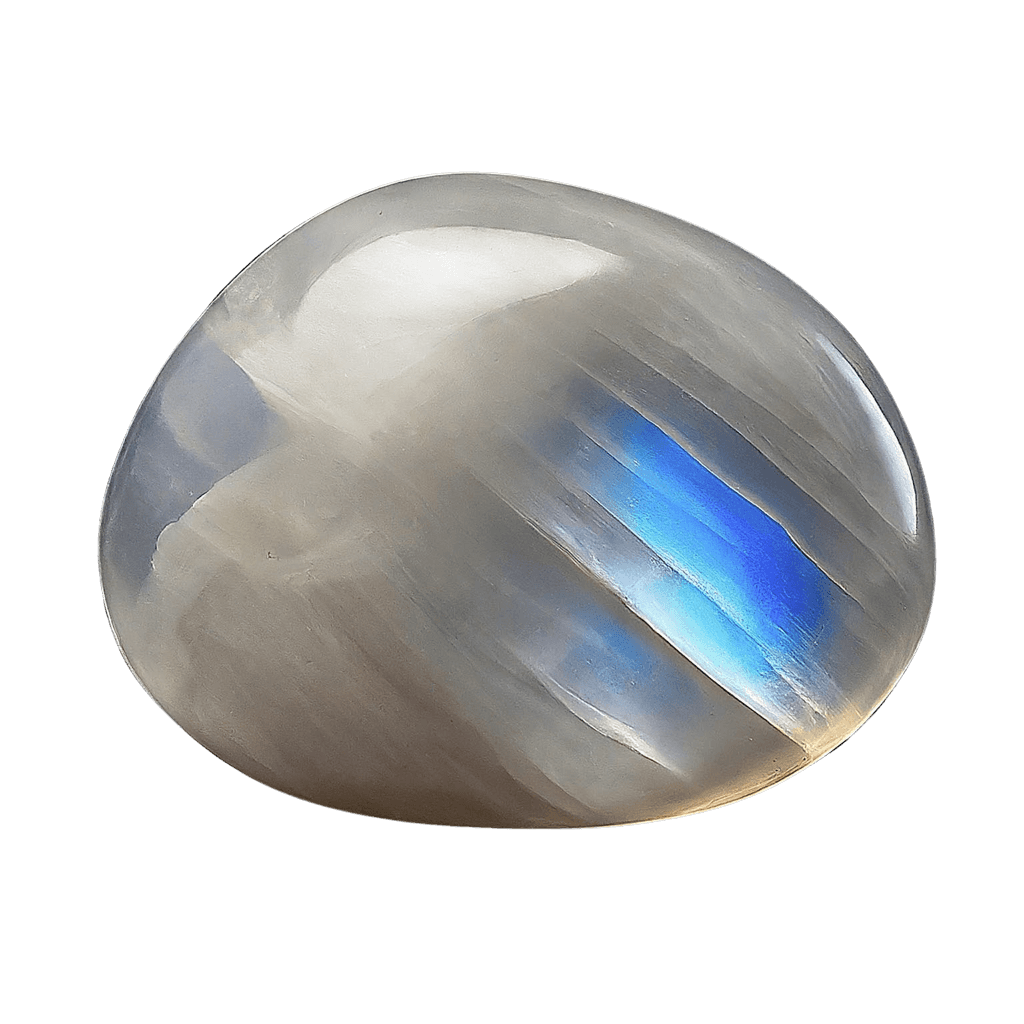
Buying White Jade: Price, Quality, and Jewelry
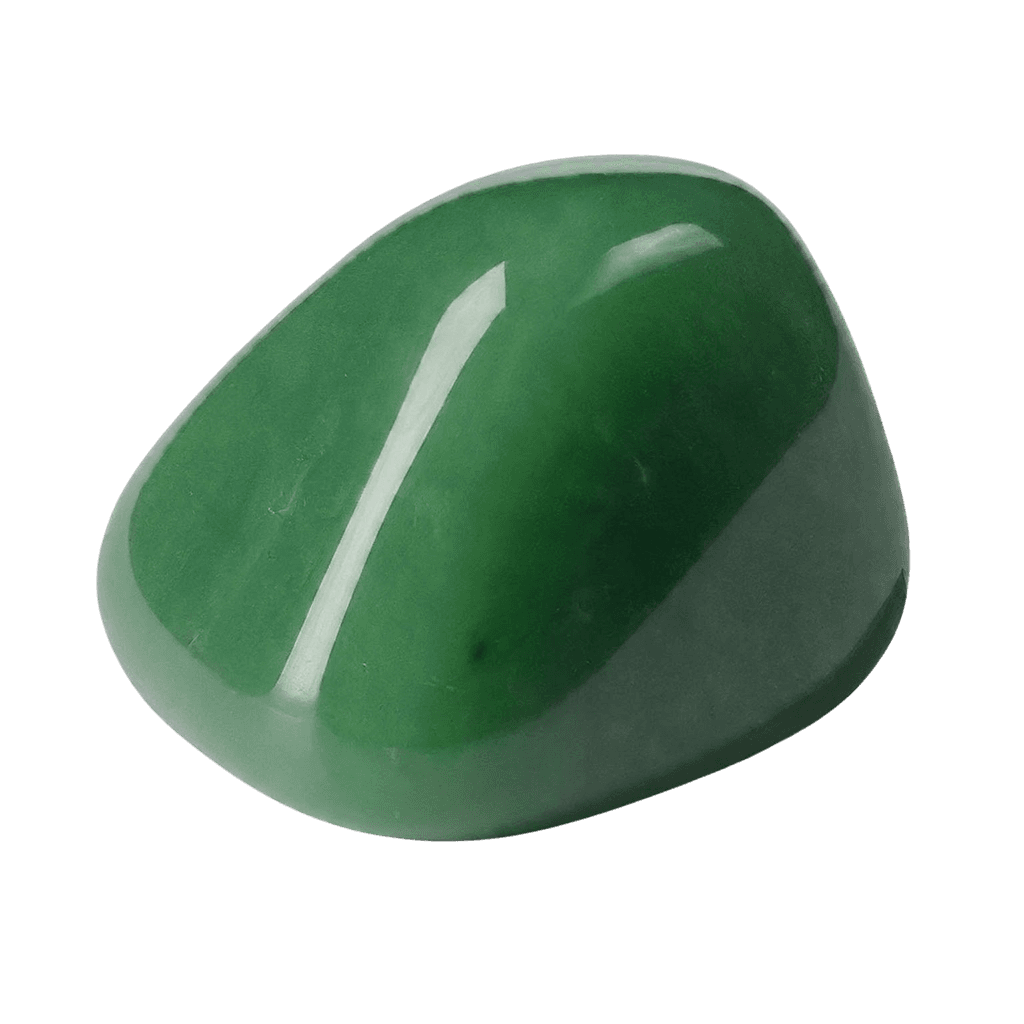
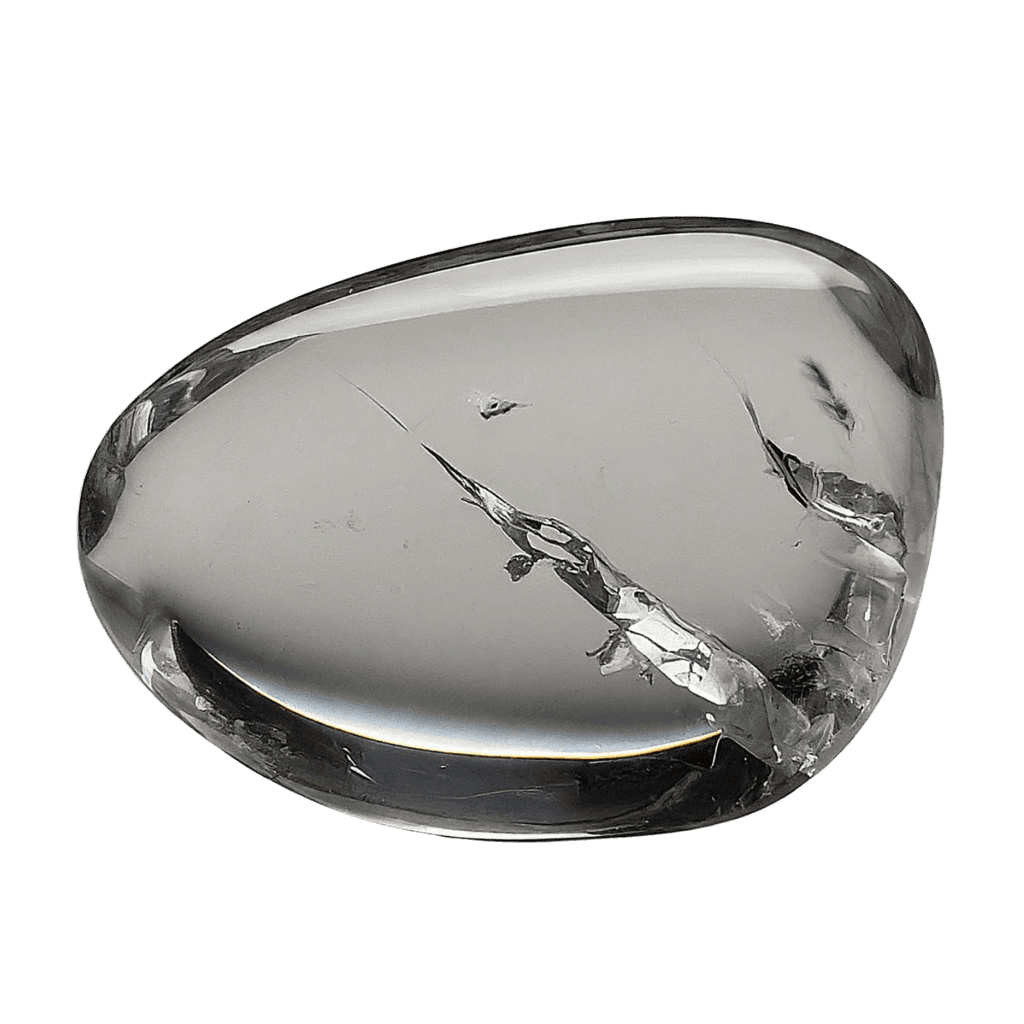
The question for white jade is almost never quality, it is identity, because more material is sold as white jade than nephrite could possibly supply. The three common substitutes each have a tell. Serpentine, often labelled new jade, is markedly softer at Mohs 3 to 5 and takes a scratch from a steel blade that nephrite resists. Dyed quartzite shows colour gathered along grain boundaries when held to strong light. Dolomite marble, sold as Afghan jade, is softer again and often too white, lacking the faint grey or green cast real nephrite carries. Nephrite is tough rather than hard, sitting at about Mohs 6 while resisting breakage better than almost any stone, so it survives carving that would shatter quartz. Price is the loudest signal of all: fine Hetian mutton fat nephrite runs to four and five figures, so a ten dollar white jade pendant is telling you what it is.
How to Spot Real vs Fake White Jade
The market in White Jade has grown faster than its honesty, and white pieces are easy to imitate on a screen. Here is how to check one before you pay for it:
Temperature: genuine White Jade feels distinctly cool at first touch and gives that coolness up slowly; resin copies feel warm almost immediately, which is the quickest tell there is.
Weight and density: resin fakes run light for their size, while genuine White Jade at Mohs 6 carries honest mineral density; weigh it in the palm against any real tumbled stone you own.
Color and pattern: natural White Jade runs white, cream, or pale grey, with variation from piece to piece; perfectly uniform color across a whole tray is the classic mark of dye or synthetics.
Price reality: quality White Jade runs roughly $10 to $45 for palm-sized pieces from reputable sellers; a price far below that range is usually answering a question you should have asked.
Trust your source: a seller who knows where a white stone like this came from and says so plainly is worth more than every test on this list. Vagueness about origin is itself an answer.
Sourcing
Buying White Jade well
The CrystalStones.com crystal store is not open yet, so we do not sell White Jade here. What we can give you is the part that matters most: how to tell a genuine piece from a treated or dyed one, and how to care for it once it is yours.
Frequently Asked Questions
What is White Jade good for?
White Jade is traditionally associated with calm, decision making, clarity, and abundance. Many people find it supportive for calm and for working with the Crown and Heart chakras.
Can White Jade go in water?
It can. White Jade handles brief water contact without trouble at Mohs 6, and a short rinse under cool water makes a sound regular cleanse. Dry it afterward and skip long soaks, which no tumbled stone loves.
Can White Jade be in the sun?
Yes. White Jade is one of the sun-tolerant stones, so use morning light freely to charge the white material; just bring it in rather than leaving it out for whole days at a time.
What chakra is White Jade?
White Jade is primarily associated with the Crown (Sahasrara) and Heart (Anahata) chakras. Just clear of the head, off the body itself, is the crown convention, in seated or lying-down practice alike, for calm work.
What zodiac sign is White Jade for?
White Jade is traditionally connected to Libra and Taurus. Astrological correspondence is one tradition among several, and nothing about your chart disqualifies you; people without a Libra placement work with White Jade all the time.
How do I cleanse White Jade?
Stick to Moonlight, Sage, and Sound for White Jade; those are the methods its care profile recommends. Because the stone is water-tolerant at Mohs 6, an occasional rinse can supplement the list, with the named methods doing the steady monthly work.
Is White Jade real or fake, how can I tell?
Genuine White Jade feels cool at first touch and warms slowly; at Mohs 6 it also resists the pocket scratches that mark softer fakes. Natural white material varies piece to piece and runs about $10 to $45 tumbled, so perfectly matched stones at a suspicious discount deserve a second look.
Is white jade real jade?
White jade can be real jade, but much of what carries the name is not. Genuine white jade is nephrite, one of the two minerals the word jade properly covers, and the finest grade is the Hetian mutton fat nephrite of Xinjiang. A large share of inexpensive white jade is serpentine, dyed quartzite or dolomite marble instead, all softer than nephrite and none of them jade under any strict definition.
How can I tell white jade from serpentine?
White jade and serpentine separate on hardness and heft. Nephrite sits near Mohs 6 and resists a steel blade, while serpentine ranges from about 3 to 5 and takes a scratch easily, so a discreet test on a hidden surface settles most cases. Nephrite is also denser, so a nephrite piece feels heavier in the hand than a serpentine one of the same size, and it carries a faint grey or green cast where serpentine often looks flatly white or waxy.
Why is white jade so expensive?
Fine white jade is expensive because the material itself is scarce and the standard is exacting. Hetian mutton fat nephrite, the benchmark grade, has been gathered from a small river system in Xinjiang for centuries and the best boulders were worked out long ago. Nephrite is also extremely tough, which makes it slow and costly to carve. Most white jade sold cheaply is a substitute mineral, so the price gap between grades reflects a difference in material rather than in finish.
What’s Next?
A few thoughtful next steps if White Jade is calling to you.
Explore More Tools
Crystal Quiz
Discover which crystal matches your energy right now.
Open →Chakra Test
Find which chakras need attention and the crystals to balance them.
Open →Crystal Cleansing Guide
Learn how to safely cleanse and charge your crystals.
Open →Crystals by Intention
Find the perfect crystal for what you need right now.
Open →