



In the world of crystals, few stones are as easily confused as Sodalite and Blue Apatite. With their captivating deep blue hues, it’s easy to see why they are often mistaken for one another. However, while they may look similar at a glance, their energetic properties and spiritual benefits are remarkably distinct. Both are powerful stones often used for spiritual growth, communication, and intuition, but each offers a unique path to enlightenment.
This guide will explore the unique spiritual meanings of Sodalite and Blue Apatite. We’ll also provide a practical guide to help you tell them apart, ensuring you can choose the stone that best aligns with your intentions and personal journey.
Unveiling Sodalite: The Stone of Logic and Intuition
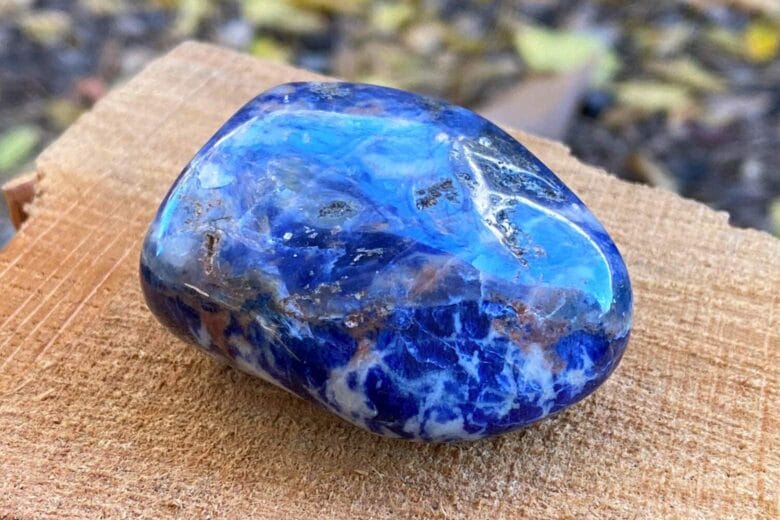
Sodalite is revered for its powerful ability to unite logic with intuition. It forges a clear path for self-expression and deeper spiritual understanding, acting as a bridge between your mind and your inner voice. This stone is a beacon of truth, helping you see the world with clarity and objectivity.
Spiritual Meanings & Metaphysical Properties
Sodalite’s energy is deeply connected to the Throat and Third Eye chakras. This dual connection makes it a remarkable tool for both clear communication and heightened intuition. It encourages rational thought, helping you organize your ideas and verbalize your feelings with confidence and precision. If you find your thoughts scattered or your emotions overwhelming, Sodalite’s calming energy can bring a sense of order to your inner world.
Many turn to Sodalite for its ability to calm the mind and ease panic attacks. It works to release old mental conditioning and rigid belief patterns that no longer serve you, freeing you from the grip of fear and self-doubt. By promoting a calm and collected state, Sodalite helps deepen meditation, allowing you to access profound wisdom and learn to trust your own judgment.

Who Should Use Sodalite?
Sodalite is particularly beneficial for:
- Writers, speakers, and students: It helps organize thoughts and articulate complex ideas with ease. Placing a piece on your desk can enhance focus and promote logical thinking.
- Individuals seeking emotional balance: If you tend to be overly emotional or, conversely, too analytical, Sodalite helps harmonize feelings with logic.
- Anyone working on self-trust: By strengthening your connection to your intuition and promoting rational thought, Sodalite builds self-esteem and encourages you to speak your truth.
To use Sodalite, try meditating with it placed on your Third Eye to access inner wisdom or keep it in your workspace to maintain a clear and organized mind throughout the day.
Exploring Blue Apatite: The Stone of Manifestation and Motivation
Blue Apatite is a dynamic and powerful motivational stone. It serves as a spiritual spark, clearing away confusion and stimulating the intellect to expand knowledge and achieve your most ambitious goals. Where Sodalite brings calm logic, Blue Apatite brings an energetic surge of inspiration.

Spiritual Meanings & Metaphysical Properties
Primarily connected to the Third Eye chakra, Blue Apatite is a stone of vision and manifestation. It enhances creativity, awakens your inner self, and provides the momentum needed to turn abstract ideas into tangible reality. Its energy is cleansing, particularly for the aura and the mental body. It sweeps away apathy, negativity, and brain fog, replacing them with a positive outlook and a can-do attitude.
For those on a deeper spiritual journey, Blue Apatite is an excellent tool for developing psychic gifts like clairvoyance and accessing insights from past lives. It promotes spiritual attunement, helping you connect with higher consciousness and understand your soul’s purpose.
Interestingly, its name comes from the Greek word apatein, meaning “to deceive,” because it was historically confused with other minerals. Today, this is ironically linked to its metaphysical use in helping to “deceive” the appetite by supporting self-control and healthier choices.
Who Should Use Blue Apatite?
Blue Apatite is ideal for:
- Artists, entrepreneurs, and visionaries: It’s a perfect companion for anyone starting a new project or venture, as it helps overcome creative blocks and fuels innovation.
- Individuals needing a motivational boost: If you’re feeling stuck, uninspired, or procrastinating, Blue Apatite provides the energetic push needed to get moving.
- Spiritual seekers: It aids in deepening meditation, exploring past lives, and enhancing psychic abilities for a more profound spiritual connection.
How to Tell Them Apart: A Practical Identification Guide?
While they can appear strikingly similar, a few key visual and physical tests can help you easily distinguish Sodalite from Blue Apatite. With a little practice, you’ll be able to identify them like a pro.
Color and Pattern
- Sodalite: Typically features a rich, royal blue color. Its most defining characteristic is the presence of white or greyish calcite inclusions, which appear as veins, patches, or cloudy formations. Sodalite is almost always opaque and rarely shows any translucency.
- Blue Apatite: Its color can range from a light, watery blue to a deep, vibrant indigo, sometimes with green undertones. It often has more translucency than Sodalite, giving it a “glassy” or “watery” appearance. It generally lacks the distinct white veining common in Sodalite.
Hardness (The Mohs Scale)
Hardness is a reliable way to differentiate minerals. On the Mohs Hardness Scale (from 1 to 10), glass is about 5.5.
- Sodalite: Has a hardness of 5.5 to 6. This means it is just hard enough that it typically will not scratch a piece of glass.
- Blue Apatite: Has a hardness of 5. It is softer than both glass and Sodalite. Therefore, it cannot scratch glass, and a piece of Sodalite could potentially scratch a piece of Blue Apatite. If you perform a scratch test, always do so carefully on a small, inconspicuous spot.
Luster and Texture
Luster refers to the way light reflects off a mineral’s surface.
- Sodalite: Often has a waxy or even greasy luster, though it can sometimes be vitreous (glass-like).
- Blue Apatite: Almost always has a vitreous, or glass-like, luster, contributing to its shiny and sometimes translucent look.
Quick Reference Chart
| Feature | Sodalite | Blue Apatite |
|---|---|---|
| Color | Rich, royal blue | Light to deep blue, sometimes with green tones |
| Inclusions | Prominent white/grey calcite veins or patches | Generally lacks white veining; can have internal fractures |
| Transparency | Opaque | Can be translucent to transparent |
| Hardness | 5.5 – 6 | 5 |
| Luster | Waxy to vitreous | Vitreous (glass-like) |
Which Stone is Right for You?
Choosing between Sodalite and Blue Apatite depends entirely on your personal goals and spiritual needs at this moment.

Choose Sodalite if you need to:
- Calm an overactive or anxious mind.
- Enhance logical thinking and clear communication.
- Boost self-esteem and find the courage to verbalize your truth.
Choose Blue Apatite if you need to:
- Receive a surge of motivation and inspiration.
- Overcome creative blocks and manifest your goals.
- Deepen your spiritual connection and psychic abilities.
You can also use them together. Their energies are synergistic. Sodalite can help you formulate a clear, logical plan, while Blue Apatite provides the creative fire and motivation to bring that plan to life.
Conclusion
While Sodalite and Blue Apatite share a beautiful blue appearance, they offer distinct spiritual gifts. Sodalite is the stone of calm logic and truthful communication, grounding your intuition with rational thought. Blue Apatite is the stone of ambitious manifestation and motivation, inspiring you to take action and pursue your dreams.
By understanding their key differences in appearance and energy, you can confidently identify and select the stone that calls to you. In the end, always trust your intuition. The crystal you are most drawn to is often the one whose energy you need the most.
Which of these blue beauties resonates more with you? Share your experiences with Sodalite or Blue Apatite in the comments below