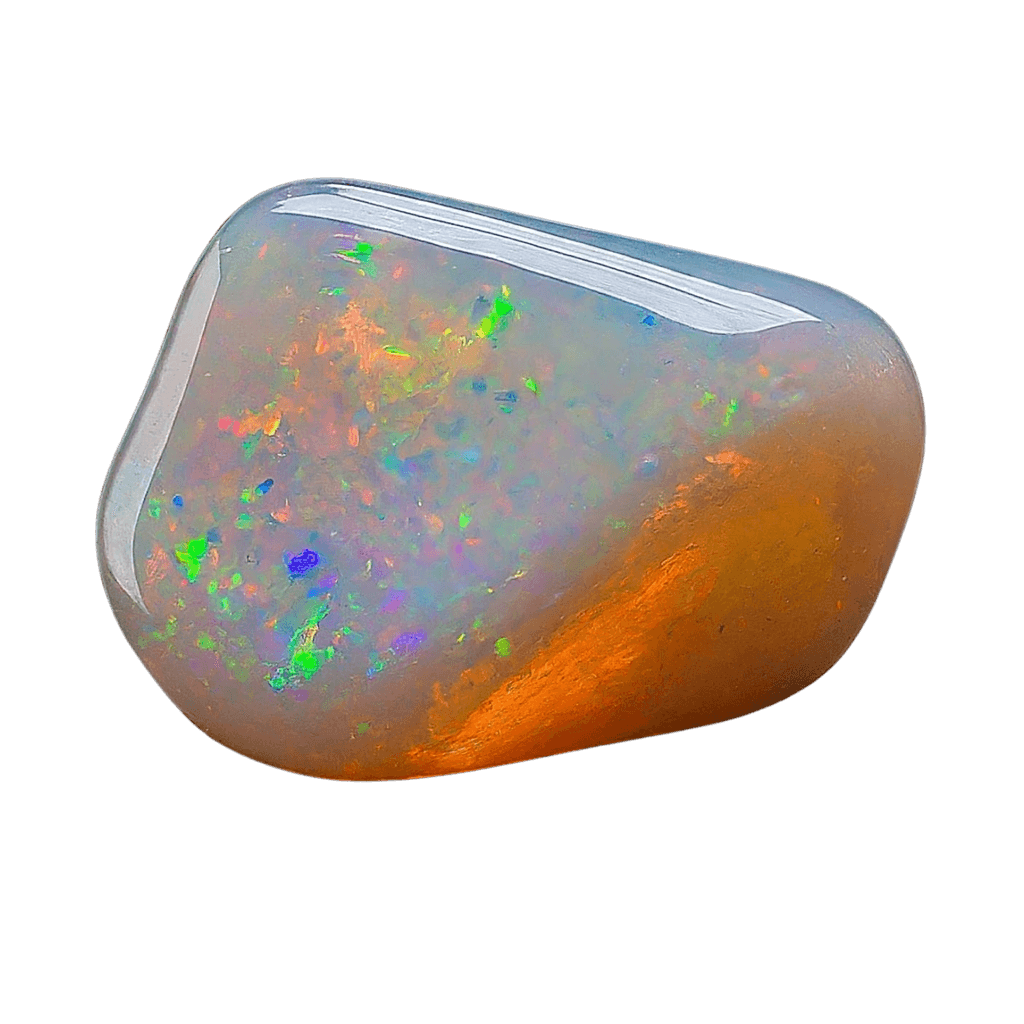
Quick Answer
Opal is a white crystal used in modern crystal healing for creativity, intuition, and expression. It measures 5.75 on the Mohs hardness scale and typically costs $18 to $200 for a tumbled stone. In the chakra tradition, Opal is associated with the Crown and Heart chakras.
Worth knowing: Opal's unlucky reputation is literary, not ancient: it traces to Sir Walter Scott's 1829 novel Anne of Geierstein, after which European opal sales reportedly fell by half.
“A hydrous silica gem of rainbow play-of-color, of emotional amplification and creativity.”
- Chakra
- Crown (Sahasrara), Heart (Anahata)
- Zodiac
- Libra ♎, Cancer ♋
- Element
- Water 💧
- Planet
- Venus ♀
- Hardness
- 5.75 / 10 (Mohs)
- Colors
- White, Black, Fire, Rainbow play-of-color
- Origin
- Australia, Ethiopia, Mexico
- Availability
- Not sold here yet
Care + Safety
Opal at a glance
- Water: avoid, may damage or leach
- Sun: fades in prolonged direct sun
- Mohs hardness: 5.75 (occasional wear only)
Worried it's fake?
How to spot real Opal
Opal is one of the most-counterfeited stones on the consumer market. In my practice, the combination of two or three hands-on tests is usually enough to separate authentic from substitute.
See Cassandra's Opal authenticity guide →What is Opal?
Opal is not a crystal at all but hardened silica gel, a mineraloid that never organized into a lattice and still carries water inside it. Precious opal's rainbow play-of-color comes from microscopic silica spheres stacked in orderly rows that diffract light. Australia supplies roughly 95 percent of the world's precious opal, and October claims it as birthstone.
Opal measures 5.75 on the Mohs scale and shows white, black, or fire coloring. As a working stone it runs warm: an activator by family, asked for creativity, intuition, and expression at the moments that require a push.
The stone connects primarily to the Crown (Sahasrara) and Heart (Anahata) chakras, carrying Water energy. Commercial material comes from Australia, Ethiopia, and Mexico, and provenance shows: pieces from different deposits vary in saturation, veining, and clarity, which is why no two specimens of Opal read quite alike.
Opal is hydrous silica, holding 5 to 10 percent water in its structure, and precious opal famously plays rainbow color through internal silica spheres diffracting light. Hold this stone and notice an amplification of whatever emotional state is present. The classical sources describe Opal as a stone of creative imagination and emotional amplification, asking the holder to bring care to their state of mind.
Also catalogued as Precious Opal and Common Opal, this is a stone that rewards regular handling more than display. Give Opal a week of creativity duty in the pocket before deciding what it is for.
8 stones are catalogued under the opal name, each with its own entry: Fire Opal, Matrix Opal, Moss Opal, Black Opal, Green Opal, Pink Opal, Boulder Opal, White Opal.
History and Mythology
Opal's bad-luck reputation has an author and a publication date. No tradition called the stone unlucky until Sir Walter Scott's 1829 novel Anne of Geierstein, in which the enchanted Lady Hermione wears an opal that flares and dims with her fortunes; readers took the Gothic plot device literally, and within a few years European opal sales had reportedly fallen by half. Australia answered the slander with abundance. After fields like Coober Pedy opened in 1915, miners in that scorching outback town dug their homes underground, the famous dugouts, in a place whose name comes from local Aboriginal words usually glossed as 'whitefella's hole in the ground'. The stone kept its deepest secret until 1964, when the CSIRO scientist J. V. Sanders put opal under an electron microscope and found the engine of play-of-color: silica spheres a few hundred nanometers wide, stacked in orderly rows, splitting white light like a diffraction grating. Rock a precious opal gently in lamplight and the colors do not glint, they roll, whole continents of fire trading places.
Opal Meaning and Metaphysical Properties
What the Hand Learns First
Pick up Opal and warmth is the first report: at Mohs 5.75 it is a mid-soft mineral that takes body heat within a minute, and its white surface polishes to a satin sheen rather than a hard glitter. Posture is where the classical guidance points for an activating stone, shoulders and spine and the angle of the chin, so watch there rather than waiting on the hand.
Primary Properties
Momentum is the family business, and the Opal property list reads accordingly: creativity, intuition, expression, and transformation. Tradition says to take the stone in hand just before the moments that ask for your full voltage, the audition, the opening day, the empty page. None of it is a guarantee; all of it is a prompt.
How Crystal Energy Works
In traditional practice Opal belongs to the Crown, the gate where personal energy meets the larger field, and creativity is what practitioners ask of it there. Crown stones are used lightly, brief sessions and soft attention, with creativity, intuition, and expression as the long arc rather than the day's demand. In both the Judy Hall and Melody catalogs the activating stones are tied to the lower three centers, where the traditional language is will and creative fire rather than luck.
Amplification Through Intention
The Water designation on Opal is permission to go slowly; this element does its creativity work through feeling rather than effort. Hold the stone when emotions need room, not fixing.
Healing Benefits
Emotional Support
Confidence is where Opal meets the emotional life: creativity, intuition, and expression. Tradition says to handle it ahead of the moments that ask you to be seen, and that small pocketing ritual carries more steadiness than its size suggests. These are traditional creativity associations rather than medical claims; for anything heavy or persistent, a qualified professional belongs in the picture alongside any stone.
Spiritual Connection
Opal attends the spiritual act of beginning. The traditional use is simple, take the stone in hand and say the intention out loud, letting that small rite turn a wish into a promise, and repeat it at the starts, new work, new chapters, new moons.
Physical Presence
Tradition pairs Water stones like Opal with the body's tides: rest, hydration, the wind-down hour that makes room for creativity. Let it sit on the night table as a cue for the evening glass of water and the earlier lights-out; gentle cues, never medicine.
Chakra Connection
Opal resonates most strongly with the Crown (Sahasrara), the energy center traditionally drawn in violet / white and the traditional seat of this stone's creativity work. When this center runs clear, the classical markers are openness to the sacred, perspective beyond the personal, and an undercurrent of unity; creativity, intuition, and expression are what Opal is most often asked to bring to it.
Use Opal at the bookends of practice: a moment of contact before you begin and another after you end. Crown stones mark the opening and closing of sacred time, which is most of what creativity needs.
Because Opal is also associated with the Heart (Anahata), it moves well in multi-stone layouts: one stone, two stations, worked on different days.
Zodiac and Astrological Connection
Opal appears under Libra ♎ (Sep 23 to Oct 22) and Cancer ♋ (Jun 21 to Jul 22) in the standard correspondence tables; if those signs are loud in your chart, expect the introduction to feel familiar.
None of this is exclusionary. If Opal keeps catching your eye, that interest counts for more than whether Libra appears anywhere in your chart.
In the planetary layer of the system, Venus ♀ holds the rulership, and that planet's prominent transits are the traditional windows for deeper creativity work with Opal.
How to Use Opal
Five practices suit Opal especially well. Pick the one that fits the day you are actually having rather than the routine you think you should have.
- 1
Meditation Hold
Hold Opal for the length of your sit and notice the moment it stops feeling like an object and starts feeling like part of the hand; for a Mohs 5.75 stone, that shift comes early.
- 2
Body Placement
Above the head, not on it, is where Opal belongs in a crown session: lie down, position the stone just clear of the crown of the head, and keep the attention gentle. Nothing about this station rewards effort. The old charts assign it to creativity.
- 3
Sleep Companion
Opal can still earn the nightstand even though its brief is creativity rather than rest: setting the stone down as you set the day down marks the switch from doing to sleeping.
- 4
Carry With You
Bring Opal to the threshold moments: interviews, first days, openings. Touch it once at the door, on purpose, and let it cue the posture that creativity actually looks like.
- 5
Crystal Grid Anchor
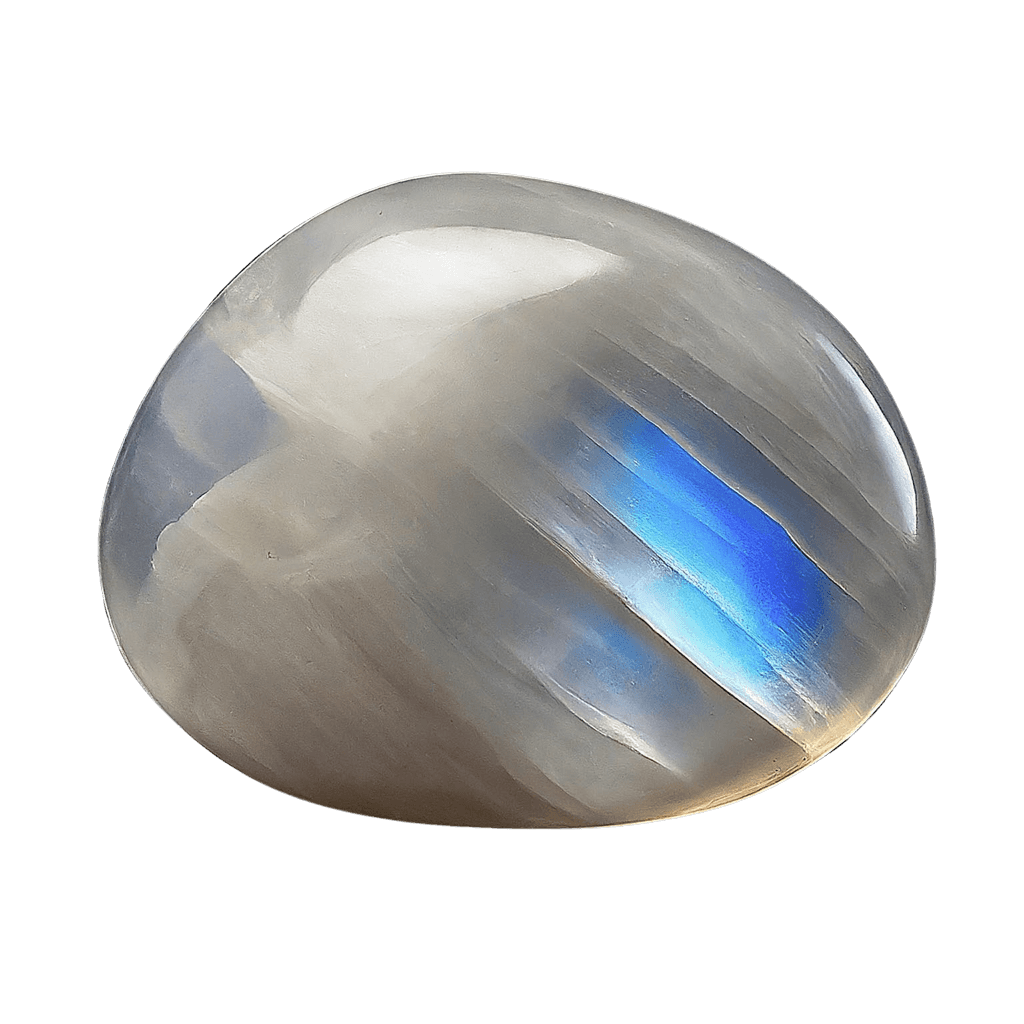
Set Opal at the center of a grid built for creativity and ring it with Fire Opal and Moonstone at the points. Speak the intention once as you place each stone; a grid is a sentence written in minerals, and saying the creativity aloud is the punctuation.
How to Cleanse and Charge
Keeping Opal energetically clear is essential, a crystal that's holding too much absorbed energy becomes less effective, like a sponge that's full. For the full water-safe / sun-safe / salt-safe profile, the recommended cleansing cadence, and the hands-on storage instructions I give my clients, see the dedicated Opal care guide.
- 1
Moonlight
Give Opal a night outdoors or at the glass under a bright moon; the tradition holds moonlight to be the universal reset, slow, cool, and risk-free.
- 2
Selenite
Lay Opal on a selenite plate or alongside a selenite wand overnight; selenite is the tradition's self-cleaning shelf, no effort, no risk to the stone.
- 3
Sage
Smoke-cleanse Opal: light the sage, let it settle to a smolder, and move the stone through the rising smoke until your sense of it lightens, usually under a minute.
- 4
Sound
A minute inside strong, sustained tone, bowl, chime, even a steady hum, resets Opal without physical risk, which makes sound the safest deep cleanse for fragile stones.
How often to cleanse
Give Opal a clearing at least every month, and sooner after hard weeks or heavy daily use. The stone will teach you its own signal in time; most people describe it as dullness, weight, or a sense the stone has gone quiet.
Charging after cleansing
Once it is cleansed, recharge Opal by setting it on a selenite plate overnight or bathing it in full moonlight; cleansing empties the stone, charging refills it.
The Crystal Starter Library
A free guide from Crystal Cassandra: the twelve stones that cover almost everything, a one page care matrix for water, sun and salt, and how to build a first intention practice.
We respect your inbox. Unsubscribe anytime.
Crystal Pairings
Ignition without steering scatters, which is why Opal pairs best with at least one grounding partner. The traditional companions alternate roles, throttle one day, brake the next. Trial any new pair on a single small creativity task and watch what happens to your focus.
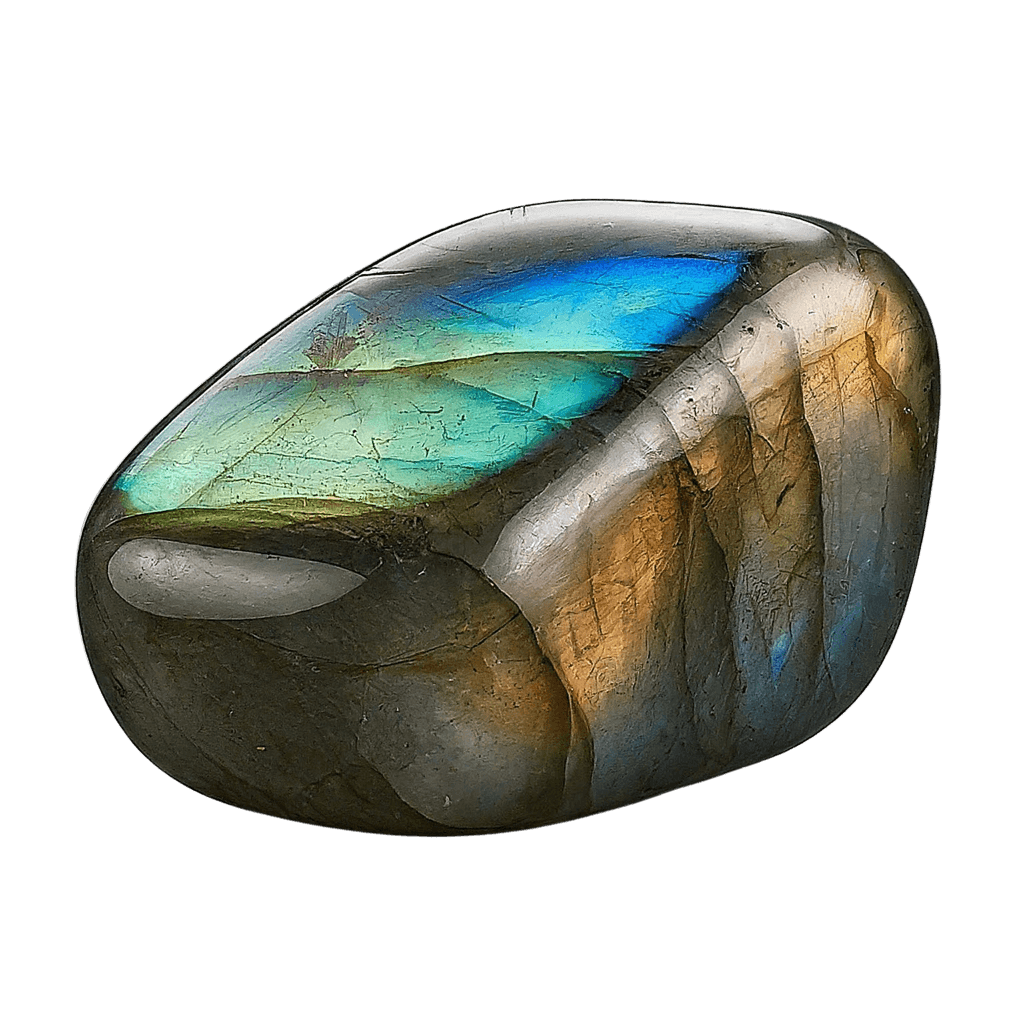
Buying Opal: Price, Quality, and Jewelry
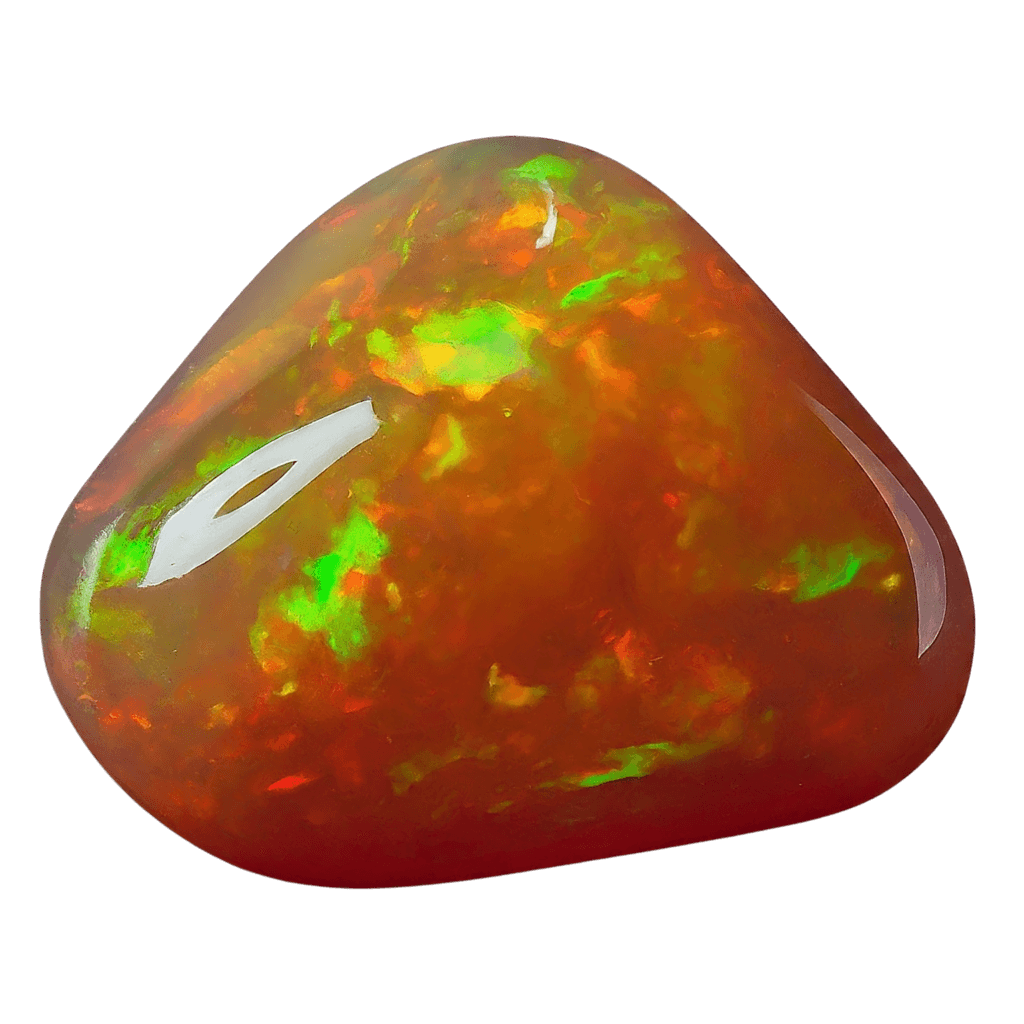
Body tone prices the opal meaning of amplified feeling: the darker the background, the more the rainbow stands out, which is why black opal from Lightning Ridge tops the market and milky white opal opens it. Expect $18 to $200 across tumbled common opal, light precious opal, and small boulder pieces, with vivid black and crystal opal climbing far beyond. Budget tiers are honest when labeled: doublets and triplets are slices of genuine opal bonded to a dark backing, beautiful and affordable, but never soak them, because water can cloud the glue line. Lab-grown opal, sold since Pierre Gilson's process reached the market in 1974, is real silica-sphere structure grown in months; under a loupe its color patches show a columnar 'lizard skin' regularity that nature never manages. Ethiopian hydrophane drinks water and can temporarily lose its fire, so keep it dry. Fragile, yes; but no other gem carries the whole spectrum in one stone.
How to Spot Real vs Fake Opal
Imitations of Opal exist because demand does. A few hands-on checks separate genuine white material from glass, resin, and dye:
Temperature: at Mohs 5.75, genuine Opal warms in the hand noticeably faster than glass; an imitation in glass stays cold and slick well past the first minute.
Weight and density: resin fakes run light for their size, while genuine Opal at Mohs 5.75 carries honest mineral density; weigh it in the palm against any real tumbled stone you own.
Color: expect white, black, or fire with honest variation, banding, zoning, the odd inclusion; a batch where every stone matches exactly came out of a factory, not the ground.
Price reality: the fair range for Opal sits near $18 to $200 at palm size; below that, assume treatment or imitation until the seller proves otherwise.
Trust your source: buy Opal from sellers who can name the mine or region behind their white stock and who disclose treatments without being chased. A seller who volunteers that information before you ask is the one worth returning to.
Sourcing
Buying Opal well
The CrystalStones.com crystal store is not open yet, so we do not sell Opal here. What we can give you is the part that matters most: how to tell a genuine piece from a treated or dyed one, and how to care for it once it is yours.
Frequently Asked Questions
What is Opal good for?
Opal is traditionally associated with creativity, intuition, expression, and transformation. Many people find it supportive for creativity and for working with the Crown and Heart chakras.
Can Opal go in water?
No, water and Opal do not mix; moisture can compromise the surface or the structure itself. Hydrous opal, sensitive to drying out, heat, and thermal shock. Avoid soaking and prolonged sun. Some Ethiopian hydrophane opal absorbs water and temporarily loses color play.
Can Opal be in the sun?
Treat sun as a risk for Opal: short incidental light does no harm, but hours of direct exposure will cost the white tones their depth. Default to moonlight.
What chakra is Opal?
Opal is primarily associated with the Crown (Sahasrara) and Heart (Anahata) chakras. Position it clear of the head rather than on the body, seated or lying down; edge placement is the crown convention for creativity work.
What zodiac sign is Opal for?
Opal is traditionally connected to Libra and Cancer. That said, the zodiac correspondence is an invitation rather than a requirement; any chart can work with Opal, and attraction to the stone matters more than the calendar.
How do I cleanse Opal?
Stick to Moonlight, Selenite, and Sage for Opal; those are the methods its care profile recommends. Notice that the whole list runs dry; for this stone's chemistry, that is a feature rather than a limitation.
Is Opal real or fake, how can I tell?
Genuine Opal warms quickly in the hand at Mohs 5.75, while glass imitations stay cold longer and feel slick rather than satiny. A fair tumbled piece sits near $18 to $200 and shows honest variation across the white range; flawless uniformity at a bargain price is the tell worth trusting.
Sources and further reading
What’s Next?
A few thoughtful next steps if Opal is calling to you.
Explore More Tools
Crystal Quiz
Discover which crystal matches your energy right now.
Open →Chakra Test
Find which chakras need attention and the crystals to balance them.
Open →Crystal Cleansing Guide
Learn how to safely cleanse and charge your crystals.
Open →Crystals by Intention
Find the perfect crystal for what you need right now.
Open →