


The world of crystals is vast and captivating, drawing people in with their unique beauty and energetic properties. Among the sunny, yellow stones, two often cause confusion: Citrine and Yellow Calcite. Their similar golden hues can make them difficult to tell apart, especially for those new to crystal collecting. This guide is here to clear up the confusion.
We will explore the distinct characteristics of both Citrine and Yellow Calcite. You will learn how to identify them, understand their unique compositions, and discover their different metaphysical properties.
By the end, you’ll know exactly which stone is which and which one might be right for you.
Overview of Citrine and Yellow Calcite
While they may share a cheerful color, Citrine and Yellow Calcite are fundamentally different minerals. Let’s get to know each one individually before comparing them side-by-side.
What is Citrine?
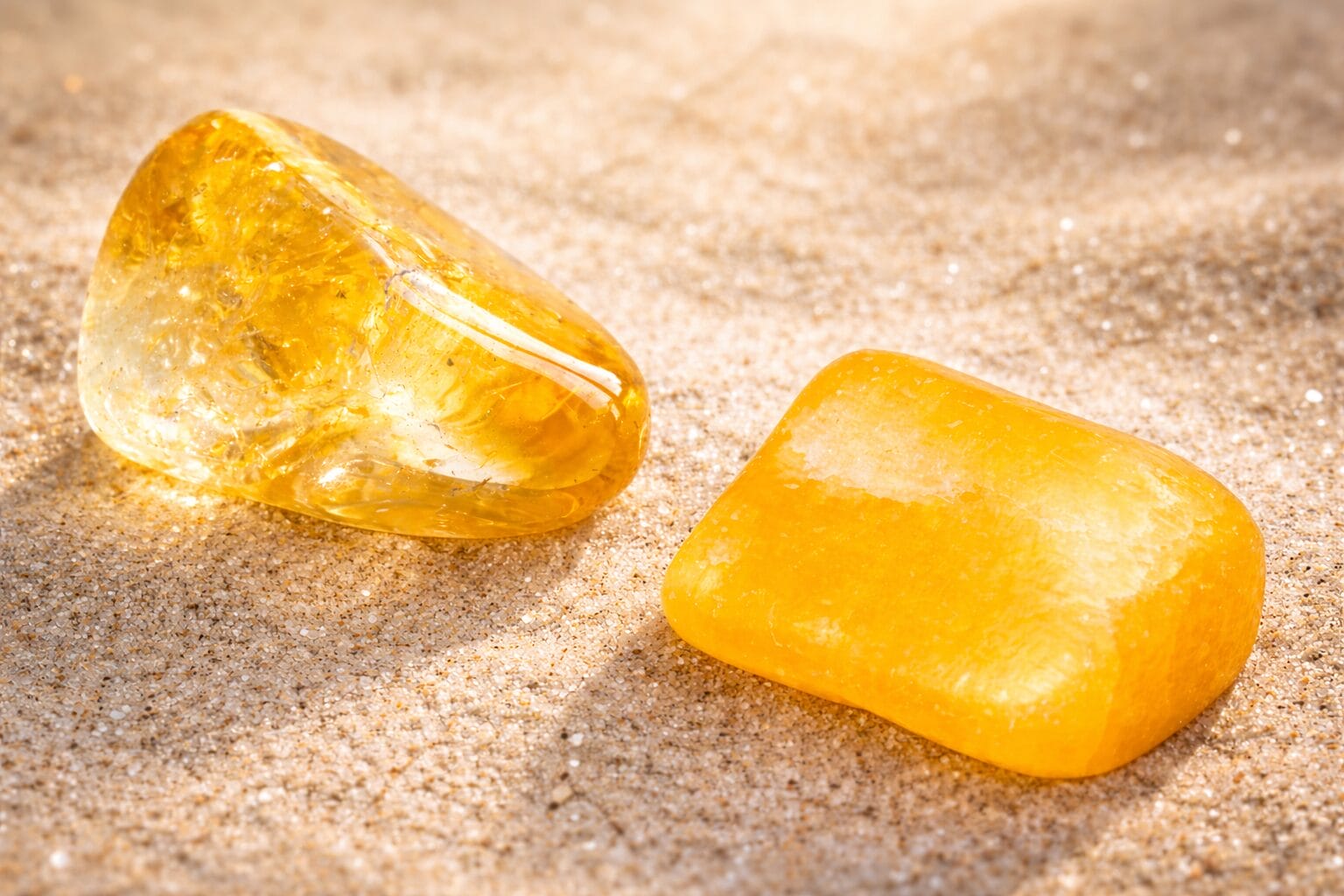
Citrine is a variety of quartz, a large and well-known mineral family. Its name comes from the French word “citron,” meaning lemon, which perfectly describes its vibrant yellow to brownish-orange shades. This color is due to traces of iron within the quartz crystal structure.


Most Citrine on the market today is actually Amethyst that has been heat-treated. Natural Citrine is quite rare, making it more valuable. It is a popular choice for jewelry due to its durability and brilliant sparkle. Beyond its beauty, Citrine is also cherished for its association with positivity and abundance.
What is Yellow Calcite?
Yellow Calcite belongs to the calcite mineral group, which is a carbonate mineral. Unlike the hard, glassy structure of quartz, calcite is much softer and often has a waxy or soapy feel. Its color ranges from a pale, buttery yellow to a deep honey gold.
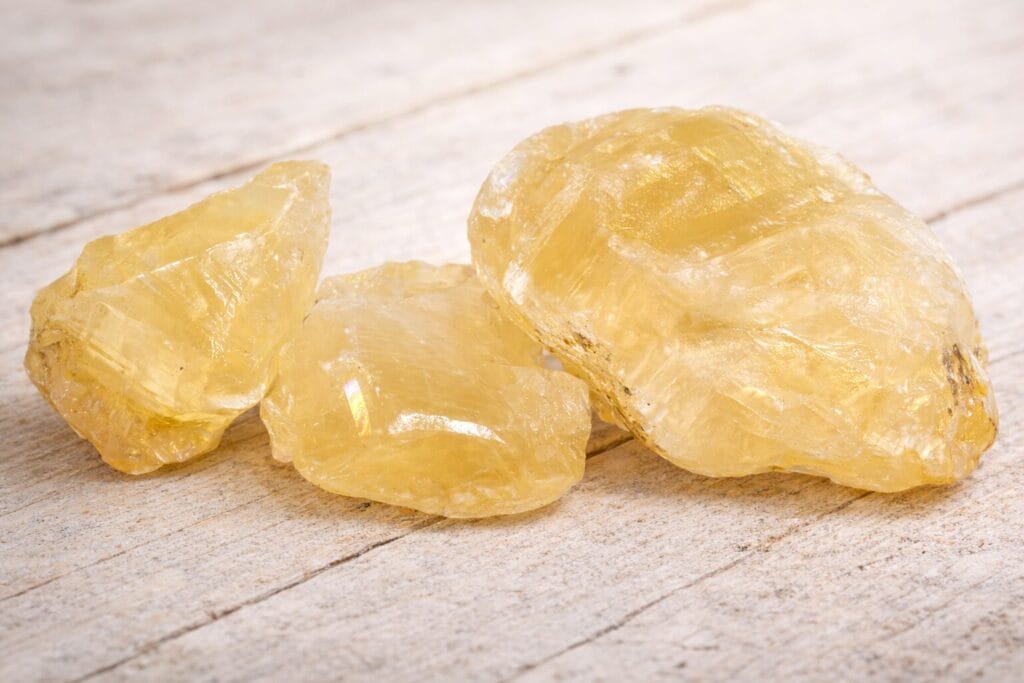
Yellow Calcite is more of a collector’s stone and is frequently used in metaphysical practices rather than for jewelry. Its softness makes it prone to scratches, so it is often shaped into spheres, wands, or decorative pieces. This gentle stone is known for its ability to enhance confidence and clear stagnant energy.
Key Differences: Citrine vs Yellow Calcite
Understanding the specific differences in their physical and energetic properties is the best way to distinguish between these two golden crystals.
Appearance and Physical Properties
The most immediate way to tell these stones apart is by examining their physical traits.
- Hardness: This is a definitive test. Citrine, being a type of quartz, has a Mohs hardness of 7. This means it can scratch glass and is quite durable. Yellow Calcite is much softer, with a Mohs hardness of only 3. It can be easily scratched with a knife or even a copper coin.
- Clarity and Luster: Citrine typically has a glassy, transparent to translucent appearance. It sparkles and reflects light brilliantly. Yellow Calcite, on the other hand, is usually more opaque and has a waxy or greasy luster. It doesn’t have the same sharp sparkle as Citrine.
- Texture: If you hold a raw piece of each, Citrine will feel harder and more glass-like. Yellow Calcite often feels softer, almost soapy or waxy to the touch.
- Color Distribution: In heat-treated Citrine (which is common), the color can be very intense and uniform, often with a white base. Natural Citrine’s color is typically more subtle and evenly distributed throughout the crystal. Yellow Calcite’s color is usually consistent and doesn’t have the white, cloudy base seen in treated amethyst.
Metaphysical and Healing Properties
While both are connected to the Solar Plexus Chakra, their energetic uses differ significantly.
- Citrine’s Properties: Often called the “Merchant’s Stone,” Citrine is famous for its connection to abundance, prosperity, and success. It is believed to attract wealth and help you maintain it. Citrine is also a powerful cleanser and regenerator that carries the energy of the sun. It doesn’t hold or accumulate negative energy, so it never needs energetic cleansing. Its vibrant energy promotes joy, creativity, and motivation.
- Yellow Calcite’s Properties: Yellow Calcite is a stone of self-confidence and hope. Its energy is gentler than Citrine’s, working to clear self-doubt and amplify self-worth. It is an excellent stone for students, as it is believed to enhance memory and help you learn new information. Metaphysically, it helps to clear out old energy patterns and encourages a positive outlook, making it a great tool for emotional healing and boosting motivation.
Price and Availability
The cost and accessibility of these stones also vary greatly.
- Citrine: Natural, unheated Citrine is rare and can be expensive. Heat-treated Citrine (made from Amethyst) is much more common and affordable. It is widely available in most crystal shops and online stores.
- Yellow Calcite: Yellow Calcite is a very common mineral found in large deposits around the world. As a result, it is generally inexpensive and widely available, especially in its raw or tumbled form.
How to Care for Your Crystals?
Proper care ensures your crystals remain beautiful and energetically potent for years to come. Because of their different hardness levels, Citrine and Yellow Calcite require different handling.

Cleaning and Charging
- Citrine: Being a hard stone, Citrine can be safely cleaned with water and a soft brush. As mentioned, it does not hold negative energy, so it doesn’t require frequent energetic cleansing. However, if you wish to charge it, placing it in sunlight for a short period can boost its vibrant energy.
- Yellow Calcite: This stone is very soft and can be damaged by water over time. It’s best to clean it with a dry, soft cloth. Avoid salt water or harsh cleaners. To charge Yellow Calcite, place it under the moonlight or bury it in the earth for a few hours. Direct, prolonged sunlight can cause its color to fade.
Storage Tips
- Citrine: Due to its hardness, Citrine can scratch other, softer crystals. It’s a good idea to store it separately or in a soft pouch to protect your other stones.
- Yellow Calcite: Because it is so soft, Yellow Calcite should be stored carefully to avoid getting scratched by harder minerals like quartz or even dust. Wrap it in a soft cloth and keep it away from harder stones.
Choosing the Right Crystal for You
In the end, both Citrine and Yellow Calcite are wonderful additions to any collection. Citrine offers a powerful, vibrant energy perfect for manifesting goals and cultivating joy. Yellow Calcite provides a gentler, more soothing energy focused on building self-confidence and clearing emotional blockages.
Now that you understand their key differences, you can appreciate the unique qualities each stone offers. Take the time to explore both and see which one resonates with you and your intentions.