


For centuries, “Fool’s Gold” has symbolized disappointment for hopeful prospectors. But what if this nickname for pyrite is misleading? This shimmering mineral, often dismissed as a worthless imitation, holds value beyond monetary wealth, woven into its spiritual meaning, industrial uses, and powerful symbolism.
This article will explore Fool’s Gold (Pyrite): its meaning, uses, and why it’s more valuable than you think. We’ll cover its historical significance, its role in modern industry and spiritual wellness, and how to identify it. Prepare to see pyrite not as a symbol of foolishness, but as a treasure in its own right.
What is Pyrite, or “Fool’s Gold”?
Pyrite is an iron sulfide mineral with the chemical formula FeS₂. Its metallic luster and pale brass-yellow hue give it a superficial resemblance to gold, which is how it earned its famous nickname.
The name “pyrite” itself comes from the Greek word pyr, meaning “fire.” This is because pyrite can create sparks when struck against metal or another hard material, a property the ancient Greeks used to start fires.

The term “Fool’s Gold” became popular during the American Gold Rush in the 19th century. Inexperienced prospectors, eager to strike it rich, would often mistake the glittering pyrite for real gold.

This confusion led to both heartbreak and cautionary tales, cementing the mineral’s reputation as a deceiver. However, the history of pyrite goes back much further, with ancient civilizations valuing it for its fiery properties and unique, cubic crystal formations.
The Meaning and Symbolism of “Fool’s Gold”
Across cultures and throughout history, pyrite has been seen as more than just a mineral. It has been a symbol of wealth, protection, and power.
In ancient cultures like the Incas and Romans, pyrite was used for divination and was believed to hold magical properties. Polished pyrite mirrors were used in rituals, thought to reveal insights into the future.
In modern spirituality, pyrite is known as a powerful stone of protection and abundance. Its energy is believed to shield against negative influences and environmental pollutants, creating a safe space for personal growth. It’s also strongly associated with manifestation and prosperity. Many believe that keeping pyrite nearby helps attract wealth, opportunities, and success by boosting confidence and willpower. This makes it a popular stone for entrepreneurs and anyone looking to achieve ambitious goals.
Physical and Chemical Properties
Understanding pyrite’s properties is key to appreciating its unique character and learning how to identify it.
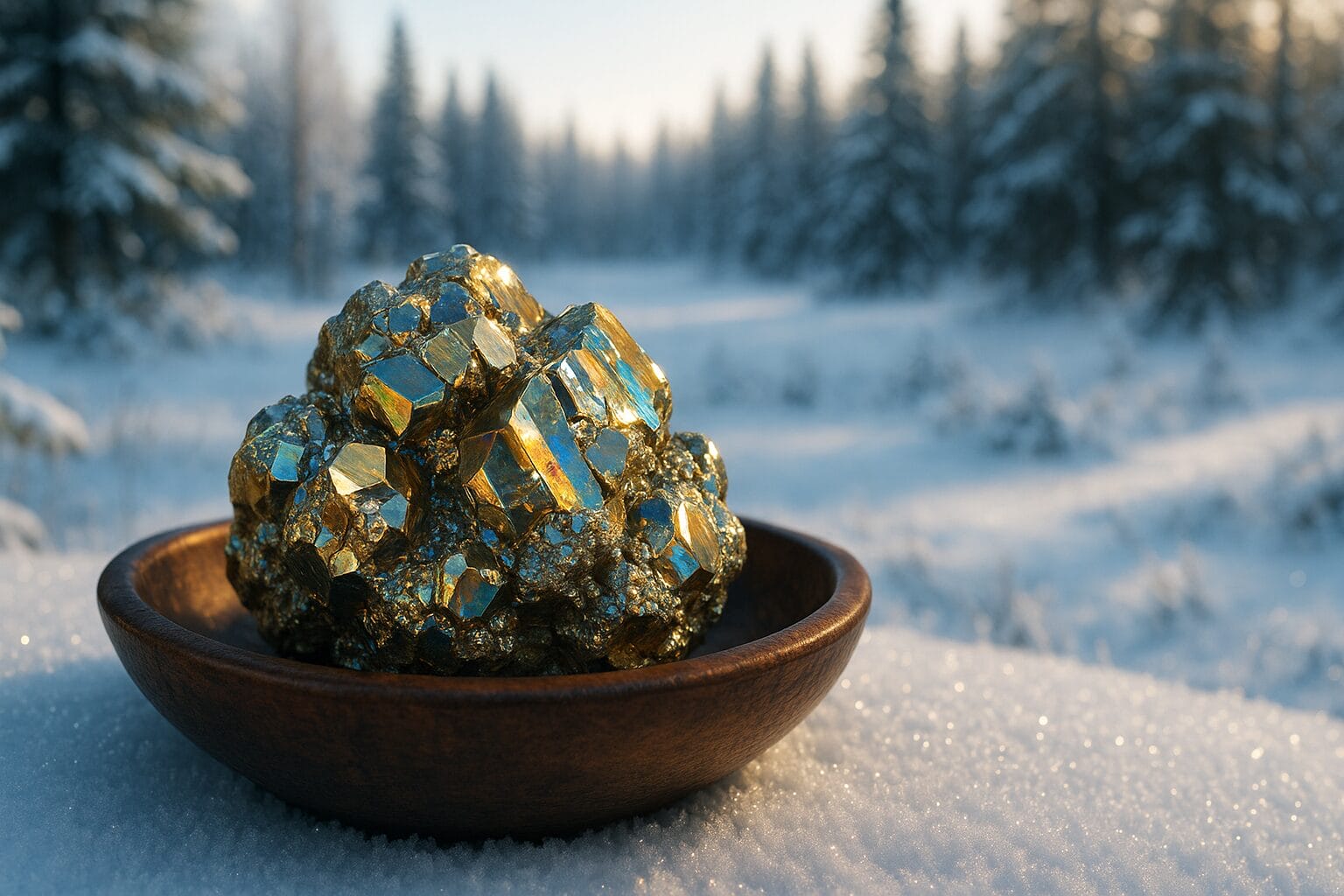
- Composition and Structure: Pyrite is composed of iron and sulfur. It forms in beautiful, often perfectly symmetrical, cubic crystals. It can also be found in other shapes, including octahedrons (eight-sided) and pyritohedrons (twelve-sided), or as granular masses.
- Appearance and Texture: It has a shiny, metallic luster that can look very similar to gold. However, its color is a brassy yellow, which can appear cooler and more pale than the rich, warm yellow of true gold. Its texture is hard and brittle.
- How to Identify Pyrite: You can distinguish pyrite from gold in a few ways. Pyrite is much harder than gold; it can’t be scratched with a knife, whereas gold is very soft and can be easily dented. When dragged across an unglazed ceramic plate (a “streak test”), pyrite leaves a greenish-black streak, while gold leaves a true golden-yellow streak. Finally, pyrite crystals often form in sharp, angular shapes, which is uncommon for gold nuggets.
The Many Uses of Pyrite “Fool’s Gold”
While it may not be gold, pyrite is far from useless. It has a surprising number of applications across different fields.

Industrial Uses
- Sulfur Production: Historically, pyrite was a primary source for producing sulfur and sulfuric acid, a crucial chemical in many industrial processes. Although other methods are more common today, pyrite’s role was foundational to the chemical industry.
- Paper and Chemicals: Sulfuric acid derived from pyrite is used in the paper industry to pulp wood and is a key ingredient in producing fertilizers, detergents, and other chemicals.
Decorative Uses
- Jewelry and Ornaments: During the Victorian era, pyrite was polished and cut into small stones for jewelry, often called “marcasite.” Its brilliant shine makes it an attractive material for affordable yet elegant earrings, brooches, and rings.
- Home Décor: High-quality pyrite specimens, with their stunning cubic formations, are highly sought after by mineral collectors and interior designers. A cluster of pyrite on a desk or shelf can serve as a striking natural sculpture and is often used in feng shui to attract wealth and abundance into a space.
Metaphysical Uses
- Healing and Energy Work: In crystal healing, pyrite is used to boost energy and overcome fatigue. It is believed to stimulate the intellect, enhance memory, and promote clear, logical thinking.
- Manifestation: Pyrite is often called the “stone of action,” used in meditation and rituals to help manifest goals. Its grounding energy is thought to connect to the solar plexus chakra, the center of willpower and confidence, empowering you to take decisive action.
Caring for Your Pyrite
To maintain its shine and energy, pyrite requires proper care.
- Cleaning: Avoid using water or harsh chemicals, as pyrite can oxidize (rust) when exposed to moisture for prolonged periods. To clean your pyrite, gently dust it with a soft, dry cloth or brush.
- Storing: Store pyrite in a dry place away from direct sunlight, which can cause its color to fade. Keeping it in a cloth bag or a separate compartment in a jewelry box will prevent it from being scratched by harder minerals.
- Using Pyrite in Daily Life: You can place a pyrite cluster on your desk to enhance focus and attract professional success. Carrying a small piece in your pocket can help maintain your energy and confidence throughout the day. During meditation, hold pyrite to focus your intentions on abundance and manifestation.
Myths About Fool’s Gold
Several misconceptions surround pyrite, mostly related to its value. The most common myth is that it is entirely worthless. As we’ve seen, its industrial and decorative applications give it real economic value. Another myth is that finding pyrite is a sign of bad luck for miners. In reality, pyrite is often found in the same geological formations as gold, so its presence can actually be an indicator that real gold is nearby.
Embrace the True Worth of Pyrite
Pyrite, or “Fool’s Gold,” is a stone that has been unfairly defined by what it is not, rather than celebrated for what it is. It is a mineral with a rich history, a striking appearance, and a multitude of practical and spiritual uses. From fueling industrial processes to empowering individuals to achieve their dreams, its value is undeniable.
The story of pyrite is a powerful reminder that value is not always obvious. Sometimes, the greatest treasures are the ones we initially overlook. So, the next time you see a piece of pyrite, look beyond the “fool’s” label and appreciate the fiery, powerful, and truly valuable stone that it is.